Africa Democracy and Resilience Network Launches Climate Change Adaptation Project in Terekeka
By Kidega Livingstone
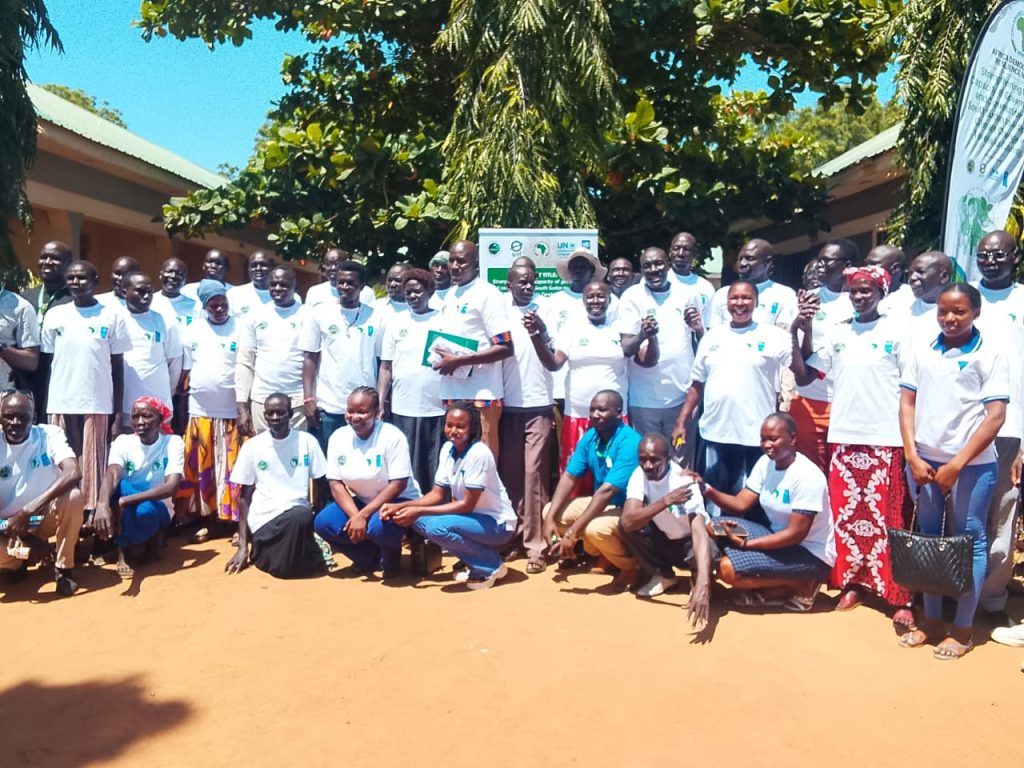
The Africa Democracy and Resilience Network (ADRNET) has launched a climate change adaptation and land restoration project in Terekeka County, Central Equatoria State, aimed at strengthening the capacity of local communities and government institutions to respond to the growing impacts of climate change.
The initiative seeks to support communities affected by climate-related shocks, including flooding, land degradation, declining agricultural productivity and food insecurity.
The project comes at a time when communities in parts of South Sudan are increasingly facing environmental challenges linked to changing weather patterns, deforestation and the degradation of natural resources.
Speaking during the launch of the project, ADRNET Executive Director Wani Stephen Elilas said the initiative will be implemented in selected payams of Terekeka County, with a major focus on restoring degraded land and community forests.
He said about 200 acres of community forest will be restored through the establishment of nursery beds that result into planting of approximately 900,000 seedlings for a period of one year.
“We are contributing to mitigating climate change and responding to climate adaptation. The project will also help build resilient communities that understand and can respond to the shocks of climate change, particularly flooding and food insecurity,” Elilas said.
The project is expected to promote environmental conservation while encouraging communities to participate in the protection and restoration of forests and other natural resources.
Land restoration and tree planting are considered important measures in addressing climate change because trees help protect soil from erosion, improve the condition of degraded land, support biodiversity and contribute to the absorption of carbon dioxide from the atmosphere.
In Terekeka, where many communities depend heavily on agriculture, livestock and natural resources for their livelihoods, environmental degradation can increase vulnerability to climate-related shocks.
The Executive Director of Terekeka County, Galdino Wani Laku, welcomed the initiative, saying many community members have limited knowledge of climate change adaptation and environmental protection.
He attributed some of the environmental challenges to human activities, including the uncontrolled cutting down of trees.
“Some of these climate changes are man-made, while others are natural. We need to start proper training and awareness on climate change so that communities can understand it thoroughly and know how to adapt,” Laku said.
He said building community awareness is important in ensuring that local people understand the relationship between environmental protection, livelihoods and climate resilience.
For her part, the Chairperson of the Women’s Association in Terekeka County, Asunta Paul Laku, said women and other community members would use the knowledge gained through the project to promote environmental protection in their villages.
She said communities have often cut down trees without fully understanding their importance to the environment.
“We are going to take the same message to our communities in the villages that we are not supposed to cut trees anyhow because trees are very important to the environment and rainfall,” she said.
Climate change is increasingly affecting communities across South Sudan through floods, prolonged dry spells, unpredictable rainfall and other environmental pressures.
These challenges can disrupt farming activities, damage infrastructure, reduce access to food and water, and increase pressure on already vulnerable households.
Environmental degradation, particularly deforestation, can further worsen these impacts by reducing vegetation cover and increasing soil erosion and land degradation.
The ADRNET project therefore aims to combine community awareness, climate adaptation, land restoration and tree planting to strengthen the ability of communities in Terekeka to withstand environmental shocks.
The establishment of tree nurseries and restoration of community forests are also expected to provide communities with greater knowledge of sustainable natural-resource management and encourage local ownership of environmental protection efforts.
The organization says the project will work closely with communities and relevant government structures to promote long-term climate resilience and ensure that environmental conservation becomes part of local development efforts.