UNMISS Escorts Veterinary Teams to Deliver Life-Saving Livestock Vaccinations in Greater Mundri
Credit: UNMISS
By Sasuk Taban
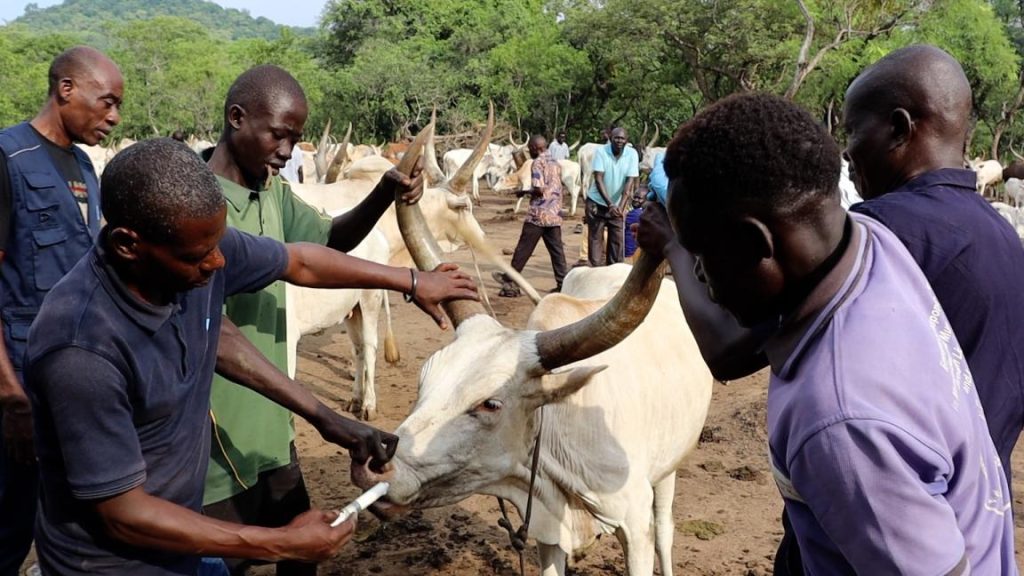
The United Nations Mission in South Sudan (UNMISS) has provided security escorts to veterinary teams carrying out a large-scale livestock vaccination campaign in conflict-affected Greater Mundri, Western Equatoria State, helping protect thousands of animals that are vital to local livelihoods.
The vaccination campaign is being implemented by the Food and Agriculture Organization (FAO) in partnership with the Western Equatoria State Ministry of Animal Resources. With support from UNMISS peacekeepers, veterinary teams have been able to safely reach remote cattle camps that have long been difficult to access because of insecurity and poor road conditions.
The exercise targets more than 100,000 cattle, sheep, and goats, vaccinating them against deadly livestock diseases, including Contagious Bovine Pleuropneumonia, Peste des Petits Ruminants, Anthrax, Black Quarter, Haemorrhagic Septicaemia, and Newcastle disease. Dogs are also being vaccinated against rabies to improve both animal and public health.
For families in Greater Mundri, livestock are a primary source of income, food security, education funding, and social support. Healthy animals enable households to pay school fees, meet cultural obligations, and cope with emergencies, making disease prevention critical to community resilience.
FAO Deputy Field Coordinator in Yambio, Abakar Rajab, said the UNMISS security escort was essential in allowing veterinary teams to reach isolated livestock communities and deliver the vaccinations safely.
Greater Mundri has experienced recurring intercommunal violence and cattle-related conflicts that have disrupted humanitarian access and government services. Although security has improved following local peace initiatives, many rural areas remain difficult to reach.
UNMISS said the campaign not only safeguards livestock and livelihoods but also contributes to peacebuilding by supporting communities recovering from conflict and reducing tensions linked to livestock losses.