Trust Key to Containing Ebola Spread Along South Sudan-DRC Border
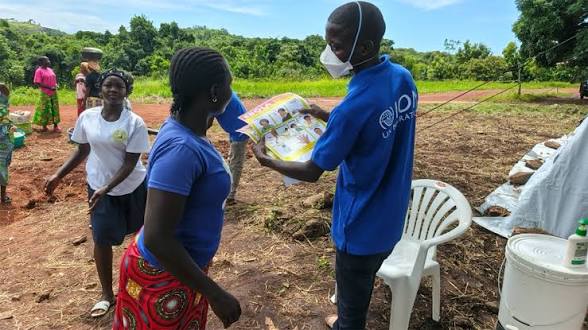
Credit: Direct Relief
Health authorities and humanitarian organizations are stepping up Ebola preparedness along South Sudan’s border with the Democratic Republic of Congo, where community mistrust and insecurity are complicating efforts to contain the rapidly spreading outbreak.
The International Organization for Migration (IOM) has screened about 700,000 people at South Sudan border crossings since the outbreak was reported in May and reached nearly 500,000 people with Ebola awareness messages, according to Direct Relief.
IOM teams screen travelers for symptoms including fever, vomiting, severe headaches and fatigue. People showing possible signs of infection are isolated while samples are collected and sent for testing.
So far, no confirmed Ebola cases have been identified among people screened at the South Sudan border crossings.
Bilali Emmanuel David Lingo, a South Sudanese nurse working with IOM, said the number of people crossing from eastern DRC remains a major concern as the outbreak moves closer to South Sudan.
“The risks are very high; they are moving closer to our borderlines,” Lingo said.
Some of the busiest border crossings can see as many as 1,500 people on market days, while informal routes remain difficult to monitor.
Beyond screening, health workers are focusing on building trust with communities and travelers who may be skeptical about Ebola prevention measures.
Lingo said education and patience have helped change attitudes among some travelers who initially resisted screening.
“We try to inform them that Bundibugyo (Ebola) virus is real and everyone has to be vigilant, from the communities to the family level,” he said.
The outbreak in eastern DRC has placed additional pressure on already overstretched health systems and humanitarian operations. Direct Relief recently provided IOM in South Sudan with personal protective equipment, infection-prevention supplies and oral rehydration salts for use at four primary health facilities and border posts.
The Ebola outbreak has expanded rapidly in eastern DRC, with cases reportedly doubling every 20 days, according to United Nations figures cited by Direct Relief.
North Kivu has experienced a particularly sharp deterioration. Reported cases more than doubled in three weeks, rising from 158 to 325, while deaths increased from 89 to 223.
Uganda, meanwhile, declared itself Ebola-free on July 28 after recording 20 confirmed cases and two deaths linked to travel from DRC.
Direct Relief said its response covers DRC, Uganda and South Sudan, including the provision of protective equipment, medicines and other medical supplies.
Health officials and humanitarian organizations say community mistrust remains one of the biggest obstacles to controlling Ebola in eastern DRC.
A June survey by Ground Truth Solutions found that 60% of 391 residents surveyed in eastern DRC said people in their communities did not believe an Ebola outbreak was occurring.
Respondents cited a lack of information, suspicions that the outbreak had been fabricated for financial or political reasons, and other misinformation.
Only about half of those surveyed said people felt safe seeking treatment at health centers. Fear of becoming infected at health facilities was the most common concern.
Health workers say trusted community members are therefore essential to communicating accurate information and encouraging people with symptoms to seek treatment early.
VillageReach has trained more than 1,000 community health workers in Ituri, Haut-Uélé and Tshopo provinces to provide Ebola information and support outbreak response activities.
The organization is also working with DRC’s Ministry of Health to strengthen laboratory sample transportation and has helped deliver more than 800 samples for testing.
Freddy Nkosi, VillageReach’s DRC country director, said using local health workers helps bridge the trust gap between communities and response teams.
With more than 50 local languages spoken across eastern DRC, responders say health workers must understand and be accepted by the communities they serve.
Conflict and insecurity continue to restrict humanitarian access across parts of eastern DRC and South Sudan.
The United Nations says South Sudan remains one of the world’s most dangerous countries for humanitarian workers, with 29 aid workers and contractors reportedly killed during the first half of 2026.
IOM South Sudan communications focal person Amber Lynn Christino said insecurity and violence were limiting humanitarian access in many parts of the country, while health systems remained heavily overstretched.
Health officials and humanitarian organizations are urging communities to report suspected cases early and cooperate with screening and other public health measures.
The DRC Ministry of Public Health and the National Institute of Public Health remain responsible for leading the Ebola response, working with humanitarian organizations, health facilities and regional partners.
Authorities have also engaged traditional leaders in affected areas to strengthen community awareness and encourage the early referral of people showing Ebola symptoms to treatment centers.
Health experts say early treatment improves patients’ chances of survival while reducing the risk of transmission within households and communities.
As Ebola continues to spread in eastern DRC, health responders say restoring public trust, strengthening border surveillance and working through trusted local community networks will be critical to preventing further regional transmission.