South Sudan Strengthens Preparedness as Bundibugyo Virus Disease Outbreak Continues in DRC
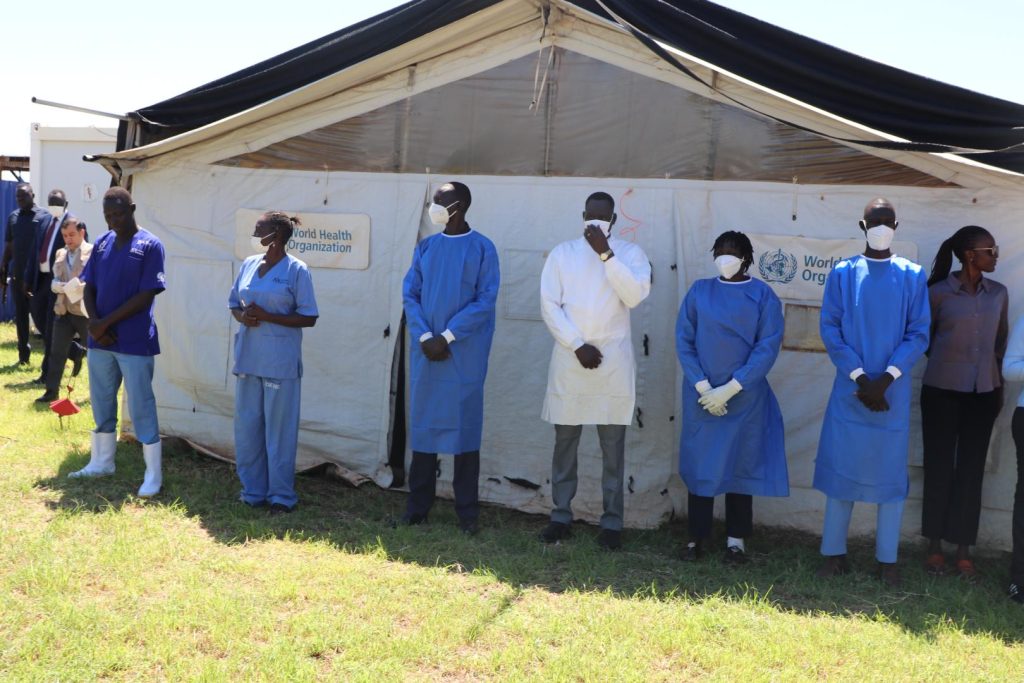
Credit: WHO
South Sudan is strengthening preparedness measures against the risk of Bundibugyo virus disease importation as an outbreak remains active in the Democratic Republic of the Congo, according to a new UNICEF humanitarian situation report.
UNICEF said South Sudan remains at high risk because of extensive cross-border movement with the DRC, porous borders, weak health systems and ongoing humanitarian challenges affecting an estimated 9 million people, including 4.9 million children. No confirmed Bundibugyo virus disease cases have been reported in South Sudan to date.
The report, covering July 2026 and published Aug. 28, said surveillance and cross-border screening are continuing at 15 priority points of entry, where an average of 17,646 travelers are screened daily.
Authorities have reported 26 alerts across three states bordering the DRC. Thirteen samples have been tested, with all returning negative results, according to UNICEF.
However, UNICEF identified community-based surveillance as a major concern, with zero reporting reaching only 10.8% of Boma health workers.
UNICEF is supporting the government’s preparedness efforts in surveillance, risk communication and community engagement, infection prevention and control, water, sanitation and hygiene, case management, logistics and coordination.
Key measures include assessments at priority health facilities and points of entry, finalization of national standard operating procedures and the deployment of 12.6 metric tons of personal protective equipment and infection prevention and control supplies to priority border areas. Additional supplies continue to arrive in the country.
Community preparedness has also been expanded through the training and deployment of more than 600 Boma Health Workers and mobilizers. UNICEF said the initiative has reached 7,635 people with household and community-level prevention messages, as well as 721 schoolchildren and 236 community stakeholders and influencers through household visits, community engagement, radio programs and information campaigns.
UNICEF said it is working closely with the Ministry of Health, the National Public Health Institute, the World Health Organization and other partners to strengthen readiness and address gaps in community surveillance, laboratory and referral capacity, infection prevention and control, WASH standards and operational resources for frontline response.
The Bundibugyo virus disease outbreak in the DRC continues to drive preparedness efforts across neighboring and other at-risk countries.
UNICEF said Uganda officially declared the end of its outbreak on July 28, while no confirmed cases have been reported in other neighboring countries as of Aug. 23. Despite this, population movements, porous borders, displacement and humanitarian vulnerabilities continue to create a risk of cross-border transmission.
The World Health Organization declared the outbreak a Public Health Emergency of International Concern, while Africa CDC designated it a Public Health Emergency of Continental Security in May 2026. UNICEF subsequently activated its Level 3 corporate emergency procedures to support affected countries and strengthen preparedness in at-risk countries.
UNICEF is supporting governments in 10 priority at-risk countries through measures including surveillance, infection prevention and control, WASH, risk communication and community engagement, emergency coordination, laboratory preparedness and readiness at key points of entry.
The agency said countries are conducting simulation exercises, training frontline responders, updating contingency plans and pre-positioning critical supplies to enable the rapid detection, isolation and response to imported cases.
Despite progress, UNICEF warned that funding shortages continue to limit preparedness activities across the region.
The agency estimates that US$25.4 million is required to sustain preparedness and readiness efforts in 10 at-risk countries, with 58% of the funding requirement still unfunded.
UNICEF said immediate and flexible funding is needed to maintain frontline readiness, pre-position critical supplies, reinforce essential services and allow rapid expansion of response measures if transmission is detected.
The agency emphasized that early investment in preparedness is essential to prevent cross-border spread and enable the rapid detection and containment of imported cases.