South Sudan Faces High Ebola Importation Risk, REACH Assessment Finds
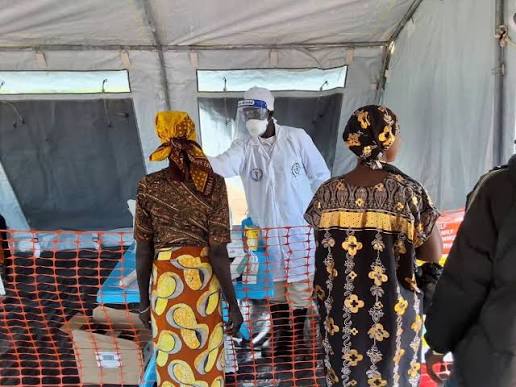
South Sudan faces a high and sustained risk of Ebola virus disease being imported from neighboring Democratic Republic of Congo and Uganda, with gaps in public awareness, health information access and border screening posing challenges to preparedness, according to a new assessment by REACH.
The Rapid Ebola Virus Disease Knowledge Assessment, conducted in July 2026, examined knowledge, risk perceptions, cross-border movement, health information sources and care-seeking behavior in Juba, Yambio, Gangura, Nimule and Kajo-keji. The assessment involved 1,065 individual surveys and six focus group discussions.
South Sudan’s risk has increased because of the ongoing Bundibugyo virus disease outbreak in the Democratic Republic of Congo and confirmed cross-border transmission into Uganda. The assessment says strong social and economic ties and porous borders make the importation of the virus into South Sudan a significant concern.
Although awareness of Ebola was generally high across the assessed locations, the findings identified important gaps in risk perception. In Juba, nearly one-fifth of respondents said they had not heard of Ebola, while some respondents in the assessed areas did not believe that an outbreak was occurring in neighboring countries or that they were personally at risk.
The assessment also found that many respondents could identify common Ebola symptoms, but focus group participants said they would have difficulty distinguishing Ebola from other diseases with similar symptoms, including malaria. At the same time, there was strong demand for additional information about Ebola.
Health workers, health facilities and radio were among the most frequently reported sources of health information in the assessed locations. However, researchers found that radio coverage and access to radio devices are limited in some remote communities.
Participants generally expressed greater trust in information provided directly by health workers, health facilities, the Ministry of Health and government authorities. Community leaders were also identified as trusted sources, particularly in Yambio and other areas where local leaders have close relationships with residents.
The assessment recommends greater use of trained community leaders, in-person awareness campaigns and megaphones to reach communities that have limited access to radio or health workers.
Cross-border movement between South Sudan, the Democratic Republic of Congo and Uganda remains extensive, driven by trade, family visits and access to markets.
Focus group participants reported few practical restrictions on movement, while informal routes are used to avoid taxation and administrative checks. The assessment concludes that border closures are unlikely to be effective in preventing the spread of Bundibugyo virus disease and could increase the risk of transmission.
Common movement routes identified by participants included destinations in Uganda such as Elegu, Pagirinya, Adjumani, Moyo, Obongi and Yumbe, as well as occasional travel to Juba and Kampala. The assessment also highlights the Ituri-Arua corridor as a potential transmission pathway because of established cross-border movement.
Screening was reported to be active at official border crossings, but participants raised concerns about its consistency and coverage.
In Nimule and Kajo-keji, respondents said screening was reportedly not conducted at night and did not routinely target local residents crossing the border. In Yambio, some participants said they were unaware of any screening despite regularly crossing into the Democratic Republic of Congo.
Despite these concerns, communities viewed screening as an important protective measure and called for expanded screening in public places beyond official border crossings.
The assessment found that people were generally willing to report suspected Ebola cases to health authorities, but awareness of the EVD hotline varied considerably.
Hotline awareness was highest in Gangura, at 73%, and lowest in Kajo-keji, at 24%. Participants said they valued the hotline because it is toll-free and allows people to report cases anonymously, although some expressed concerns about response times.
The assessment also found that treatment costs and household decision-making could influence care-seeking behavior. Some participants said women may need permission from male household members before seeking hospital treatment, while others reported turning to herbal remedies as an initial treatment option.
Safe and dignified burials could become a sensitive issue during an Ebola outbreak because physical contact with the deceased is an important part of traditional burial practices in many South Sudanese communities.
In Yambio, 22% of respondents said they would wash the body of someone who died from Ebola. Participants said restrictions on traditional burial practices could create tensions, but indicated that measures clearly explained and supported by health workers would be more likely to gain community acceptance.
The assessment also found significant differences between locations in people’s willingness to wait for health workers before burial. In Kajo-keji, most respondents indicated they would not wait even a day, highlighting the importance of rapid deployment of health personnel if an Ebola outbreak occurs in South Sudan.
The findings point to the need for stronger risk communication and community engagement, particularly in urban areas such as Juba and remote communities along high-risk border corridors.
The assessment recommends strengthening trusted community-based information channels, improving awareness of the Ebola hotline, ensuring clearer communication around screening and preparing health personnel to respond rapidly to suspected cases.
REACH said the findings are intended to support Risk Communication and Community Engagement partners in adapting Ebola messaging to populations considered at risk. The assessment covered four targeted locations, with data from Kajo-keji collected independently by GOAL using nearly identical tools.
The researchers caution that the findings should be considered indicative rather than representative of the assessed towns, payams or counties as a whole because of sampling limitations and fieldwork constraints.