Small Gardens, Big Impact – How WFP Is Assisting Mothers Fight Malnutrition and Build Resilience in South Sudan
By Staff Reporter
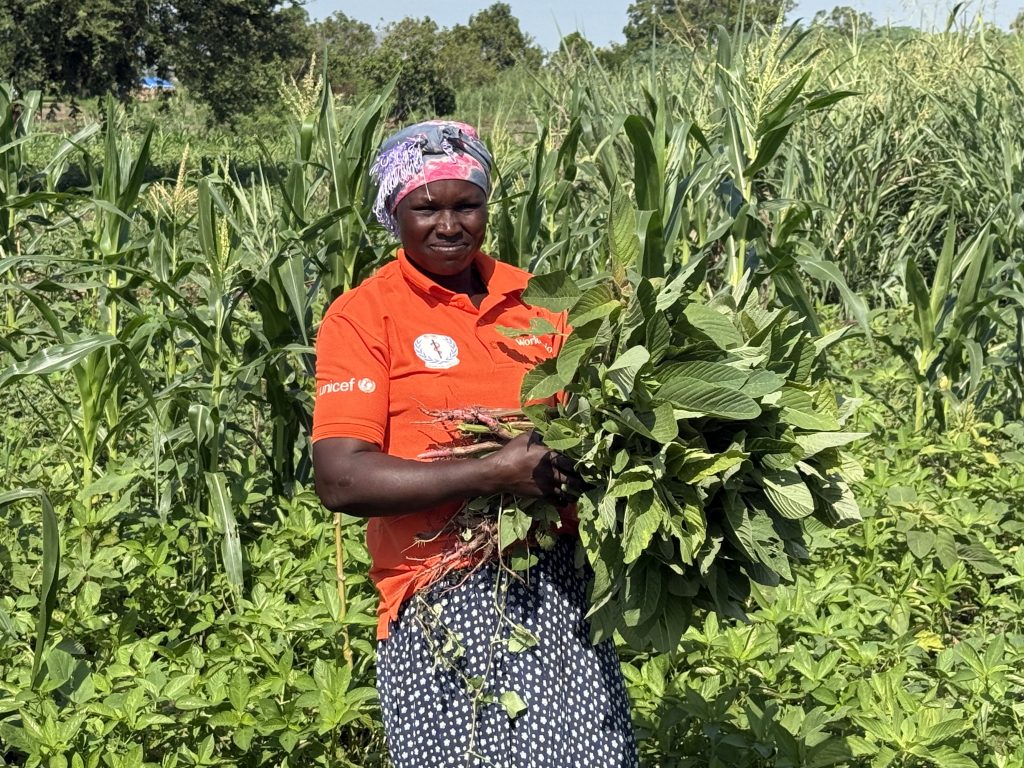
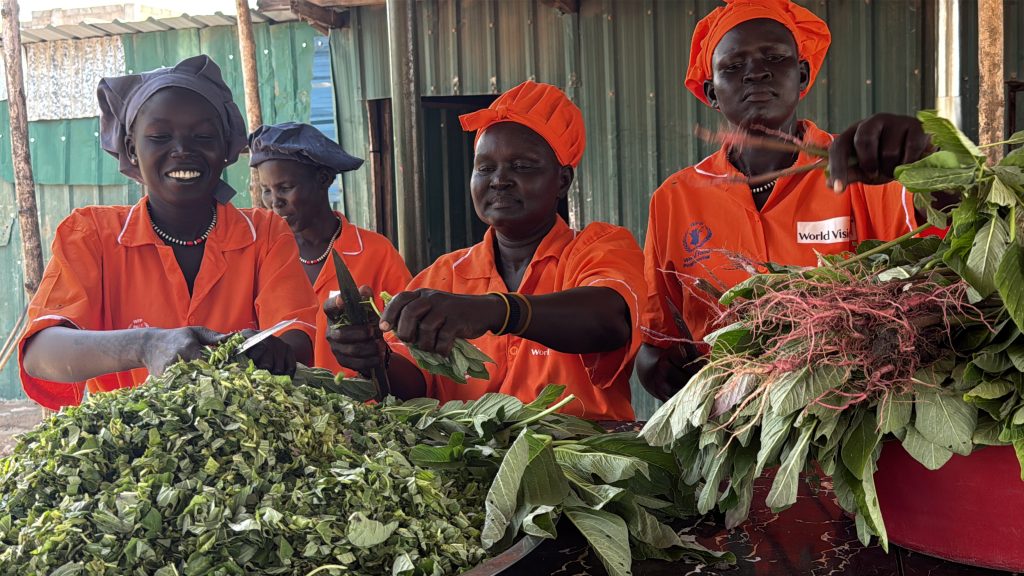
As the morning sun rises over Luri Rokwe village on the outskirts of South Sudan’s capital, Juba,Elizabeth Tiye George, walks through rows of vibrant green vegetables, carefully harvesting bunches ofAmaranthus commonly known as ‘kudra, a nutritious leafy vegetable, that is rich in iron, calcium andvitamins, and has become a valuable ingredient in the fight against malnutrition.
She gathers fresh bundles bound for a nearby school, where they will add color, flavor and vital nutrientsto children’s meals.
Just a few years ago, this was not the life she imagined.
At 43, Elizabeth’s life took a difficult turn when her husband passed away, leaving her to raise sevenchildren, including a set of twins, on her own. Determined to provide for her family, she spent yearsworking long hours selling vegetables in Juba’s bustling Konyo Konyo, Custom and Munuki markets.
Yet despite her tireless efforts, low prices and unpredictable earnings meant that putting enough nutritiousfood on the table remained a daily struggle. Every day was a balancing act between feeding her children,paying school fees and meeting the family’s most basic needs.
“I worked every day, but the money was never enough,” she recalls.
That changed in 2025 when Elizabeth brought one of her twins to the Luri Rokwe Nutrition Centre andreceived news no mother wants to hear: her child was malnourished.
The diagnosis left her frightened and uncertain about the future. Yet it also marked the beginning of aremarkable journey from vulnerability and hardship to resilience and self-reliance.
Through a World Food Programme (WFP)-supported nutrition programme implemented by World Vision,with funding from KFW, the German Development Bank, Elizabeth joined a mother-to-mother supportgroup established to promote maternal, infant and young child nutrition. The group, made up of 15women, helps mothers improve children’s diets, share nutrition knowledge and serve as role modelswithin their communities.
There, Elizabeth learned about child nutrition, healthy feeding practices and climate-smart vegetableproduction. She received training on growing nutrient-rich crops including sukuma wiki another hardyleafy green rich in vitamins and minerals and, with support from community leaders, gained access toland where she could begin farming on a larger scale.
“I appreciate the World Food Programme and World Vision for giving me the knowledge and skills,” saysElizabeth. “I am happy that I can now afford food for my children.”
What started as a nutrition intervention for her child quickly grew into something much bigger.
Today, Elizabeth’s garden produces nutritious food not only for her family but also for hundreds ofschoolchildren in her community. Through the programme, she was linked to local schools participating inWFP’s Home-Grown School Feeding Programme enabling her to supply fresh vegetables directly toschools where they are used to enrich children’s diets. The Home-Grown School Feeding Programmeprovides safe, diverse, and nutritious meals to school children using food sourced locally from smallholder farmers such as Elizabeth.
Among her regular customers is Dr. John Garang Primary School. On a good day, Elizabeth harvests upto 50 kilograms of amaranthus from her garden. She sells the produce to schools and communitymembers, earning around 250,000 South Sudanese Pounds—approximately US$40 from a singleharvest. Since she joined the programme, she has earned more than 2.5 million South Sudanese Pounds(about US$400) through vegetable sales to schools, an income she once thought was beyond reach.
One of her proudest moments was using the proceeds from vegetable sales to pay school fees for her14-year-old daughter, Linda Iku Jacob, a Primary 8 candidate at Luri Rokwe Primary School.
“My dream has finally come true,” Elizabeth says. “I have learned to farm, and now I provide vegetablesto schools to increase my income and enable me to pay my daughter’s school fees.”
The benefits extend far beyond Elizabeth’s household.
Fresh vegetables supplied by local producers help diversify school meals and provide essential nutrientsthat support children’s growth, health and learning. The programme creates a powerful cycle of impact:mothers earn an income, schools gain access to fresh produce, and children receive more nutritiousmeals.
In Luri Rokwe, Elizabeth has become a farmer, a supplier, a role model and a provider of nutritious foodfor the next generation.
“This is the kind of sustainable, community-led resilience that WFP and its partners are helping to build across South Sudan,” said Mutinta Chimuka, WFP Country Director in South Sudan.“By combining nutrition education, mother support groups, kitchen gardens, and local procurement, we are reducing malnutrition, improving learning outcomes, strengthening local farmers, and building more resilient communities. We are deeply grateful to our partners, whose support is making this lasting impact possible.”
By July, 180 women had received support through the Mother Support Groups, helping to strengthen community-based care and support networks. Support from donors such KFW and the German Federal Ministry for Economic Cooperation and Development (BMZ) is helping communities move beyond immediate food assistance towards lasting solutions that improve nutrition, strengthen livelihoods andbuild resilience.
For Elizabeth, every basket of vegetables harvested represents a healthier future for her children andproof that, with the right support, families can transform crisis into opportunity.