UNHCR Directs $2.3 Million to Refugee-Led Organizations to Strengthen Local Humanitarian Response
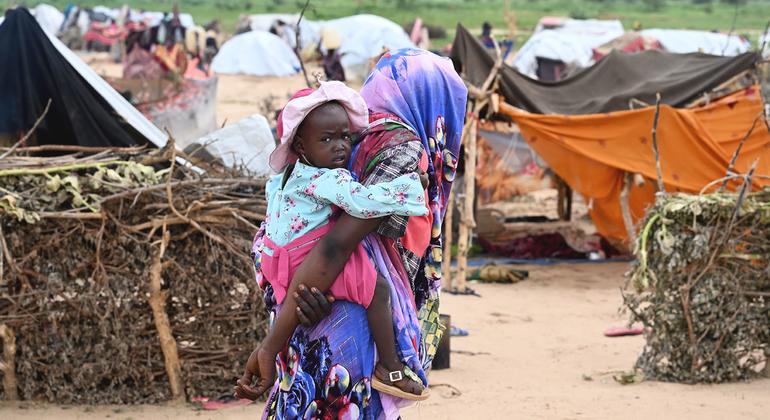
Credit: UN News
The UN Refugee Agency (UNHCR) has invested US$2.3 million in 201 refugee- and stateless-led organizations across Eastern and Southern Africa as it expands efforts to place displaced communities at the center of humanitarian response.
The funding, outlined in the UNHCR Regional Bureau for Eastern and Southern Africa (RBESA) Localization Brief, supports organizations led by forcibly displaced and stateless persons to deliver humanitarian assistance, strengthen community resilience, and participate in humanitarian decision-making.
UNHCR said the initiative reflects its commitment to localization by enabling refugee-led organizations to move beyond the role of aid recipients and become implementing partners in humanitarian programmes.
According to the agency, refugee-led organizations are already providing frontline services in hard-to-reach areas, including conflict-affected communities in Sudan and South Sudan, where insecurity and access constraints have limited the reach of international humanitarian agencies.
The bureau reported that 2,148 grassroots organizations have been mapped across the region, while 4,661 refugee- and stateless-led organizations have registered on UNHCR’s global engagement platform. More than 2,500 community leaders have also received training in governance, financial management, and donor compliance to improve their capacity to manage humanitarian projects.
UNHCR said governments across the region have introduced policy reforms to improve the operating environment for refugee-led organizations. Uganda has streamlined approval procedures through the Office of the Prime Minister, Kenya has simplified legal registration processes, South Sudan has decentralized administrative services closer to displacement-affected communities, Ethiopia has introduced new registration guidelines, and Sudan has continued facilitating grassroots engagement despite the challenges posed by ongoing conflict.
The report also highlights growing representation of refugee-led organizations in humanitarian coordination through Refugee-Led Organization Networks (RELONs), which are now operational in six countries. The networks provide refugee representatives with formal opportunities to contribute to humanitarian planning and policy discussions.
Among the supported organizations, 16 percent are youth-led, 14 percent are led by women and girls, while 3 percent are organizations representing persons with disabilities, reflecting efforts to promote inclusive leadership.
UNHCR highlighted several success stories, including Uganda’s FUSE Women Initiative, which has evolved from a small refugee-led enterprise into a community organization that has distributed US$85,000 in sub-grants to ten women-led groups, trained more than 100 artisans, and supported over 10,500 refugees through livelihood programmes.
In Kenya’s Kakuma Refugee Camp, the Girl Power Action Initiative (GPAI) has expanded access to education, protection services, and livelihoods by establishing community learning centres, producing reusable sanitary pads, and reaching approximately 8,000 refugees and host community members.
Despite the progress, UNHCR acknowledged that many refugee-led organizations continue to face challenges, including limited institutional capacity, banking restrictions, and complex donor compliance requirements.
To address these barriers, the agency, together with partners such as the Mastercard Foundation, is implementing a tiered support model that combines seed funding and technical mentoring for emerging organizations with longer-term partnership agreements for more established refugee-led groups.
UNHCR said strengthening refugee-led organizations is essential to building more effective, inclusive, and sustainable humanitarian responses across Eastern and Southern Africa while ensuring displaced communities play a leading role in shaping solutions to the challenges they face.