SSRA Launches Digital Tax Audit System to Strengthen Revenue Administration

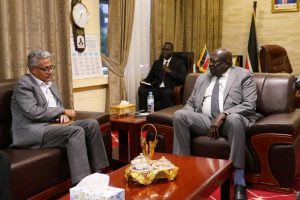
SSRA Commissioner General Amb. Moun Deng Ajuet
The South Sudan Revenue Authority has launched an electronic tax audit module aimed at replacing manual, paper-based auditing with a digital system designed to improve tax compliance, transparency and revenue collection.
The e-Tax Audit Module was launched Monday at the Radisson Blu Hotel in Juba as part of the authority’s efforts to modernize tax administration and reduce revenue leakages.
Gumnok Manhom, deputy commissioner for audit and compliance in the Domestic Tax Revenue Division, said the department was committed to implementing the authority’s digital audit policy.
“Our entire department was doing it manually. Today, we are committed to implementing these policies,” Manhom said.
Crawford Capital Pay Managing Director Biong Deng Biong said the company was supporting the South Sudan Revenue Authority’s efforts to modernize the country’s revenue systems.
He said the digital audit platform would help address revenue leakages, improve compliance and give the authority greater oversight of audit operations.
“Our mandate has always been clear: to support SSRA under the directive to modernize our revenue systems,” Biong said. “We assured SSRA and the government that Crawford Capital Pay is fully committed to supporting this reform. We are a reliable partner.”
In his closing remarks, SSRA Commissioner General Amb. Moun Deng Ajuet said the introduction of the e-Tax Audit Module demonstrated the authority’s commitment to moving away from traditional paper-based auditing toward a more transparent and efficient digital process.
Deng said he had recently issued a directive prohibiting manual audits and that the new module would provide the digital platform needed to implement the directive.
“As many of you are aware, I recently issued a directive prohibiting manual audits,” Deng said. “These directives reflect our commitment to move away from the traditional and paper-based audit process to a more transparent, efficient and adaptable digital system.”
He said the module would ensure that audit operations are carried out through systematic processes, with decisions based on reliable information and audit activities properly documented and monitored.
According to Deng, the system will improve audit planning and support audit teams in managing tax files. It will also centralize audit reports and taxpayer information, including audit cases, findings, correspondence and supporting documents.
The module is expected to improve monitoring and supervision by giving managers greater visibility into individual cases and their progress.
“Management will be better positioned to monitor the status of audits, identify delays and take timely corrective action,” Deng said.
He said the digital system would also reduce reliance on paper records, disconnected spreadsheets and repetitive data entry.
“The transition to a digital platform will reduce dependence on paper-based processes, disconnected spreadsheets and repetitive data entry,” Deng said. “This will help improve consistency, minimize administrative burdens and support better decision-making through stronger institutional processes.”