South Sudan Foreign Ministry Highlights Week of Diplomatic Engagements
Credit: Sudans Post
South Sudan’s Ministry of Foreign Affairs and International Cooperation has highlighted a week of diplomatic engagements focused on strengthening bilateral relations, cooperation with international partners, regional health preparedness, humanitarian diplomacy and engagement with South Sudanese communities abroad.
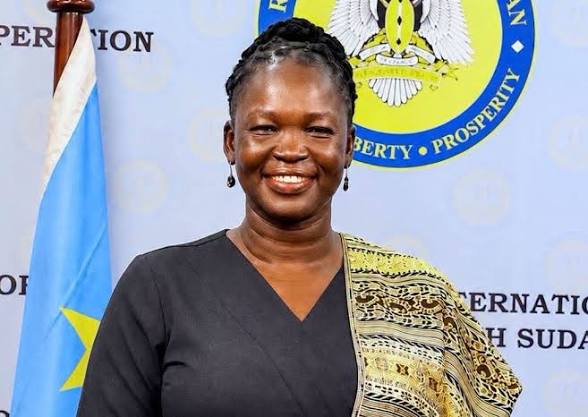
The ministry’s weekly briefing, covering Aug. 15-21 and presented by spokesperson Amb. Apuk Ayuel Mayen, said the period included engagements at both presidential and ministerial levels, as well as progress in South Sudan’s cooperation with Saudi Arabia and international organizations.
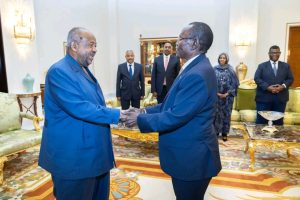
On Aug. 17, President Salva Kiir Mayardit received the credentials of four newly appointed ambassadors representing Côte d’Ivoire, India, Germany and Bangladesh.
The ministry said South Sudan maintains relations with all four countries and looks forward to working with their representatives to strengthen bilateral ties and pursue practical areas of cooperation.
Foreign Affairs and International Cooperation Minister James Pitia Morgan also held a series of diplomatic meetings during the week.
On Aug. 18, Morgan met with U.S. Ambassador to South Sudan Michael J. Adler to discuss bilateral relations and issues of mutual interest. The ministry described the United States as an important partner and said engagement with the U.S. government would continue.
Morgan also met with Kiki Gbeho, the U.N. special representative of the secretary-general and head of the United Nations Mission in South Sudan. Their discussions included Gbeho’s recent engagement with the U.N. Security Council on South Sudan, preparations for the upcoming U.N. General Assembly, development cooperation and matters concerning UNMISS.
On Aug. 20, Morgan met with Dr. Tolbert G. Nyenswah, Africa CDC’s country representative in South Sudan. Their discussions focused on disease surveillance, emergency preparedness and response, laboratory systems and capacity building for health workers.
The meeting came amid heightened regional concern over Ebola. The ministry said the technical response remains the responsibility of the Ministry of Health, while the Foreign Affairs Ministry would continue supporting diplomatic engagement with Africa CDC and other partners where coordination is required.
Another major development during the week was the ratification by the Transitional National Legislative Assembly of the General Cooperation Agreement between South Sudan and the Kingdom of Saudi Arabia.
The agreement was ratified Aug. 19 after the foreign minister appeared before the Assembly during its consideration. Morgan explained that the agreement provides a general framework for cooperation between the two countries, while specific areas of implementation will be pursued by relevant ministries according to their respective mandates.
The ministry welcomed the ratification, describing Saudi Arabia as an important partner and saying the agreement provides a basis for expanding cooperation in areas of shared interest.
The ministry also highlighted efforts to strengthen the professional capacity of diplomats through humanitarian diplomacy training.
The Diplomatic Institute, in partnership with the International Committee of the Red Cross, concluded a three-day training on international humanitarian law and humanitarian diplomacy. The training brought together diplomats from across the ministry and focused on the application of international humanitarian law to diplomatic work and the handling of humanitarian issues through diplomacy.
At the closing ceremony, the Director General of the Diplomatic Institute, Amb. Ajiing Adiang Mariik, encouraged participants to apply the knowledge gained during the training. The ministry also expressed appreciation to the ICRC for its continued cooperation in strengthening the professional capacity of South Sudanese diplomats.
Meanwhile, the ministry concluded a three-day workshop on the National Diaspora Policy in partnership with the International Organization for Migration.
The policy is intended to provide a clearer framework for the government’s engagement with South Sudanese communities abroad. The ministry said South Sudanese living overseas contribute to the country through professional expertise, investment, knowledge, networks and support to families and communities.
Deputy Foreign Affairs Minister Akuei Bona Malwal, who closed the workshop, thanked participants and partners for their contributions and called for stronger cooperation with South Sudanese communities abroad.
The ministry said work on the diaspora policy would continue as the process moves forward.
The weekly briefing described the period as an active week for South Sudanese diplomacy, with the ministry continuing to represent the country, maintain engagement with international partners and pursue cooperation in areas considered important to South Sudan’s national interests.