Conflict, Hunger and Disease Deepen Humanitarian Crisis in South Sudan
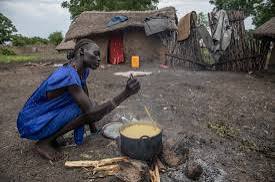
Credit: WFP
By Sasuk Taban
South Sudan’s humanitarian situation continues to deteriorate as escalating conflict, worsening food insecurity, disease outbreaks and funding shortfalls leave millions of people in urgent need of assistance, according to the latest Humanitarian Update released by the United Nations Office for the Coordination of Humanitarian Affairs (OCHA).
The report warns that nearly 9 million people are expected to require food assistance between June and September 2026 due to conflict, displacement, economic decline, climate shocks, flooding and emerging drought conditions. Emergency levels of food insecurity (IPC Phase 4) are projected across 26 counties, while communities in parts of Jonglei and Upper Nile states face catastrophic (IPC Phase 5) conditions, with FEWS NET warning that famine remains a credible risk if insecurity worsens and humanitarian access is further restricted.
Eastern Equatoria has emerged as another major hotspot, with Kapoeta East, Kapoeta North and Lafon counties experiencing severe food shortages caused by prolonged dry spells, poor harvests and water scarcity. The deteriorating situation has forced some families to migrate to Juba and neighbouring Kenya and Uganda in search of food and basic services, while others have resorted to negative coping mechanisms such as gathering wild fruits from forests.
The World Food Programme (WFP), together with the Government of South Sudan, has activated the country’s first drought anticipatory action plan, delivering cash assistance and early warning messages to vulnerable communities in Budi and Kapoeta North counties. More than 52,000 people have already benefited from interventions implemented jointly by WFP and the Food and Agriculture Organization (FAO), while FAO has vaccinated over 50,000 livestock and poultry.
Meanwhile, escalating violence continues to threaten both civilians and aid workers. Six humanitarian workers were killed in separate attacks in Jonglei State and the Greater Pibor Administrative Area between June 29 and July 1, bringing the total number of aid workers and contractors killed in South Sudan since January to 36. The violence has also disrupted humanitarian operations in several conflict-affected areas, leaving thousands without access to life-saving assistance.
In Warrap State, renewed intercommunal violence in Greater Tonj has left dozens dead, displaced communities and disrupted humanitarian access, while fighting in Walgak, Akobo County, forced civilians to flee and temporarily suspended aid operations for more than 30,000 conflict-affected people. Humanitarian agencies recorded 391 access incidents between January and June 2026, a 63 per cent increase compared to the same period last year.
Disease outbreaks are further compounding the crisis. As of July 14, South Sudan had reported more than 109,000 cholera cases and 1,716 deaths, with Unity, Upper Nile and Jonglei states accounting for most recent infections. Rubkona County in Unity State remains the country’s worst-affected area, while poor water, sanitation and hygiene conditions continue to increase transmission risks, particularly in displacement sites.
Health officials are also maintaining heightened surveillance against the risk of Ebola Virus Disease following the outbreak in neighbouring Democratic Republic of the Congo. Although South Sudan has not recorded any confirmed Ebola cases, preparedness efforts have been intensified in high-risk border counties, with more than 552,000 travellers screened at points of entry.
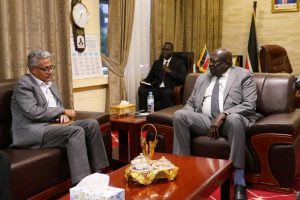
On July 16, Humanitarian Coordinator Ramanathan Balakrishnan led a high-level mission to Bentiu to assess conditions affecting more than 109,000 internally displaced people. The delegation highlighted overcrowding, inadequate water and sanitation services and the ongoing cholera outbreak, while calling for greater investment in resilience, flood protection and durable solutions for displaced communities.
Despite growing humanitarian needs, the 2026 Humanitarian Needs and Response Plan remains severely underfunded. OCHA reports that only 33.8 per cent of the required US$1.46 billion had been received by July 17, forcing aid agencies to scale back assistance. Humanitarian partners have reached approximately 2.1 million people so far this year, but warn that sustained funding is urgently needed to continue life-saving operations and reach millions more in need.