
Uganda has tightened border surveillance and introduced a 21-day quarantine for citizens returning from the Democratic Republic of Congo as Ebola case...
Uganda has tightened border surveillance and introduced a 21-day quarantine for citizens returning from the Democratic Republic of Congo as Ebola cases reported in Kenya and Nigeria raise concerns about the potential spread of the virus across the region.Health authorities announced the measures on Oct. 25, 2026, as neighbouring countries intensified efforts to contain infections linked to travellers who had passed through Uganda.Uganda says it has no active Ebola outbreak but is strengthening screening, contact tracing and monitoring to reduce the risk of imported infections.The new restrictions come amid reports of Ebola infections in Kenya and Nigeria involving travellers with links to Uganda. Authorities are investigating the cases and tracing people who may have been exposed to the virus.Kenya reported its first imported case in early October involving a traveller who had passed through Uganda after travelling from Congo. The patient died on Oct. 5, prompting health officials to identify and monitor contacts.Nigeria subsequently reported an imported case involving a traveller who had travelled from Uganda to Abuja. The case prompted additional surveillance and contact-tracing measures as authorities worked to establish the patient's movements and possible exposure.The World Health Organization has called for stronger cross-border coordination, rapid identification of suspected cases and enhanced surveillance to prevent further transmission.Uganda has stepped up screening at Entebbe International Airport and land border crossings. Authorities are also collecting passenger information to support contact tracing and help identify people who may have been exposed to the virus.The 21-day quarantine reflects the maximum incubation period commonly associated with Ebola, during which exposed individuals are monitored for symptoms. People who develop symptoms require immediate medical assessment and isolation.The measures follow an outbreak of the Bundibugyo strain of Ebola in Congo, where health authorities have reported thousands of confirmed cases and deaths. The WHO's Oct. 23 update said Congo had recorded 9,704 confirmed cases and 4,687 deaths as of Oct. 20.Ebola is a severe viral disease transmitted through direct contact with the blood or other bodily fluids of an infected person, or contaminated materials. Symptoms may include fever, headache, muscle pain, weakness, vomiting and diarrhoea.Health officials advise people to seek medical attention immediately if they develop symptoms after possible exposure. Early detection, isolation and supportive treatment are important in managing the disease and reducing transmission.The outbreak has renewed concerns about the vulnerability of countries with busy cross-border trade and transport routes. Uganda's location along major regional travel corridors makes coordination with neighbouring countries particularly important.Although Uganda reports no active outbreak, health authorities continue to urge travellers and communities to follow screening instructions, report suspected cases promptly and cooperate with public health teams.The WHO has emphasised the importance of surveillance and regional cooperation in containing the outbreak, while cautioning against unnecessary travel and trade restrictions that could disrupt essential movement and humanitarian assistance.Photo Credit: AP Photo/Hajarah Nalwadda, Creator: Hajarah Nalwadda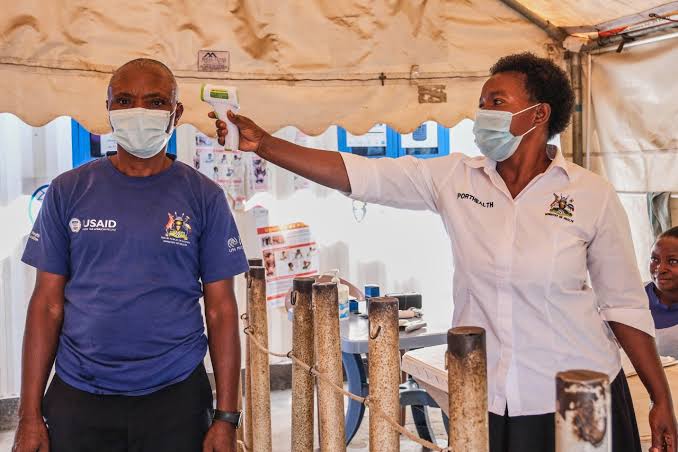
0 likes