Women Leaders Call for Action, Mentorship and Inclusion
By Roselyn Oboy
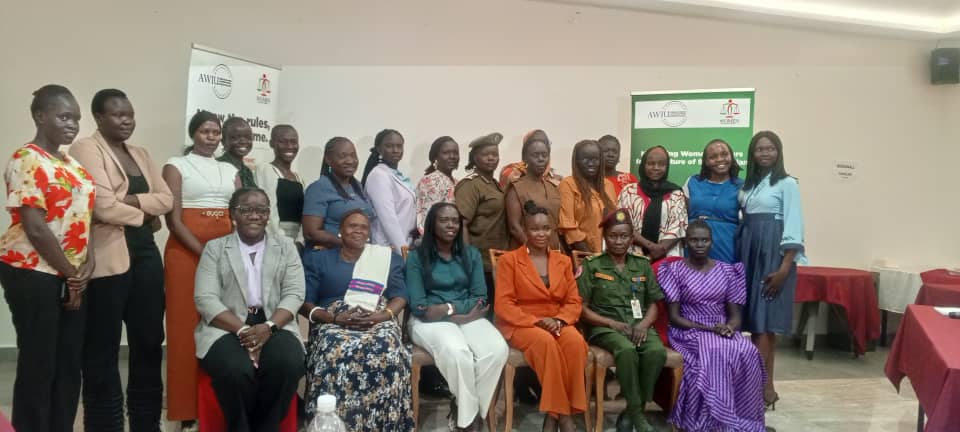
Women leaders, youth representatives, and persons with disabilities have called for stronger mentorship, inclusive leadership, and practical action to advance women’s leadership in South Sudan after a two-day leadership and mentorship program organized by Women for Justice and Equality ( WOJE), with the support from American Women for International Understanding ( AWIU) in Juba.
The program brought together participants from different institutions and sectors for practical training aimed at strengthening leadership skills, promoting personal development, and enhancing women’s participation in decision-making processes.
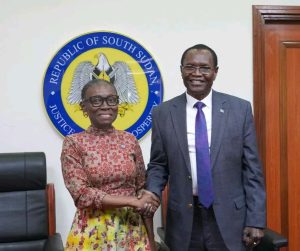
The Undersecretary in the Ministry of Gender, Child and Social Welfare, Esther Ikere Eluzai, urged participants to translate the training into action, stressing that leadership is defined by what one does, not the position one holds.
“Leadership is not a title. Leadership is an action. You can lead even if you don’t have a title,” she said.
She emphasized that mentorship remains a key bridge for personal and professional growth, encouraging participants to remain committed to their development plans.
“Mentorship is a bridge between where you are and where you want to be,” Eluzai said.
She further challenged participants to begin implementing their personal action plans, including identifying mentors, strengthening leadership skills, and improving personal habits.
Executive Director of the South Sudan Women Security Network, Hariet Fauzia, praised the program, saying it had transformed her approach to leadership and discipline.
“What I have gained from here is not only going to stop here. I will practice it,” she said.
“I am not the same Harriet I used to be.”She also called for the expansion of mentorship programs to reach more women, including those in uniform and security institutions.
Deputy Secretary for Education and Research at the Central Equatoria States Youth Union, Susan Anthony Michael, said the training had changed her perspective on leadership and career development.
“I am a changed person. I am a changed leader,” she said. “I will advocate for young people who are doing things they are not passionate about.”
She added that mentorship should continue beyond the workshop, encouraging participants to share knowledge widely.Representative of persons with disabilities, Catherine Vincencio, said the program had strengthened inclusion and professional growth among women.
“Leadership doesn’t mean power. Leadership is empowerment,” she said. “We have been empowered by this training, and we are going to empower others.”
Participants committed to applying the lessons learned, and strengthening mentorship networks, and promoting inclusive leadership for women across South Sudan.