UN Urges Stronger Global Action Against Conflict-Related Human Trafficking and Sexual Violence
Credit: UN Photo
The United Nations has called for stronger international cooperation to combat human trafficking for sexual exploitation by armed and terrorist groups, warning that women and girls continue to face horrific abuses in conflict zones around the world.
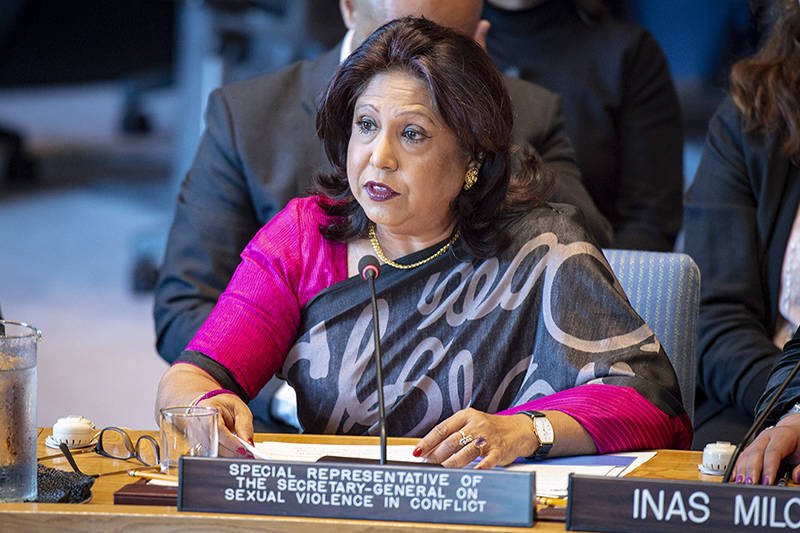
Speaking at a high-level event on the sidelines of the 2026 UN Security Council Open Debate on Conflict-Related Sexual Violence, the UN Secretary-General’s Special Representative on Sexual Violence in Conflict, Pramila Patten said trafficking for sexual exploitation remains a widespread but underreported crime.
Patten said that over the past decade, armed groups including the so-called Islamic State (ISIL), Al-Shabaab, Boko Haram and other extremist organizations have used sexual slavery, rape and trafficking as deliberate tactics of war and terror.
She noted that the latest UN report on conflict-related sexual violence found that women and girls continued to be trafficked and sexually exploited in 2025, including in the Sahel, Haiti and South Sudan.
According to the report, abduction and sexual slavery in South Sudan have continued to be used as collective punishment against rival communities, contributing to displacement and prolonged suffering.
Patten stressed that many cases remain undocumented because survivors often face stigma, insecurity, fear of reprisals and limited access to support services.
She urged UN Member States to strengthen information collection, improve investigations and prosecutions, preserve evidence of crimes committed during conflicts, and expand legal protection for survivors.
The UN official also called on the Security Council to intensify the use of sanctions against individuals and groups responsible for trafficking and conflict-related sexual violence, while strengthening cooperation between governments, humanitarian agencies and law enforcement.
Patten emphasized that survivors must remain at the center of prevention and response efforts through access to medical care, psychosocial support, justice, reparations, education and livelihood assistance.
She concluded by urging the international community to close information gaps, hold perpetrators accountable and address the root causes of violence and exploitation, saying that protecting survivors is essential to defending human dignity, upholding the rule of law and building lasting peace.