South Sudan Health Emergencies Persist as Cholera Declines, BVD Risk Remains High
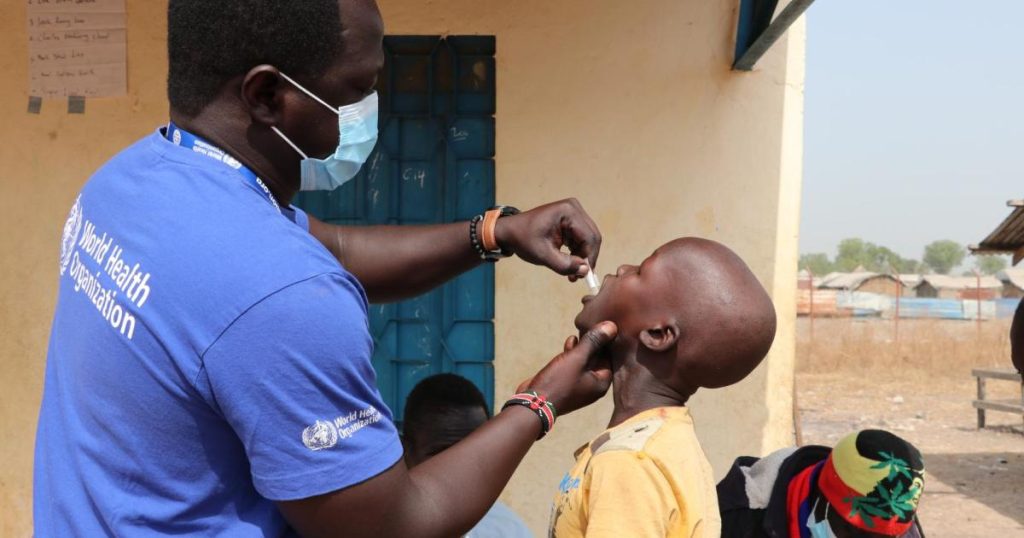
Credit: WHO
South Sudan continues to face multiple public health emergencies, with cholera cases declining but outbreaks of measles and mpox, malaria and the risk of Bundibugyo virus disease (BVD) placing continued pressure on the country’s health system.
The latest Health Cluster situation update, covering Aug. 17-23, said cholera recorded 165 new cases and no deaths during the week, an 18% decline from the previous week. Active transmission remained concentrated in Rubkona, Leer and Renk counties.
The update said South Sudan has recorded no confirmed BVD cases, but the country remains at high risk of importation because of continued transmission in neighboring Democratic Republic of Congo. As of Aug. 23, the DRC outbreak had recorded 5,290 confirmed cases and 2,516 deaths across 56 health zones in six provinces, according to the report.
South Sudan has investigated 32 cumulative BVD alerts, with 17 testing negative and 15 discarded. No alerts remained pending, while screening at points of entry continued.
Health authorities are using a tiered preparedness approach focused on 15 high-risk counties, with Ezo, Yambio, Juba, Yei, Morobo and Nzara classified as Tier 1A priority areas.
Malaria remained one of the country’s leading health concerns, with 56,229 cases reported during epidemiological Week 34. The figure was 36.3% lower than the same week in 2025, while 11 deaths were reported compared with 20 during the corresponding period last year.
The distribution of long-lasting insecticidal nets has reached 7.5 million of the 9.5 million nets allocated under the current campaign, representing 79.3% coverage. Health partners are preparing to deploy additional malaria commodities to counties where cases are increasing as the peak malaria season approaches.
The Health Cluster has also reported the first molecular evidence of partial artemisinin resistance in malaria parasites from Bor and Juba. However, first-line artemisinin-based combination therapies remain effective, with health authorities calling for expanded drug-resistance surveillance.
Four measles outbreaks remain active in Magwi, Wau, Aweil East/Centre and Pariang, despite no new measles cases being reported during Week 34. Health authorities are investigating the outbreaks and preparing for a supplementary immunization campaign scheduled for Aug. 25-28.
Mpox transmission also remains active. South Sudan has recorded 129 confirmed cases cumulatively, with Yambio, Juba and Ezo accounting for most confirmed infections. The latest update reported 728 suspected cases and said case investigations, contact tracing and follow-up were continuing in Ezo and Yambio.
The health situation in Akobo remains particularly fragile, with six facilities reporting 3,082 consultations during Week 34. Malaria accounted for 497 consultations, acute respiratory infections for 560 and acute watery diarrhea for 316. One death was reported.
Health partners said insecurity, shortages of medical supplies and damaged immunization infrastructure continue to constrain services. The Health Cluster is calling for the restoration of routine immunization and expanded outreach services for displaced communities.
The broader Health Cluster bulletin also identified a severe nutrition crisis in Guit County, Unity State, where a June SMART survey found a global acute malnutrition rate of 36.2% and severe acute malnutrition of 9.4%. Among people living in the county’s displacement camp, global acute malnutrition reached 40.1%.
The Health Cluster said more than 11 primary health facilities in western Akobo remain closed because of insecurity, while acute malnutrition in Akobo West has reached 23%.
The latest reports underscore the continuing strain on South Sudan’s health system as disease outbreaks, insecurity, displacement, malnutrition and shortages of essential supplies converge in several parts of the country.