IOM Records Over 38,000 Population Movements Across South Sudan in June
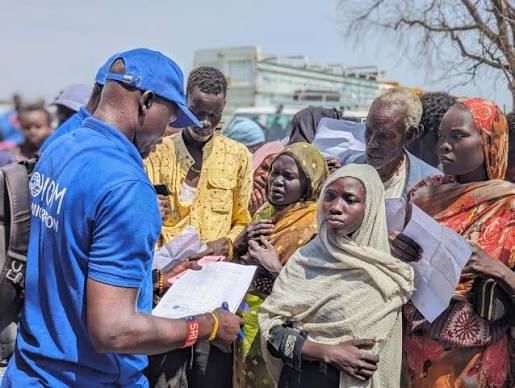
Credit: IOM
More than 38,000 people moved within and across South Sudan’s borders in June, with returns from displacement driving the majority of movements, according to the latest Flow Monitoring Registry report released by the International Organization for Migration (IOM).
The report recorded 38,136 individual movements at 13 Flow Monitoring Points across the country during the month, averaging 1,271 movements per day. Incoming cross-border movements accounted for 20,116 people (53 percent), while 13,278 people (35 percent) moved within South Sudan. Another 4,646 people (12 percent) exited the country, and 96 people were recorded in transit to non-neighbouring countries.
IOM said 37 percent of all recorded movements were linked to returns from displacement, largely involving people returning from Ethiopia to Jonglei and Upper Nile states after fleeing conflict in Akobo and Maiwut counties. Family-related travel accounted for 27 percent of movements, followed by 15 percent returning from voluntary travel and 6 percent travelling for economic reasons.
The report showed that Ethiopia was the largest source of incoming cross-border movements with 15,388 arrivals, followed by Uganda (3,028), the Democratic Republic of the Congo (964) and Kenya (632). Jonglei State received the highest number of arrivals, followed by Central Equatoria and Upper Nile states.
Boat transport remained the most common means of travel, accounting for 41 percent of all movements. Another 20 percent of travellers moved on foot, while 15 percent travelled by air and 11 percent used buses.
The monitoring exercise also identified vulnerable travellers, including 3,292 pregnant or lactating women, 1,240 older people requiring care, and 768 unaccompanied children.
Despite security-related access constraints at some monitoring locations, IOM said the registry continues to provide critical data to support humanitarian operations, development planning and government decision-making. The agency noted that the findings represent movements recorded at selected monitoring points and are not statistically representative of all internal and cross-border movements in South Sudan.