Food basket cost rises 1% in South Sudan, WFP says
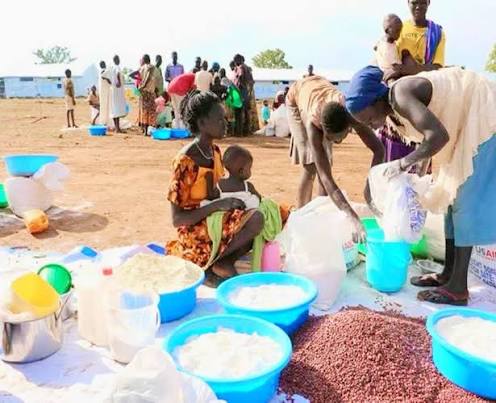
The average cost of a standard food basket in South Sudan rose 1% week-on-week to 129,671 South Sudanese pounds per person in August, driven in part by rising demand in Eastern Equatoria, according to the World Food Programme.
The WFP said the cost of the food basket increased 9% in Eastern Equatoria during the week of Aug. 17-23 as a prolonged dry spell in Kapoeta South pushed more people to migrate in search of food, increasing demand in local markets.
Food basket costs also rose 4% in Warrap and 2% in Northern Bahr el Ghazal. Prices declined by 4% in Lakes and 1% in Jonglei and Western Equatoria, while costs remained unchanged in Central Equatoria and Unity.
The national monthly average also increased 1%, according to the WFP. The standard food basket includes 15 kilograms of cereals, 1.5 kilograms of pulses, 0.9 liter of cooking oil and 0.15 kilogram of salt.
Commodity prices showed significant variations across markets. Sorghum prices increased by 12% in Abyei, while Rumbek recorded a 17% decline. Wheat flour prices rose 65% in Rumbek but fell 29% in Aweil Town.
Bean prices increased 50% in Rumbek, while vegetable oil prices more than doubled in Old Fangak, rising 122%. In contrast, vegetable oil prices fell 50% in Mayom.
The WFP also reported increases in prices for salt, sukuma wiki, goats and other commodities in some markets, with Rumbek recording sharp movements across several products.
Fuel prices declined marginally by 1% on average during the week. Mayom recorded the sharpest drop, with fuel prices falling by half to 15,000 South Sudanese pounds per liter.
The parallel-market exchange rate remained relatively stable, with the U.S. dollar trading between 7,000 and 7,800 South Sudanese pounds. The WFP said the dollar traded above 7,500 pounds in Northern Bahr el Ghazal, Unity and Warrap, while rates were lower in the Equatorias and Jonglei.
The WFP said Rumbek and Mayom recorded particularly sharp price movements across multiple commodities during the reporting period.
The figures are based on price data collected from markets across South Sudan, including Juba, Bor, Bentiu, Malakal, Rumbek, Wau, Yambio, Yida and other locations.