Ebola Outbreak Deepens DR Congo’s Humanitarian Crisis Amid Mass
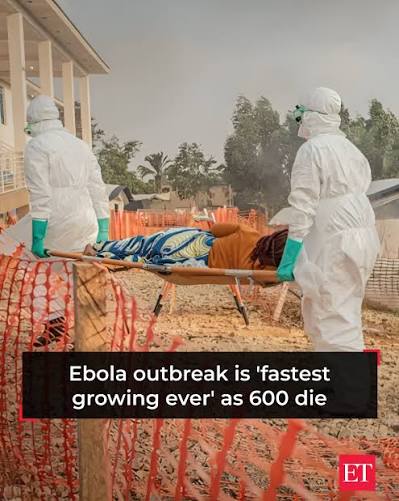
The Democratic Republic of the Congo (DRC) is facing an escalating humanitarian crisis as a rapidly expanding Ebola outbreak compounds the challenges posed by widespread conflict and one of Africa’s largest displacement emergencies.
The outbreak, driven by the rare Bundibugyo strain of the Ebola virus, continues to spread across the eastern provinces of Ituri, North Kivu and South Kivu, where insecurity, armed violence and fragile health systems are hindering response efforts. Health workers are also grappling with constant population movements that increase the risk of transmission and make disease surveillance more difficult.
The World Health Organization (WHO) declared the outbreak a Public Health Emergency of International Concern (PHEIC) on 17 May 2026, highlighting the growing international concern over the spread of the virus.
At the same time, conflict continues to uproot millions of people. According to the UN Refugee Agency (UNHCR), the DRC is home to 5.77 million internally displaced persons (IDPs), making it the country with the second-largest internally displaced population in Africa after Sudan. Another 4.26 million people have returned to their areas of origin, many facing difficult humanitarian conditions.
The DRC also hosts 603,511 refugees and asylum seekers, primarily from neighboring countries. These include 267,971 refugees from the Central African Republic, 196,225 from Rwanda, 90,358 from South Sudan, and 46,743 from Burundi.
Beyond its borders, the regional displacement crisis continues to grow, with more than 1.31 million Congolese refugees living in other African countries. Recent data also shows 52,066 people were repatriated from the DRC to neighboring states, while 23,911 Congolese refugees returned home during the same reporting period.
Humanitarian agencies have also warned that weaknesses in the country’s civil registration system are leaving many displaced people, particularly children and newborns, without legal identity documents. The lack of registration increases the risk of statelessness and limits access to education, healthcare and other essential services.
To address the challenge, UNHCR has joined the United Nations Legal Identity Programme, which aims to strengthen the country’s civil registration system and ensure vulnerable populations can obtain legal identity documents even during periods of crisis.
Aid agencies continue to urge greater international support to contain the Ebola outbreak, strengthen healthcare services, protect displaced communities and expand humanitarian assistance as the DRC confronts multiple, overlapping emergencies.