
A Kenyan tribunal has dismissed a legal challenge filed by a consumer rights organisation against Nigerian billionaire Aliko Dangote's planned $16 bil...
A Kenyan tribunal has dismissed a legal challenge filed by a consumer rights organisation against Nigerian billionaire Aliko Dangote's planned $16 billion oil refinery in Lamu County, removing one legal obstacle facing the major investment.The Public Private Partnerships Petition Committee dismissed a petition by the Consumers Federation of Kenya (COFEK), ruling that the organisation had failed to demonstrate that the proposed refinery qualified as a public-private partnership (PPP) project.In its ruling dated Oct. 30, the tribunal also found no legal basis for compelling the government to disclose documents relating to the project's financing and proposed public investment.COFEK had asked the tribunal to review approvals granted to the refinery and establish whether the project complied with Kenya's public-private partnership laws.The organisation also sought details of the Kenyan government's proposed investment, including the size of its potential stake, financing arrangements, shareholding structure and evidence of public participation.However, the committee ruled that the petitioner had not provided sufficient evidence to establish that the project fell under the PPP framework.The proposed refinery, known as the Dangote East Africa Petroleum Refinery and Petrochemicals project, is planned for Lamu's Indian Ocean coast and is expected to process up to 700,000 barrels of crude oil per day.The $16 billion investment is expected to include a refinery, petrochemical and fertiliser facilities, a power plant, storage infrastructure and pipelines. Construction is expected to take about 40 months, with commissioning targeted for 2030.Kenyan President William Ruto and Dangote officially launched the project on Sept. 30, 2026, describing it as a major investment expected to strengthen regional energy security, create employment and reduce dependence on imported petroleum products.Despite the latest ruling, the project continues to face separate legal challenges involving land ownership and environmental concerns raised by local residents.In September, 133 residents of Chandavai challenged the development, claiming that the land earmarked for the refinery was ancestral property occupied by their families for generations.A Kenyan court subsequently lifted an interim restriction on the project on Oct. 14, allowing construction preparations to proceed while the underlying land dispute continues.The refinery is expected to supply petroleum products to Kenya and other East African markets, potentially transforming the region's energy and industrial sectors.Photo Credit: Business Insider Africa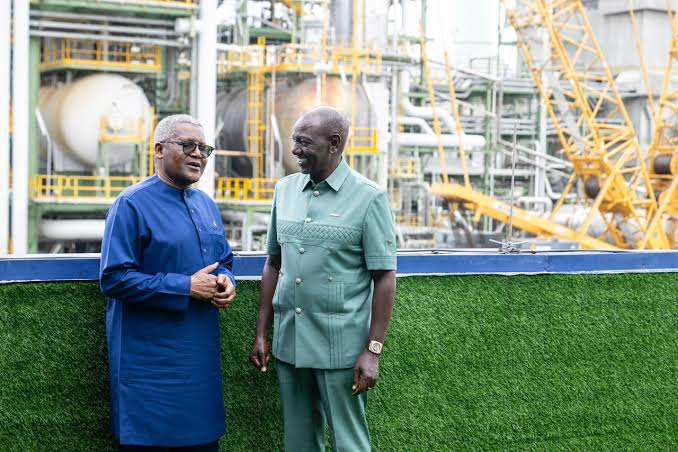
0 likes