El Niño Could Drive Severe Flooding and Displace Up to 3 Million People in East Africa
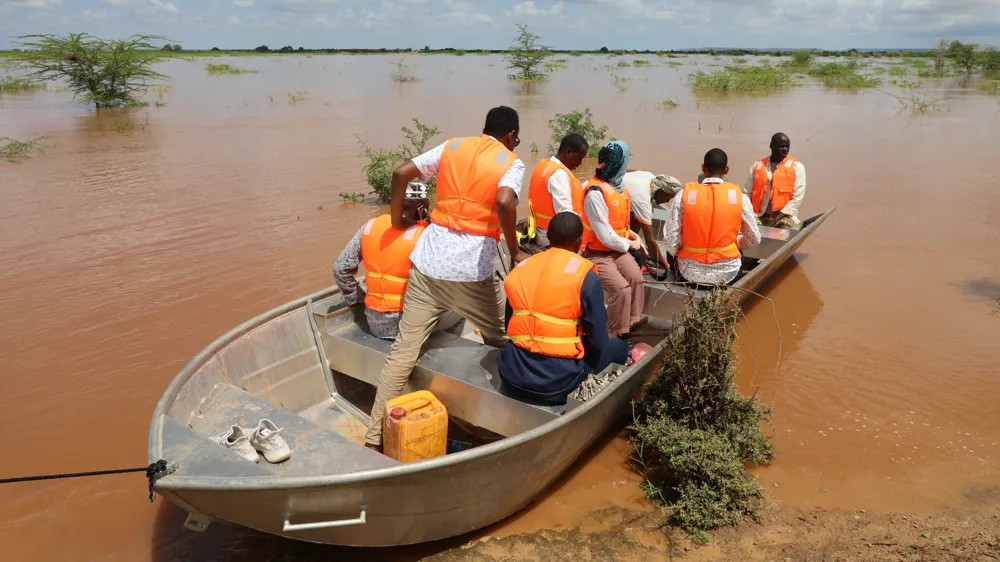
Credit: Danish Refugee Council
A strengthening El Niño climate pattern could significantly increase the risk of flooding across parts of East Africa, potentially displacing up to 3 million people by the end of 2026 under a worst-case scenario, the Danish Refugee Council (DRC) has warned.
The warning comes as the region prepares for the October-December rainy season, with climate forecasts pointing to above-average rainfall in several parts of the Greater Horn of Africa.
Somalia and Kenya are expected to face some of the highest risks, while southern Ethiopia and other parts of the region could also experience heavier-than-normal rainfall. The seasonal outlook indicates a 90% probability of enhanced rainfall over southern Ethiopia, central and southern Somalia and northeastern Kenya.
The DRC said its modelling shows that, in a worst-case scenario, as many as 3 million people could be displaced by flooding across the region by the end of the year.
The potential impact is particularly concerning for communities already affected by conflict, drought, food insecurity and displacement. Refugees and internally displaced people are among those considered most vulnerable because they often have limited resources and fewer options to protect their homes and livelihoods from climate shocks.
The region has also experienced major climate-related displacement in recent years. Severe flooding across Somalia, Kenya and Ethiopia in late 2023 affected more than 2 million people and displaced nearly 1.5 million by December, according to an analysis of previous El Niño impacts.
Above-average rainfall could improve water availability, pasture and agricultural conditions in some areas following prolonged dry periods. However, excessive rainfall could also trigger flash floods and river flooding, damage crops and infrastructure, disrupt transport and increase the risk of water- and vector-borne diseases.
The October-December rains are particularly important for the region. In parts of Ethiopia, Kenya and Somalia, the season can account for up to 70% of annual rainfall, making the timing and intensity of the rains critical for food production and livelihoods.
Humanitarian agencies and governments are being urged to strengthen preparedness and early-warning systems ahead of the rainy season.
For communities in flood-prone areas, early action could include reinforcing drainage systems, protecting critical infrastructure, pre-positioning emergency supplies and ensuring that evacuation and response plans are in place before heavy rains begin.
The latest forecasts are expected to evolve as the rainy season approaches. The World Meteorological Organization is due to issue its next El Niño update on Sept. 3.
The DRC said early preparedness is particularly important because climate shocks are increasingly overlapping with existing humanitarian crises, leaving displaced and vulnerable communities with fewer resources to recover from new disasters.