Insecurity Hampers Humanitarian Aid in Central African Republic as Ebola Preparedness Intensifies
Credit: UN News
Insecurity is disrupting the delivery of humanitarian assistance in northeastern Central African Republic, while authorities and humanitarian agencies are strengthening preparedness for a possible spread of Ebola from neighboring Democratic Republic of Congo, the United Nations said.
The UN Office for the Coordination of Humanitarian Affairs (OCHA), in its Situation Report No. 82 covering Aug. 19-25, said deteriorating security in Vakaga Prefecture, particularly around Am-Dafock, has increased pressure on already limited humanitarian resources.
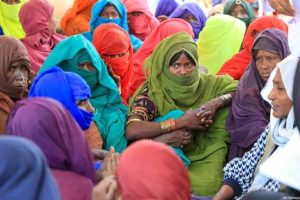
The situation has been compounded by population movements, including arrivals from Sudan, as well as secondary displacement by people leaving Am-Dafock in search of safety and livelihoods. Humanitarian organizations operating in Birao and Am-Dafock continue to provide health, water, protection and food assistance, but insecurity along major supply routes, military operations and the region’s remoteness are restricting the response.
In Haut-Mbomou Prefecture, about 3,655 people have fled five villages following the death of a village chief in Guinikoumba in June and abuses by armed groups along the Zemio-Dembia road, according to OCHA.
Some displaced people remain in the bush, while others have sought refuge in Dembia. The entire population of Guinikoumba, estimated at about 1,100 people, has relocated to Dembia.
The displacement could disrupt humanitarian operations along the road, including the construction of water, sanitation and hygiene infrastructure supported by the Central African Republic Humanitarian Fund.
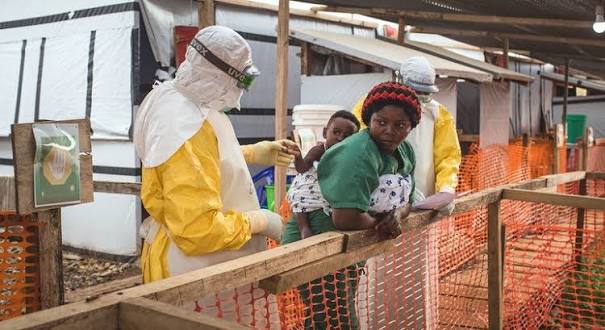
The UN’s Central Emergency Response Fund has allocated $3 million to support Ebola prevention efforts in the Central African Republic following confirmed cases in neighboring DRC.
The funding will support disease surveillance, isolation capacity, community engagement and access to water. No Ebola cases have been confirmed in the Central African Republic, OCHA said.
Since Aug. 21, a Ministry of Public Health team supported by the World Health Organization has been deployed to Mbomou Prefecture to strengthen surveillance and preparedness. The team is identifying potential isolation facilities, establishing screening points and increasing community awareness.
Mbomou is considered a high-risk area because of its proximity to Bas-Uele Province in DRC, where a confirmed Ebola case was recently reported.
Despite security challenges, aid agencies continued delivering assistance in several parts of the country.
Between Aug. 15 and 21, 875 vulnerable households in Batangafo and Benzambé, Ouham-Fafa Prefecture, received food security assistance. Plan International and its partners distributed cereals, pulses, oil and salt to 667 households, while Welthungerhilfe provided 208 households with small livestock to support livelihoods and food security.
In Bouar, more than 1,000 internally displaced people received essential household items and water, sanitation and hygiene kits following armed clashes in Abba-Bogani that displaced 203 households, or 1,015 people.
OCHA also reported that 205 households affected by heavy rains in Ndjo received non-food items, including blankets, mats, jerry cans, kitchen utensils and mosquito nets.
In Vakaga, the International Rescue Committee launched activities at a child-friendly space in Tiringoulou, where 149 children participated in recreational and psychosocial support activities.
Community leaders also received awareness training on gender-based violence and available services for survivors, while discussions were held on civil documentation and the right to legal identity.
In Mbomou, a UNHCR partner documented 19 protection incidents between Aug. 17 and 19. Five survivors of gender-based violence were referred for medical services, while another person was referred for psychosocial support.
OCHA estimates that 2.3 million people in the Central African Republic need humanitarian assistance, with 1.3 million targeted for assistance. The country had 433,674 internally displaced people as of July 31, while the humanitarian response requires $264.1 million, of which $111.97 million, or 42.1%, had been received as of Aug. 20.