Government, UNDP Launch $1.7 Million Aweil State Reference Laboratory to Strengthen Disease Surveillance
By Sasuk Taban
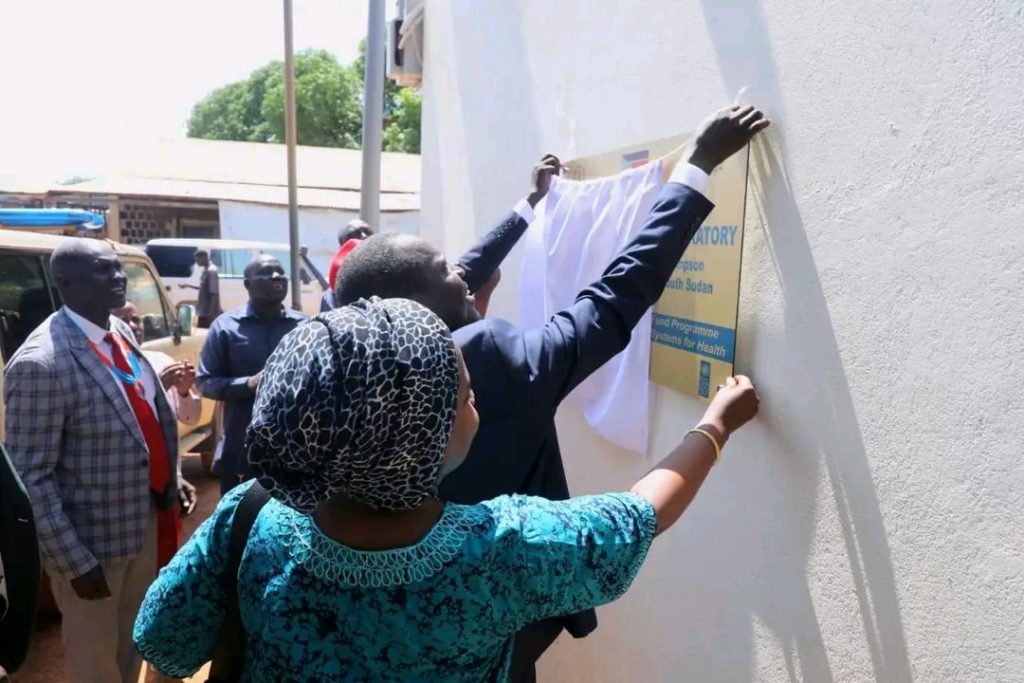
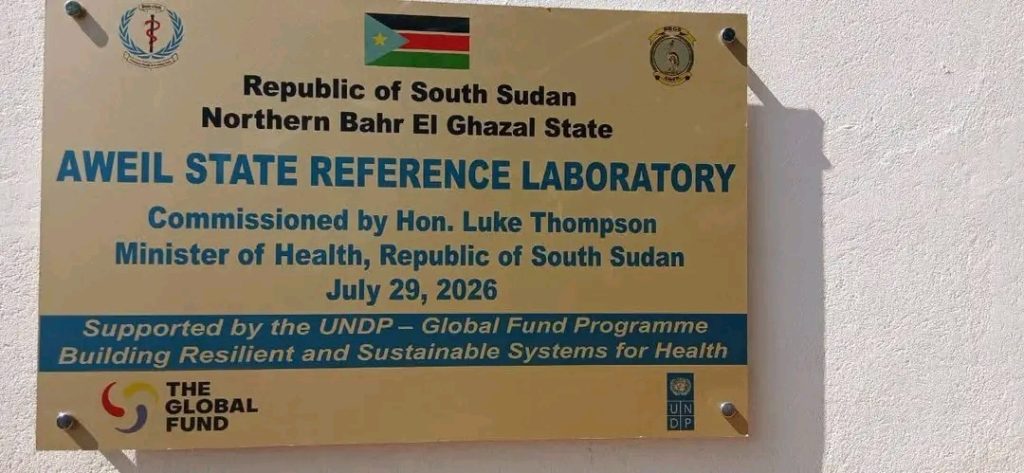
The Government of South Sudan, in partnership with the United Nations Development Programme (UNDP), has officially commissioned the Aweil State Reference Laboratory, a 150-kilowatt solar power system, and a modern medical incinerator in a $1.7 million investment aimed at strengthening the country’s health security and disease surveillance.
The project, funded by the Global Fund through the COVID-19 Response Mechanism (C19RM) and managed by UNDP, was handed over to the Ministry of Health during a ceremony at Aweil State Hospital.
The new laboratory is expected to improve diagnostic services, disease surveillance, and emergency preparedness in Northern Bahr el Ghazal and the wider Greater Bahr el Ghazal region, particularly as South Sudan continues to receive refugees and returnees fleeing the conflict in neighboring Sudan.
Health officials said the facility will enhance early detection of disease outbreaks, support cross-border health monitoring, provide timely laboratory data for public health decision-making, and improve the safe disposal of medical and hazardous waste.
The laboratory is equipped with modern diagnostic equipment, furniture, and workstations, while the newly installed 150-kWp solar photovoltaic system, supported by a 200-kWh battery storage unit, will provide uninterrupted electricity for 24-hour laboratory operations and critical hospital services. A medical incinerator has also been installed to strengthen infection prevention and environmentally safe healthcare waste management.
Speaking during the commissioning ceremony, Minister of Health Dr. Luke Thompson Thoan Teny described the project as a major milestone in strengthening South Sudan’s health system.
He praised UNDP for delivering the project as planned and urged local authorities and the Ministry of Health to ensure the facility is properly maintained to serve future generations.
UNDP Deputy Resident Representative for Programmes Sheila Ngatia said the investment represents more than the construction of a laboratory, calling it a strategic contribution to South Sudan’s health security, resilience, and sustainable development.
“As the Principal Recipient of the Global Fund grants in South Sudan, UNDP remains committed to supporting the Government in building resilient health systems capable of responding to routine health needs and public health emergencies,” she said.
Ministry of Health Undersecretary Dr. Francis Oromo Seriano said the Aweil Reference Laboratory is larger than the National Public Health Laboratory in Juba and was strategically located along the country’s northern corridor to improve surveillance of diseases linked to increased population movement.
He added that the facility would also support research and higher learning institutions while serving as a model for similar laboratories planned in other parts of the country, including Yambio.
Northern Bahr el Ghazal State Minister of Health Dr. Riiny Riiny Lual welcomed the investment, saying reliable solar power would ensure uninterrupted delivery of essential health services at Aweil State Hospital, while the new incinerator would improve infection prevention and environmental protection.
The commissioning ceremony was attended by senior national and state government officials, including Deputy Governor Dr. Tong Lual Ayat, Ministry of Health Undersecretary Dr. Francis Oromo Seriano, State Minister of Health Dr. Riiny Riiny Lual, and UNDP Deputy Resident Representative Sheila Ngatia.