UN Women Invests in Youth-Led Initiatives to Advance Women’s Economic Justice
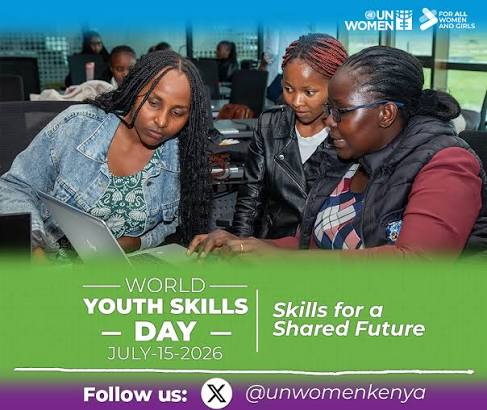
Credit: UN Women Kenya
UN Women has launched its first Economic Justice and Rights (EJR) Action Coalition Small Grants Initiative, investing in youth-led organizations to accelerate women’s economic empowerment through grassroots innovation, advocacy, and community-based solutions.
Supported by the Government of Germany, the initiative awarded US$5,000 grants to eight youth-led feminist organizations across Africa, Asia, and Latin America.
The funding enabled locally driven projects aimed at removing barriers that prevent women from fully participating in the economy.
According to a report released by UN Women, the initiative demonstrated that relatively small investments can generate meaningful change when local youth organizations are empowered to lead development efforts.
In South Sudan, the Wider Aid & Development Agency (WADA-SS) strengthened women’s economic resilience in conflict-affected Aweil by providing trauma-awareness training and establishing Village Savings and Loan Associations (VSLAs). More than 60 women gained access to community-based savings and credit services, helping improve their financial independence.
In Uganda, Global Learning for Sustainability tackled the unequal burden of unpaid care work by training 20 Care Economy Fellows, advocating for expanded social protection programmes, and introducing labour-saving technologies, including washing machines, to reduce the time women spend on domestic chores.
In Kenya, the Women Students Mentorship Association (WOSWA) trained 109 female university students in entrepreneurship and design thinking while organizing campus pop-up markets that connected young entrepreneurs with more than 1,000 consumers.
In Cameroon, two youth organizations implemented climate-smart agriculture and vocational skills programmes that supported marginalized young mothers through sustainable onion farming, tailoring, and business development training.
In Burkina Faso, ANGEL-SD trained rural women to manufacture energy-efficient cookstoves and eco-friendly charcoal, creating new income opportunities while promoting environmental sustainability.
In Pakistan, RIHRDO provided tailoring and digital financial literacy training to 60 young women. Participants produced and sold more than 120 garments at a local trade fair, improving their access to income-generating opportunities.
Meanwhile, in Panama, indigenous youth organization ANYAR combined traditional knowledge with green economy practices by training young people in organic farming, establishing community gardens, and publishing a gastronomy recipe book to promote sustainable tourism.
UN Women said the initiative demonstrates that technical skills training alone is not enough to achieve lasting economic empowerment.
The report recommends that future programmes combine skills development with mentorship, access to finance, market opportunities, and policy advocacy to ensure women can build sustainable livelihoods and overcome structural barriers to economic participation.
The organization said the pilot initiative highlights the important role youth-led organizations can play in advancing women’s economic justice when they are provided with flexible funding and community-driven support.