DRC Confirms Over 1,000 Ebola Cases Amid Ongoing Outbreak
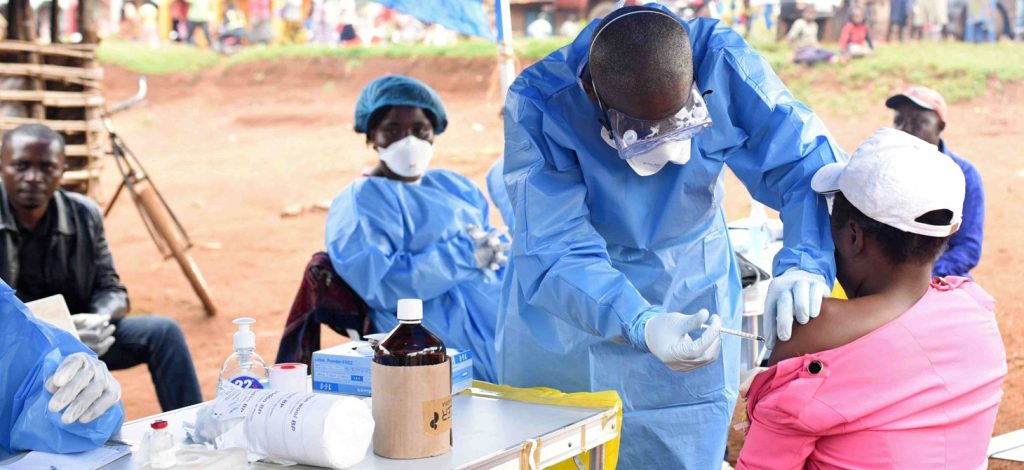
As of 23 June, the Democratic Republic of the Congo (DRC) had confirmed more than 1,000 cases of the Ebola disease caused by the Bundibugyo virus (BVD) as per the World Health Organization; as of 24 June, an additional 20 cases had been confirmed in Uganda. Cross-border movements, displacement and population flows are shaping disease transmission, requiring an urgent, rapid response to save lives and protect people on the move, while mitigating regional health risks.
Key highlights :
Over 1.7 million health screenings conducted at points of entry and control across affected countries.
117,258 individuals reached through risk communication and community engagement campaigns in cross-border communities.
Strengthened surveillance and preparedness at 35 PoEs and 57 PoCs in DRC, and additional support in Ethiopia, Rwanda, and South Sudan.
Deployment of critical supplies, including thermal scanners and hand sanitizer dispensers, and training of frontline personnel.
The outbreak is unfolding in a context where 14.9 million people in DRC alone require humanitarian assistance. Insecurity, access constraints, and community resistance continue to impact response operations.
There is an urgent need for sustained, multisectoral support to:
Scale up humanitarian response in high-risk and hard-to-reach areas.
Strengthen cross-border coordination and surveillance.
Ensure inclusion of internally displaced persons, returnees, and migrants in preparedness and response plans.
Given unfolding public health risks, IOM’s preparedness and response efforts focus on supporting cross-border communities, points of entry (PoEs) and points of control (PoCs) to inform and guide broader public health interventions. In line with the Inter-Agency Standing Committee (IASC) system-wide scale-up activation for infectious disease events, IOM is scaling-up its response, enabling enhanced surge support, operational capacity and coordination across affected countries.
IOM’s response continues to focus on Priority 1a countries, DRC and Uganda, where active outbreak response operations are ongoing, and Priority 1b countries, Burundi, Rwanda and South Sudan, which face an elevated risk of cross-border transmission.
Preparedness interventions are also being implemented in other at-risk countries across the region, including Priority 2 countries, Angola, the Central African Republic, Ethiopia, Kenya, the Republic of the Congo, the United Republic of Tanzania and Zambia, to strengthen readiness and enhance regional health security, while supporting continent-wide efforts in countries, particularly as co-lead of the PoE technical working group at the continental level.