Maiwut County Faces Critical Child Malnutrition Amid Severe Food Insecurity, Survey Finds
Credit: WFP
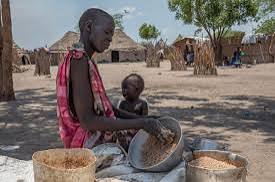
Children in Maiwut County of South Sudan’s Upper Nile State are facing critical levels of acute malnutrition as food insecurity, poor sanitation, disease outbreaks, and limited humanitarian access continue to threaten vulnerable communities, according to a new SMART survey conducted by REACH Initiative and Relief International.
The assessment, carried out between March 16 and 24, 2026, found that Global Acute Malnutrition (GAM) among children aged 6 to 59 months stood at 15.1 percent, exceeding the World Health Organization’s emergency threshold and placing the county in IPC Acute Malnutrition Phase 4 (Critical).
The survey assessed 479 households and 507 children across 40 villages in Maiwut County.
Researchers found that the combined acute malnutrition rate reached 18.1 percent, while 3.5 percent of children were suffering from Severe Acute Malnutrition (SAM). In addition, 16.9 percent of children were stunted and 19.6 percent were underweight, highlighting both chronic and recent nutritional deficiencies.
Food insecurity remains widespread across the county. Nearly 25 percent of households recorded poor food consumption scores, while 43 percent had borderline food consumption. Around 80 percent of households experienced moderate hunger, with many relying on emergency and crisis-level coping strategies to survive.
The report attributes the worsening nutrition crisis to persistent conflict, displacement, cross-border arrivals from neighboring Sudan, recurrent flooding, poor agricultural production, and limited access to humanitarian assistance.
Water, sanitation and hygiene conditions also remain a major concern. About 68 percent of households rely on unimproved water sources, while 91 percent do not treat their drinking water before use. Open defecation was reported in 92 percent of households, increasing the risk of diarrhoeal diseases that contribute to child malnutrition.
Health challenges continue to compound the crisis. One in four children surveyed had been ill during the two weeks preceding the assessment, with fever, diarrhoea, and cough being the most commonly reported illnesses. Although Vitamin A supplementation and deworming coverage exceeded 90 percent, only 27 percent of children had received measles vaccination.
Despite the alarming nutrition situation, mortality indicators remained below emergency thresholds, with a Crude Death Rate of 0.38 and an Under-Five Death Rate of 0.40 deaths per 10,000 people per day.
The report concludes that overlapping challenges—including inadequate food access, poor dietary diversity, unsafe water and sanitation, disease outbreaks, and limited healthcare services—continue to place children and households at high risk of worsening malnutrition.
REACH Initiative and Relief International called for expanded nutrition treatment, improved food assistance, better access to clean water and sanitation, strengthened healthcare services, and sustained humanitarian support to prevent further deterioration of the situation in Maiwut County.