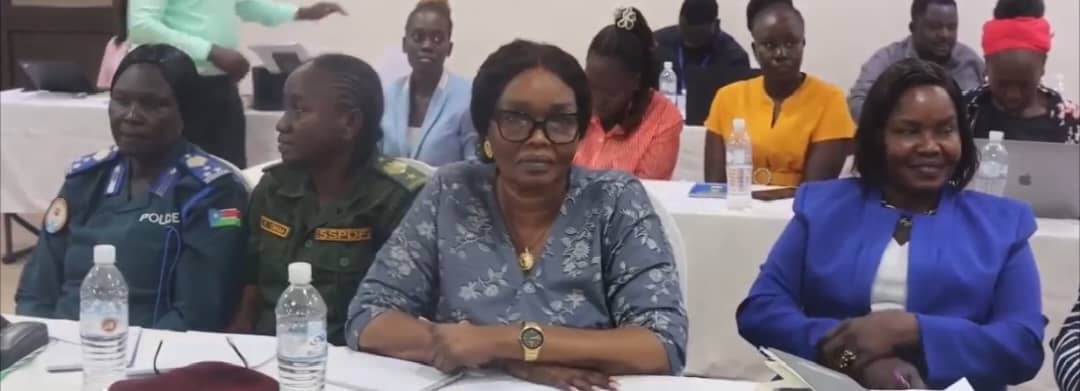
Photo: Dr. Angelina Mathijo Bazugba, a women, peace and security analyst and assistant Professor at the University of Juba.
Women leaders in South Sudan have called for stronger legal protections and greater political representation as the country prepares for elections, warning that recent declines in women’s participation in senior leadership risk reversing progress towards gender equality.The call was made during a two-day consultative workshop held in Juba on October 20–21, organized by the Centre for Inclusive Governance, Peace and Justice (CIGPJ), with support from Norwegian People’s Aid (NPA) and the Swiss Mission.Held under the theme “No Regression: Protecting Women’s Gains and Strengthening Women’s Influence in South Sudan’s Political Transition,” the meeting brought together more than 50 participants, including women political leaders, former and current public officials, civil society representatives, youth groups, development partners and international organizations.In a communiqué jointly presented by women leaders and read by Angelina Bazuka at the closing of the two-day consultative workshop in Juba on Wednesday, the women leaders said women’s representation in senior leadership had declined under the current caretaker government, citing a drop from 26 to 15 percent at the national level and from 31 to 22 percent across national and state leadership structures.The participants expressed concern that the figures fall short of the minimum 35 percent representation commitment provided for under the 2018 Revitalized Agreement on the Resolution of the Conflict in South Sudan (R-ARCSS).They attributed the persistent underrepresentation of women to structural barriers, cultural stereotypes, insecurity, limited enforcement of gender quotas and shrinking civic space.The communiqué also highlighted concerns over the lack of gender advisers in key decision-making positions at national and state levels, as well as fears of electoral violence and the continued displacement of communities.The women leaders called on President Salva Kiir to prioritize the passage of key legislation, including the Anti-Gender-Based Violence Bill, Women’s Empowerment Bill, Women’s Enterprise Fund Bill and Family Law Bill.They also urged the Political Parties Council to develop gender policies for political parties in line with affirmative action commitments and called for the appointment of gender advisers in the Office of the President and caretaker state governments.On electoral participation, the participants called on the National Elections Commission to establish a Women, Peace and Security situation room to monitor and address issues affecting women during the electoral process.They further recommended deploying trained women security officers to polling stations, establishing gender desks at polling centres and allocating resources for women candidates, civic education and voter awareness campaigns.The communiqué also urged the caretaker government to create conditions that would allow internally displaced people and refugees to return and participate in elections and national development.The participants emphasized the importance of solidarity among women across political, ethnic and social divisions, describing collective action as essential to protecting their gains and strengthening their influence in governance.They called on the Ministry of Gender, Child and Social Welfare and its partners to strengthen the Women’s Union and other women’s groups to coordinate advocacy and promote women’s representation in electoral monitoring bodies.The workshop was aimed at developing a collective agenda to safeguard women’s political participation and ensure they have a meaningful role in shaping South Sudan’s political transition.The participants concluded by condemning any regression in women’s participation in nation-building and reaffirming their call for progress towards equal representation and decision-making.“No Regression! Forward Ever! Backward Never!” the communiqué stated.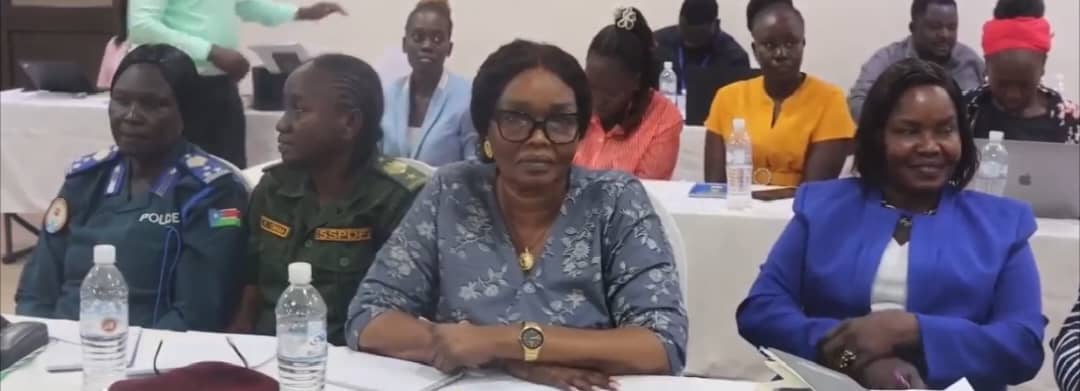
0 likes