South Sudan, Uganda Sign MoU to Strengthen Customs Cooperation
By: Emmanuel Patrick Laku | SSRA Media
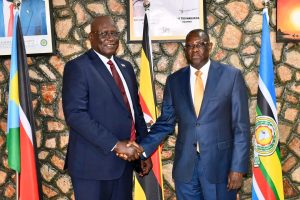
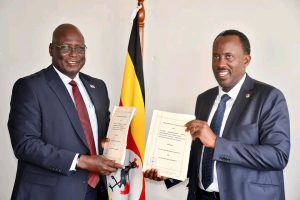
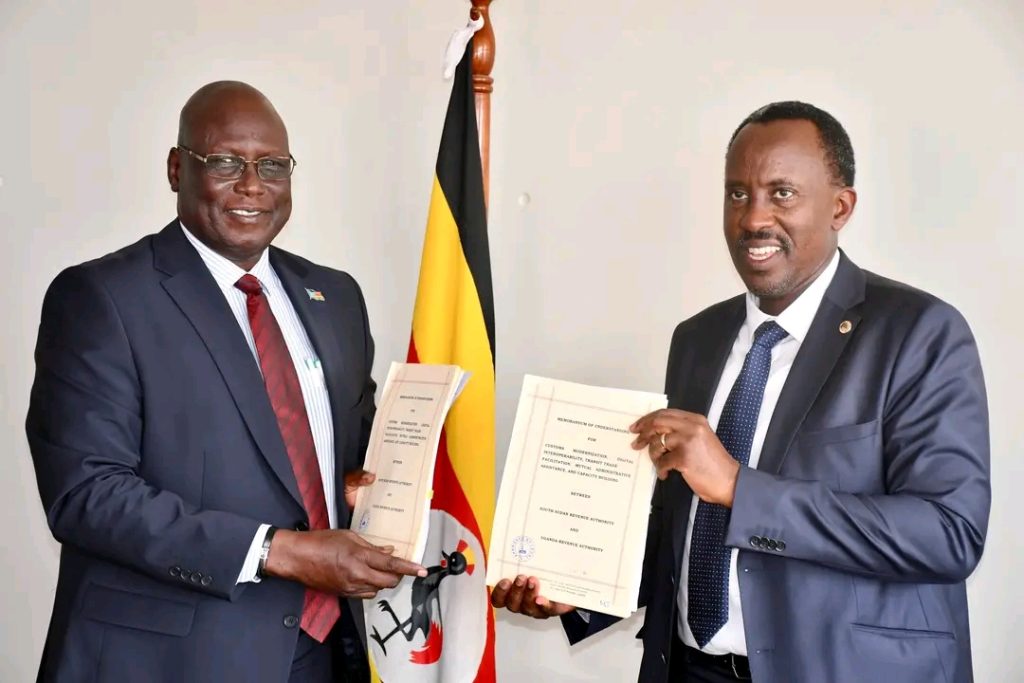
The South Sudan Revenue Authority (SSRA) and the Uganda Revenue Authority (URA) have signed a Memorandum of Understanding (MoU) aimed at strengthening customs cooperation, facilitating legitimate cross-border trade and improving revenue protection between the two countries.
The agreement covers customs modernisation, digital interoperability, transit trade facilitation, mutual administrative assistance and capacity building, while providing a framework for closer coordination on the movement and control of goods along the South Sudan-Uganda trade corridor.
The MoU is the third agreement between the two revenue authorities. However, officials say it introduces new areas of collaboration that were not included in previous agreements.
Uganda Revenue Authority Commissioner General John Musinguzi Rujoki highlighted the enforcement of the electronic permit (e-permit) system as one of the new areas of cooperation.
“There are new areas of collaboration which we didn’t have in the previous MoU which we need to bring on board in this MoU. One of them is the enforcement on the use of e-permit, which has greatly improved the revenue collections in South Sudan but also has greatly improved the controlling of goods that go to South Sudan and come back to Uganda without paying the right taxes.”
Rujoki said the enhanced cooperation benefits both countries by strengthening revenue protection and limiting opportunities for the diversion of goods and other practices that undermine fair competition.
“Our MoU and the joint collaborative efforts we have between our two sister agencies are aimed at facilitating legitimate trade, but also fighting all illegitimate schemes and making sure that the playing field is levelled. So all these initiatives will help every genuine trader or importer to play in a fair environment.”
He added that some of the measures agreed under the new framework can be implemented immediately, including procedures related to the change of destination of goods.
The issue of changing the declared destination or rerouting goods destined to South Sudan has been among the areas discussed by the two revenue authorities as part of efforts to strengthen border control and improve customs compliance.
South Sudan Revenue Authority Commissioner General Ambassador Moun Deng Ajuet said the two sides have agreed on a mechanism to address issues arising from the implementation of the agreement.
“The implementation is going to be done in three layers: one, an oversight board that will be chaired by the CGs in both countries; the technical teams; and the team that is going to be in the field, which will report to the technical team and then to the board. Immediately, we will have a solution to any issues arising at our border.”
The implementation structure is expected to provide a mechanism for coordination between the two revenue authorities, with issues identified at the operational level escalated through the technical teams to the oversight board.
The agreement also provides for greater digital interoperability, enabling SSRA and URA to strengthen the exchange of customs information and improve coordination of their operations.
Other areas covered by the MoU include transit trade facilitation, mutual administrative assistance and capacity building, aimed at strengthening the technical and institutional capacity of the two revenue authorities.
The cooperation is expected to support legitimate traders and transporters by creating a more predictable and transparent trading environment, while strengthening measures against customs violations, tax evasion and the diversion of goods.
The two authorities will now focus on implementing the agreed measures and translating the commitments under the MoU into practical improvements in customs administration and border operations.
The SSRA remains committed to strengthening regional cooperation, improving customs compliance and facilitating legitimate trade while safeguarding public revenue.