ICRC urges stronger action against cluster munitions
Credit: ICRC
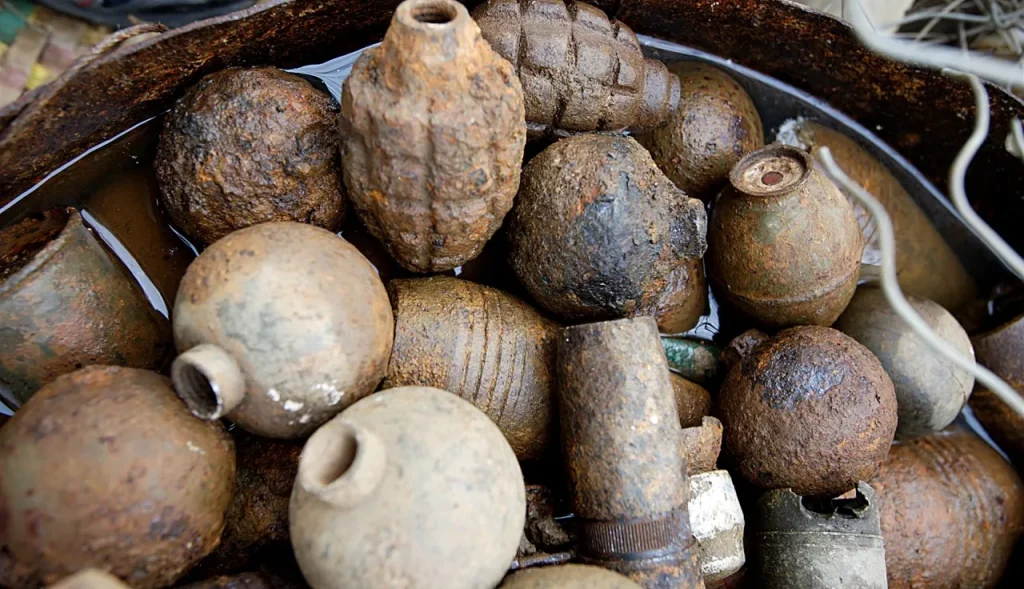
The International Committee of the Red Cross on Monday urged countries to strengthen efforts to eliminate cluster munitions, warning that the weapons continue to kill and maim civilians long after conflicts end.
Speaking at the Third Review Conference of the Convention on Cluster Munitions in Vientiane, ICRC Vice President Jürg Lauber called for renewed international commitment to a world free of the weapons.
“Cluster munitions are a horrible weapon,” Lauber said, warning that they cause widespread destruction during conflicts and leave behind unexploded remnants that threaten civilians for decades.
Lauber said cluster munitions continue to be produced, transferred and used by countries that have not joined the convention, resulting in new civilian casualties and contamination.
He also expressed concern over the slow pace of countries joining the treaty. The number of states parties has increased from 110 to 112 in the five years since the previous review conference, with three countries joining and one withdrawing.
The ICRC has witnessed the humanitarian consequences of cluster munitions, including children mistaking unexploded bomblets for toys and farmers being unable to cultivate contaminated land. The weapons also prevent communities from returning home and rebuilding their lives, Lauber said.
In 2025, ICRC teams in 28 countries provided physical rehabilitation services to more than 25,000 people suffering often lifelong injuries caused by explosive remnants of war.
Lauber said the injuries often have psychological and financial consequences for survivors and their families.
Despite the challenges, he highlighted progress made since the convention was adopted nearly two decades ago, including the destruction of stockpiles, the adoption of national legislation and the clearance of contaminated land.
He also welcomed the recent accession of South Sudan, Nigeria and Vanuatu to the convention, saying their participation demonstrated continued international support for the treaty.
Lauber urged states attending the conference to take three key steps: strengthen the stigma against cluster munitions, accelerate universal adherence to the convention and invest in its implementation.
He called on countries to destroy stockpiles, clear contaminated areas and adopt legal and administrative measures to implement the convention at the national level.
“These weapons must never become normalized,” Lauber said, urging sustained international efforts to ensure their use remains unacceptable under international norms.
He also called for greater political commitment to international humanitarian law, noting that 118 states have joined the Global Initiative to Galvanize Political Commitment to International Humanitarian Law.
The ICRC said it would continue supporting states through technical assistance, weapons contamination expertise, risk education and legal advice on national legislation and military procedures.
“The suffering caused by cluster munitions must not be allowed to continue for another generation,” Lauber said.
The Third Review Conference is being held in Laos, a country that continues to face the legacy of extensive cluster munition contamination from past conflicts.