UN humanitarian chief warns world is sending weapons to Sudan instead of aid
Credit: OCHA oPT
The United Nations humanitarian chief warned Monday that more than two-thirds of Sudan’s population needs lifesaving assistance as the country’s conflict intensifies, with drone attacks, displacement and severe funding shortages worsening the humanitarian crisis.
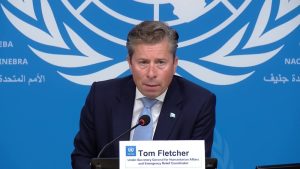
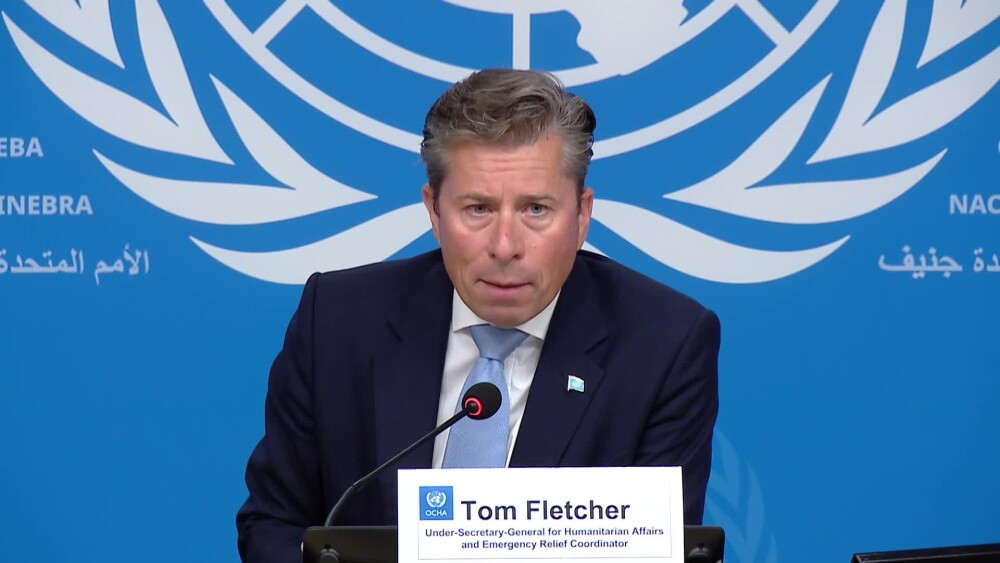
Tom Fletcher, the U.N. undersecretary-general for humanitarian affairs, told the U.N. Security Council that the international response to the crisis has fallen far short of what is needed.
“The people of Sudan need food, water and medicine,” Fletcher said. “Yet the world sends drones, weapons and mercenaries.”
More than 1,400 civilians were killed in Sudan during the first half of 2026, according to figures presented in the briefing, with more than 1,100 of the deaths attributed to drone strikes.
The escalation in drone warfare has increasingly targeted civilian areas and critical infrastructure. In El Obeid, the capital of North Kordofan state, strikes have hit markets, fuel stations and power and water infrastructure.
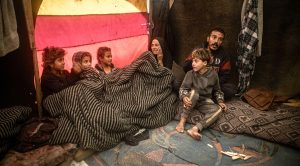
The violence has also driven about 15,000 displaced families into El Obeid since mid-July, placing additional pressure on already strained humanitarian services.
The U.N.’s humanitarian response plan for Sudan has received only about 40% of the $2.87 billion required for its prioritized operations.
The regional refugee response plan, which supports refugees and host communities in neighboring countries, is even more severely underfunded, with only 17% of its $1.59 billion requirement secured.
The United States remains the largest donor, providing nearly half of the funding, followed by the European Union, African Development Bank, United Kingdom, Canada, Germany, the Netherlands, Switzerland, France and Norway.
Despite the funding gaps and insecurity, humanitarian agencies reached nearly 11 million people with at least one form of assistance by midyear, or about 52% of their prioritized target.
Food assistance remains on track to reach the targeted 11.4 million people. Humanitarian agencies have also reached about 1.7 million people in areas classified as facing catastrophic levels of need.
However, operations remain behind schedule in education, health, shelter and clean water.
In South Kordofan, aid organizations continue to reach Dilling and Kadugli, but deteriorating roads during the rainy season are making access increasingly difficult.
Intensifying violence in the Nuba Mountains has isolated communities, damaged facilities and led to the detention of humanitarian workers, according to the briefing.
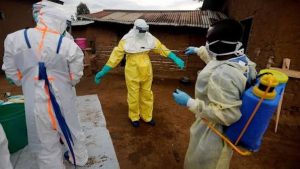
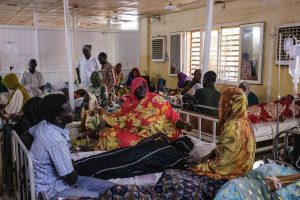
West Kordofan is also facing a severe cholera outbreak, while humanitarian operations remain limited.
In Blue Nile state, more than 370,000 displaced people are affected by heavy rains and deteriorating conditions. Cross-border attacks have also been reported in towns near the Sudan-Ethiopia border.
In Darfur, hundreds of thousands of people remain in urgent need of assistance, particularly around Tawila in North Darfur. The Adre crossing from Chad remains open, allowing humanitarian supplies to enter Darfur.
The U.N. said humanitarian operations have made progress in reducing bureaucratic obstacles and expanding logistics, including increasing humanitarian air services and moving some capacity from Port Sudan closer to Khartoum.
But heavy rains and the wet season continue to restrict access across North Darfur and South Kordofan.
Fletcher urged the Security Council and the international community to act more decisively to address the humanitarian crisis, warning that the people of Sudan cannot wait while the conflict continues to deepen.