Ebola Outbreak in DRC Claims More Than 1,800 Lives as Regional Response Intensifies
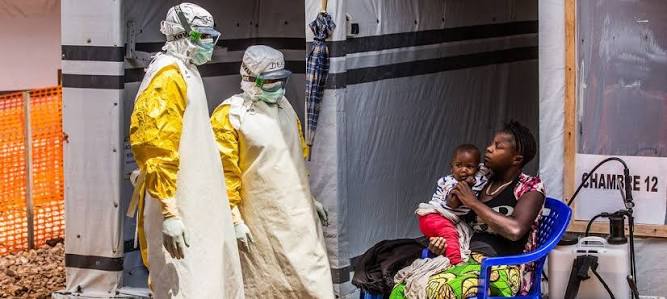
Credit: UN News
Health authorities and humanitarian organizations are intensifying efforts to contain the Democratic Republic of the Congo’s (DRC) largest and fastest-growing Ebola outbreak, which has spread across five provinces and crossed into neighboring Uganda.
Declared on May 15, 2026, the outbreak is caused by the Bundibugyo strain of the Ebola virus, for which there is currently no approved vaccine or specific treatment. The World Health Organization has classified the outbreak as a Public Health Emergency of International Concern.
According to official figures as of August 5, the DRC has recorded 3,973 confirmed Ebola cases and 1,801 deaths, representing a case fatality rate of 45.1 percent.
Beyond its devastating health impact, the outbreak is also triggering severe economic hardship across the region. A recent United Nations Development Programme (UNDP) assessment describes the crisis as a major poverty shock affecting the DRC, Rwanda, South Sudan and Uganda.
The report warns that travel restrictions and disrupted cross-border trade could cost the DRC more than US$1 billion in economic losses and eliminate an estimated 55,000 jobs. Ongoing insecurity in affected areas has also disrupted disease surveillance and limited access to routine healthcare services.
In the outbreak’s epicentre in Ituri Province, International Medical Corps (IMC) has expanded its emergency response by increasing treatment capacity and strengthening surveillance.
The organization has opened a new 100-bed Ebola Treatment Centre in Rwankole to ease pressure on the overcrowded 80-bed facility in Bunia. It is also operating a transit centre at the Kigonze camp for internally displaced people, where suspected Ebola patients are isolated while awaiting laboratory test results.
Additional treatment and transit centres are operating in Goma, Beni, Butembo and Katana to support case management and help contain the spread of the virus.
Alongside medical care, IMC is providing mental health and psychosocial support to patients, survivors and frontline health workers. Staff have been trained to deliver psychological first aid and counselling to people affected by the outbreak.
Neighbouring countries have also stepped up preparedness measures to prevent cross-border transmission.
Uganda declared the end of its active Ebola outbreak on July 28 following successful contact tracing and containment efforts. However, health teams remain deployed in high-risk border districts to strengthen surveillance and community awareness.
South Sudan has not recorded any confirmed Ebola cases, but authorities continue to prepare for potential importation of the virus. IMC is supporting the construction and operation of 24-bed Infectious Disease Units in Juba, Nimule and Yambio, while establishing triage and isolation facilities to detect suspected cases quickly.
Across the region, the coordinated response has achieved significant progress, with more than 305,500 Ebola screenings conducted, 988 patients admitted to specialized care units, 2,680 healthcare and community workers trained in infection prevention and control, and over 453,000 people reached through public awareness campaigns.
Health experts warn that sustained international funding, stronger health systems and continued community cooperation will be essential to bring the outbreak under control and prevent further regional spread.