Regional Ebola Response Intensifies as DRC Death Toll Reaches 828
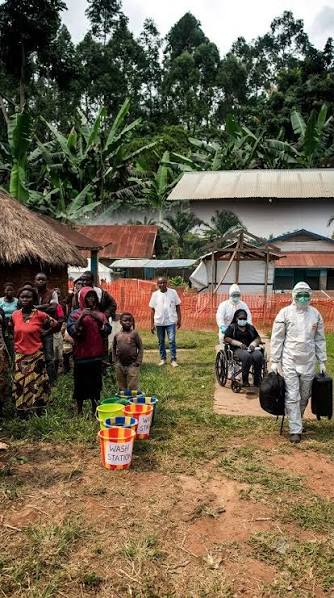
The International Organization for Migration (IOM) has intensified cross-border health screening and emergency preparedness efforts across East and Central Africa as the Bundibugyo Ebola virus disease outbreak in the Democratic Republic of the Congo (DRC) continues to pose a regional threat.
According to the latest update, the DRC had recorded 2,124 confirmed Ebola cases and 828 deaths as of July 15, 2026, making it the epicenter of the outbreak. Health authorities and humanitarian partners are strengthening surveillance and border health measures to prevent further cross-border transmission.
Uganda has reported no new Ebola cases since June 21, 2026, and is currently observing the mandatory 42-day enhanced surveillance period required before the outbreak can officially be declared over.
Meanwhile, Burundi, Rwanda, and South Sudan remain at heightened risk because of their proximity to the affected areas and the movement of people across shared borders. Additional preparedness activities are also underway in Angola, the Central African Republic, Ethiopia, Kenya, the Republic of the Congo, Tanzania, and Zambia.
Since the response began, IOM teams have supported more than 8.6 million health screenings at points of entry and control, reached 6.6 million people through risk communication and community engagement campaigns, and strengthened operations at 215 border screening points across affected and at-risk countries.
Despite these efforts, the response continues to face major challenges. IOM has appealed for $55.8 million to finance its regional preparedness plan but has received only $20.8 million, leaving a $35 million funding gap that threatens ongoing surveillance and response activities.
Security challenges in eastern DRC have also disrupted operations, forcing temporary closures of some health screening points. Humanitarian agencies are further working to improve monitoring of informal border crossings through Population Mobility Mapping to reduce gaps in disease surveillance.
The outbreak also threatens vulnerable displaced populations, with 152,991 people living across 67 IOM-supported displacement sites in Ituri, Tanganyika, and North Kivu provinces where overcrowding increases the risk of disease transmission.
In the Democratic Republic of the Congo, IOM supported operations at 27 formal points of entry and 76 checkpoints during the week of July 13–19, conducting 1,686,386 health screenings. The teams detected 74 health alerts, leading to 61 medical referrals, while two new screening checkpoints were established in Ituri Province.
In Uganda, health workers screened 34,784 travelers along border crossings without identifying any Ebola alerts. Authorities also distributed infection prevention and control kits to 32 high-risk border posts, while 66 regional health officials completed specialized mortality surveillance training.
In South Sudan, officials screened 165,920 travelers at border entry points. One suspected Ebola case was identified at the Nimule border post, where the individual was isolated and samples collected for laboratory testing. A national preparedness assessment also showed the country’s border health security readiness improved from 45 percent to 65 percent.
In Ethiopia, response teams carried out 184,865 health screenings at border crossings and Bole International Airport. Cross-border coordination with Somaliland continued to strengthen public health messaging, while regional preparedness activities expanded to include laboratory readiness and infection prevention measures in other African countries.
Health officials continue to emphasize that sustained funding, regional cooperation, and strengthened border surveillance remain essential to containing the outbreak and preventing further spread across the region.