Refugee Leaders Call for Increased Funding and Better Services at Uganda Engagement Forum
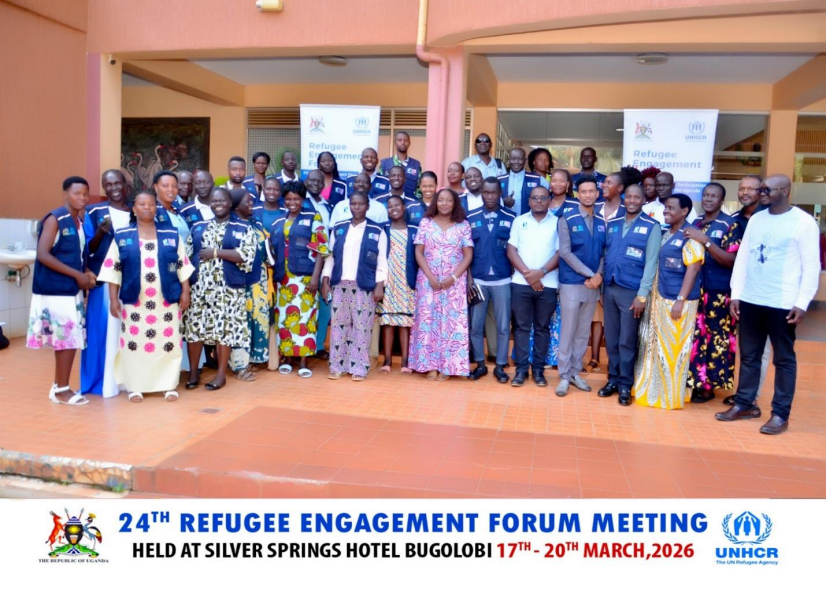
Refugee leaders from across Uganda have called for increased funding, improved healthcare, better education services and stronger livelihood support to address growing challenges facing refugee communities.
The concerns were raised during the 24th Refugee Engagement Forum (REF), held from 17 to 19 March 2026, where refugee representatives from settlements across Uganda met with government officials, UN agencies and humanitarian partners to discuss priorities for the country’s refugee response.
The Refugee Engagement Forum, established in 2018, provides refugees with a national platform to engage directly with the Comprehensive Refugee Response Framework (CRRF) Steering Group and contribute to policies affecting their communities.
Participants highlighted critical shortages of health workers, medicines, ambulances and referral services in refugee settlements, warning that funding cuts have weakened healthcare delivery. Refugee leaders also reported that limited referrals to national hospitals have forced some families to rely on traditional medicine because they cannot afford treatment costs in Kampala.
In the education sector, leaders cited overcrowded classrooms, a shortage of teachers, increasing school fees and limited scholarship opportunities, saying the challenges have contributed to rising school dropout rates, particularly among girls.
Food insecurity and limited livelihood opportunities were also identified as major concerns. Refugee representatives appealed for increased investment in agriculture, access to land, tree-planting initiatives and livelihood programmes to reduce dependence on humanitarian assistance.
Some leaders warned that worsening food insecurity has contributed to rising cases of child malnutrition and mental health challenges, including suicide among vulnerable households.
Protection issues also featured prominently during the meeting, with participants expressing concern over expired refugee documents, delays in registration and verification, and limited access to essential services for undocumented refugees.
Officials from the Office of the Prime Minister (OPM) and the United Nations High Commissioner for Refugees (UNHCR) acknowledged many of the challenges and said efforts are underway to recruit more health workers, strengthen education services and improve refugee documentation.
UNHCR also briefed refugee leaders on changes to Uganda’s refugee registration system, including the gradual transition from prima facie refugee recognition to individual Refugee Status Determination (RSD) for some asylum seekers. Refugee leaders were urged to encourage new arrivals to obtain asylum seeker certificates and avoid repeated movement between Uganda and their countries of origin.
The meeting also reviewed progress on previous recommendations, including expanding awareness of the UNHCR We-Link feedback platform, promoting the GROW Project for refugee women entrepreneurs and strengthening community protection mechanisms across refugee settlements.
During the forum, refugee leaders agreed on a list of priority issues to present to the upcoming Comprehensive Refugee Response Framework Steering Group meeting. These include increased funding for health and education, recruitment of more teachers and health workers, improved water and sanitation services, stronger referral systems, enhanced livelihood opportunities and greater inclusion of refugees in national development programmes.
Humanitarian partners reaffirmed their commitment to continue advocating for increased international support, while refugee representatives called for sustained dialogue to ensure refugee voices remain central to decision-making on Uganda’s refugee response.