South Sudan Food Crisis Deepens as 7.8 Million Face Acute Hunger, Donors Urged to Act
Credit: FAO
South Sudan Food Crisis Deepens as 7.8 Million Face Acute Hunger, Donors Urged to Act
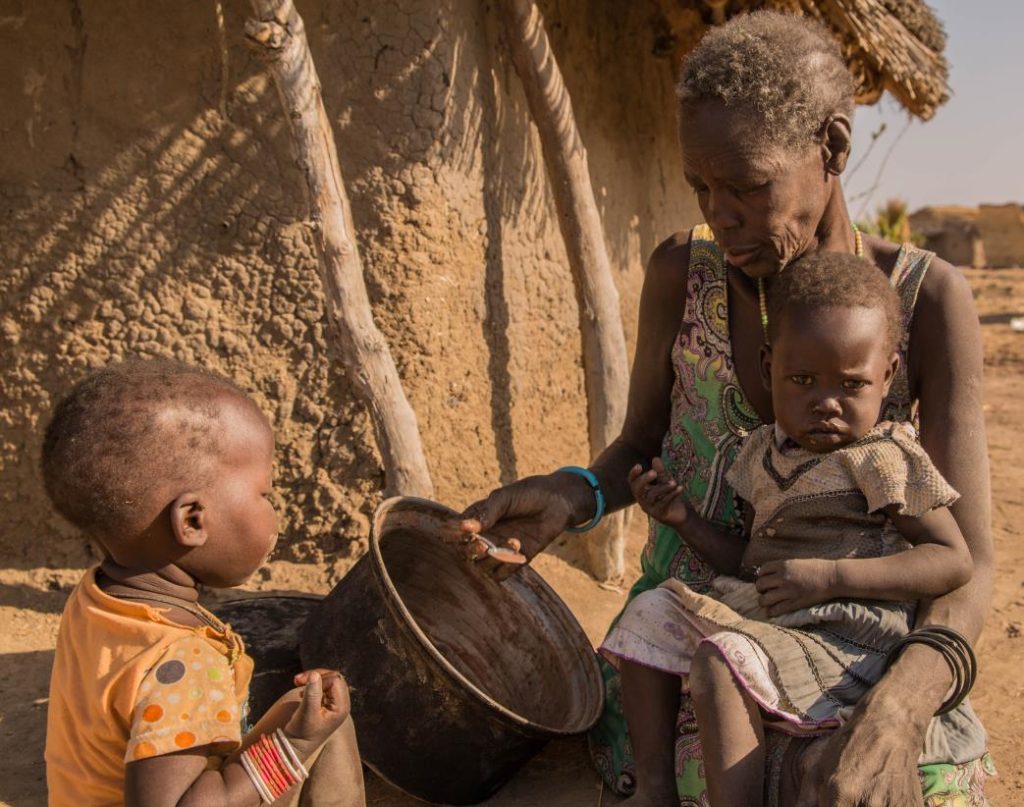
South Sudan is facing a rapidly worsening food security crisis, with 7.8 million people—about 55 percent of the population—expected to experience acute food insecurity between April and July 2026, according to the latest Integrated Food Security Phase Classification (IPC) analysis.
The report indicates that the number of people facing IPC Phase 3 (Crisis) or worse has increased by about 280,000 compared to projections made for the September 2025 lean season, underscoring the growing humanitarian emergency.
Humanitarian agencies warned that the current response is falling far short of the scale of need due to severe funding shortages. Available resources have been prioritized for people already facing Catastrophe (IPC Phase 5), areas at risk of famine, and selected Emergency (IPC Phase 4) hotspots, leaving millions of people in Crisis (IPC Phase 3) with little or no assistance.
More than 5.3 million people are already experiencing food consumption gaps and rapidly losing their livelihoods. Aid agencies cautioned that households in IPC Phase 3 can quickly deteriorate into Emergency during a single lean season if timely support is not provided.
They stressed that early humanitarian assistance is both lifesaving and cost-effective, as it helps prevent worsening hunger, displacement, loss of livelihoods, and higher future response costs. At the same time, agencies called for expanded and sustained support for people already in Emergency and Catastrophe, noting that many vulnerable households remain unreached or receive reduced food rations.
The IPC analysis also identified a risk of famine under a realistic worst-case scenario in Akobo, Nyirol, Luakpiny/Nasir, and Ulang, where conflict, displacement, restricted humanitarian access, market collapse, poor harvests, and failing health and nutrition services are driving extreme levels of need.
The food security situation has also deteriorated across parts of Jonglei, Upper Nile, Unity, Warrap, Western Bahr el Ghazal, and areas of Central and Western Equatoria due to escalating conflict, displacement, flooding, poor market access, and production shocks.
The crisis has been compounded by four consecutive years of severe flooding, which have destroyed crops, livestock, and critical infrastructure. Since April 2023, South Sudan has also received more than 700,000 returnees and refugees fleeing the conflict in Sudan, with over 70 percent settling in already vulnerable communities, placing additional pressure on limited resources and basic services.
Humanitarian partners are appealing to donors to urgently increase funding to expand food assistance, protect livelihoods, and prevent the crisis from worsening into famine in the most affected areas.