A Journey of Healing: My Experience with Appendicitis and the China Medical Team in South Sudan
By Wek Atak Kacjang
The Chinese medical team operating in Juba Teaching Hospital, stands as a beacon of hope in a nation where healthcare infrastructure remains severely limited.
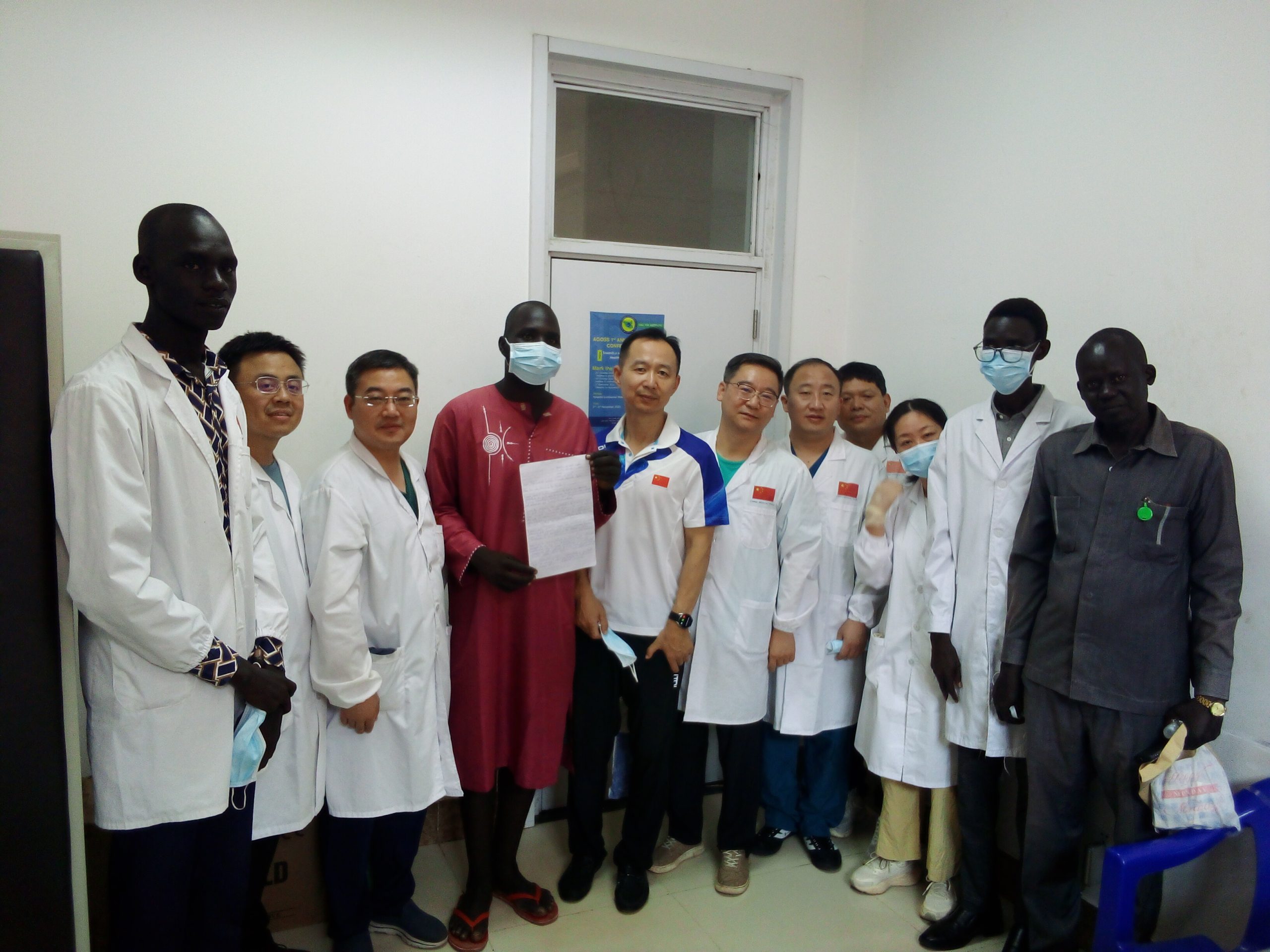
William Daniel, one of the patients shared his story of pain after a successful operation at Juba Teaching Hospital by a Chinese medical team. It is a story of perseverance and, ultimately, hope. This was the first time I had been diagnosed with appendicitis, even though I had been dealing with its debilitating effects for almost two years. What started as mysterious abdominal pain turned into a long journey of misdiagnosis, uncertainty, and finally, life-saving treatment that I could never have imagined would come from halfway around the world.
“For nearly two years, I lived with persistent pain that I couldn’t explain. It started gradually—a discomfort in my abdomen that I initially dismissed as something minor, perhaps related to diet or stress. But as weeks turned into months, the pain intensified. There were days when I could barely function, when the sharp, stabbing sensations in my lower abdomen made it difficult to work, to sleep, to live a normal life. The symptoms were confusing, sometimes subsiding for days before returning with renewed intensity. I tried various ways to undergo proper testing, visiting different healthcare facilities and seeking answers from medical professionals who might help me understand what was happening to my body,” said Daniel.
He added that doctors he consulted in Aweil suggested it might be gastritis or an ulcer. They prescribed medications for these conditions, and I followed their advice faithfully, hoping for relief. But the treatments didn’t work. The pain persisted, sometimes worse than before. I began to lose hope, wondering if I would ever find out what was truly wrong with him.
Everything changed when I decided to seek testing at the medical field hospital in Madol, Aweil East. The medical staff there took my condition seriously and conducted thorough examinations. After careful analysis and proper diagnostic procedures, it was finally confirmed: my appendix was inflamed. I had appendicitis—and had been suffering from it for far longer than anyone should.
The relief of finally having a diagnosis was overwhelming, but it was quickly replaced by a new concern: what would I do now? Appendicitis requires surgical intervention, and I knew that the resources in Aweil were limited. I needed to find a way to get the proper treatment, and I needed to find it quickly before my condition deteriorated further.
“ In my search for solutions, I contacted Dr. Michael Deng, a physician who works at Juba Teaching Hospital and collaborates with the China Medical Team. Dr. Deng has built a reputation for his dedication to patients and his connections with skilled medical professionals. I shared all the documents I had received from the medical field hospital in Madal with him, hoping he could provide guidance. Dr. Deng took my case seriously. He consulted with the China Medical Team at Juba Teaching Hospital, sharing my medical records and discussing my condition with their surgical experts. After their review, they advised me to fly from Aweil to Juba for the operation. It was a daunting prospect—traveling to another city, facing surgery in an unfamiliar place—but I knew it was my best chance for proper treatment.
Upon arriving in Juba, I first visited San Jacinto Hospital to confirm the diagnosis once more. I wanted to be certain before proceeding with surgery. The medical staff there conducted additional examinations, and their findings confirmed what the doctors in Madal had discovered: I indeed had appendicitis, and it required immediate surgical attention.
Dr. Wu Chunli, after the two months of work, our surgical team has been working here for over two months. So far, we have treated many patients every week.
“In one week, we see around 70 to 80 patients. Up to now, we have performed 10 operations, including, orthopaedic, and general surgery procedures. We have been working on these types of cases. In the future, we plan to treat even more patients. We will do our best to provide local patients with the necessary operations. We have seen a lot of patients, including some in critical and complicated conditions, but we also treat them. We not only have quality doctors but also utilize techniques like a telemedicine centre to seek help from China.
He added that they have a Multidisciplinary Team (MDT) where different departments from the China medical team can join us for joint consultations with patients. For example, if a patient needs general surgery, we can invite orthopaedic and internal medicine doctors to provide a comprehensive assessment. We strive to provide high-quality medical services and do our best to treat patients. In the past two months, we have successfully treated patients with post-operative infections. We provide daily care and treatment, leading to positive outcomes for patients with challenging conditions.
The South Sudanese people are kind and friendly, but we can feel that there is potential for the development of South Sudan.
Dr. Zhang Erqing, Chinese medical team leader, say after two months of work, the 13th batch of the China Medical Team in South Sudan, working at Juba teaching Hospital.
“We communicate and cooperate with each other, not only in treating patients but also in performing operations. We also transfer Chinese medical techniques to local doctors. We hope that not only patients benefit from the China Medical Team but also that local doctors receive assistance,”