Media Mentors Network commemorates media information literacy week
By Denis Ejulu
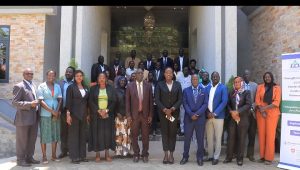
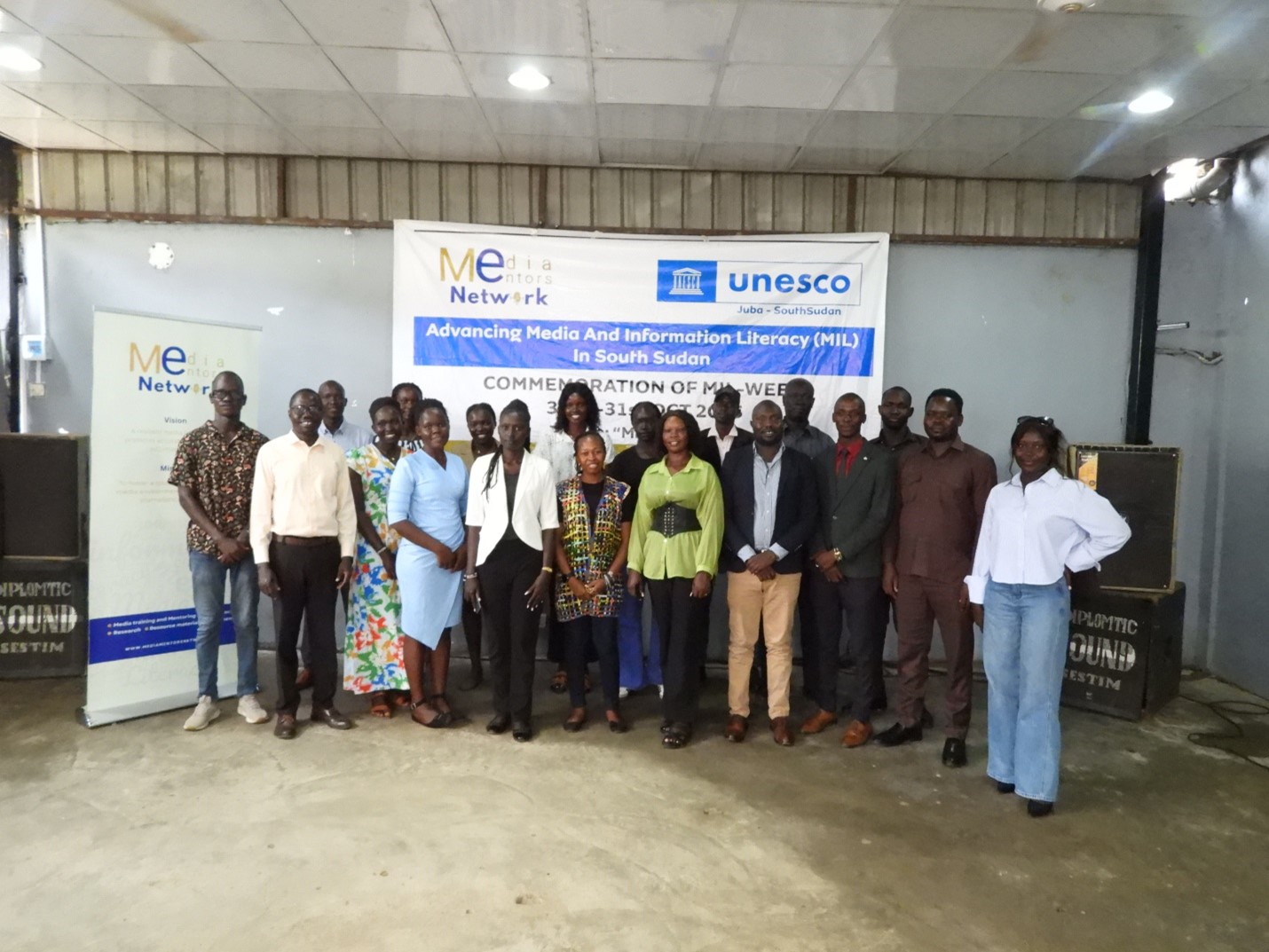
Media Mentors Network-a non-profit organization in South Sudan last Friday concluded a two-day training workshops on media information literacy with focus on the use of Artificial Intelligence (AI) in daily life.
The benefits and demerits of AI pose stern test to South Sudan-the youngest country which remains vulnerable to conflicts. As the country navigates the delicate balance of realizing sustainable peace amid challenges, the exposure to AI could either help to realize these goals or exacerbate the existing challenges.
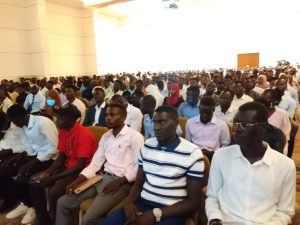
During the commemoration week of media information literacy, Media Mentors Network held training workshops starting at Juba Day Secondary School on Oct.30 and the second work shop at Scenius Hub on Oct.31 in Juba.
Lemi Isaac Yoseke, ICT specialist at Dynamic Consult Limited said that AI can both expose and amplify information, adding that the technology offers advantages and disadvantages across the world.
“On the good side of it, it can be used for fact- checking and detection (of misinformation) because something written by AI a human being cannot detect unless you also use another AI that is trying to detect whether the content is generated by human or it is generated by machine,” said Isaac at workshop held at Scenius Hub.
He also emphasized that digital literacy is no longer limited to the usage of a computer as it involves critical thinking.
“You need to educate others on how to think critically and basic understanding of what is AI generated and what is not AI generated,” said Isaac while discussing the impact of AI in the context of South Sudan, where there is limited exposure.
George Kenyi, head teacher of Juba Day Secondary School decried the spread of misinformation and fake news, saying they are harming peace and security in the country.
“There is a big impact of AI in our society because the speed outside there is very fast and some of us want to pull us very fast and in the long run it stresses us,” he said.
Stella Loki, a veteran journalist called on schools and institutions of higher learning to exert effort in instilling critical thinking among learners despite exposure to AI.
“The issue of media information literacy is of urgency because our context is very different. We are still in a country very vulnerable to conflict in as much as we have relative peace, still anything can take us to conflict if we don’t tread carefully,” she said.
Similar to her, Marina Modi, chairperson of Media Mentors Network said that teachers in primary and secondary schools should put emphasis on creating awareness on media information literacy.
Most of the panelists also called for broader collaboration between the government and partners to strengthen media information literacy.
In addition, they also stressed the need for establishing strong regulatory framework to combat misinformation, disinformation and fake news.