Judiciary calls for speedy court trials for remanded inmates as GVB Mobile Court is launched
By Kidega Livingstone
The judiciary has called for speedy court trials for the remanded inmates at Juba Central Prison to reduce the increasing number of prisoners in the cell.
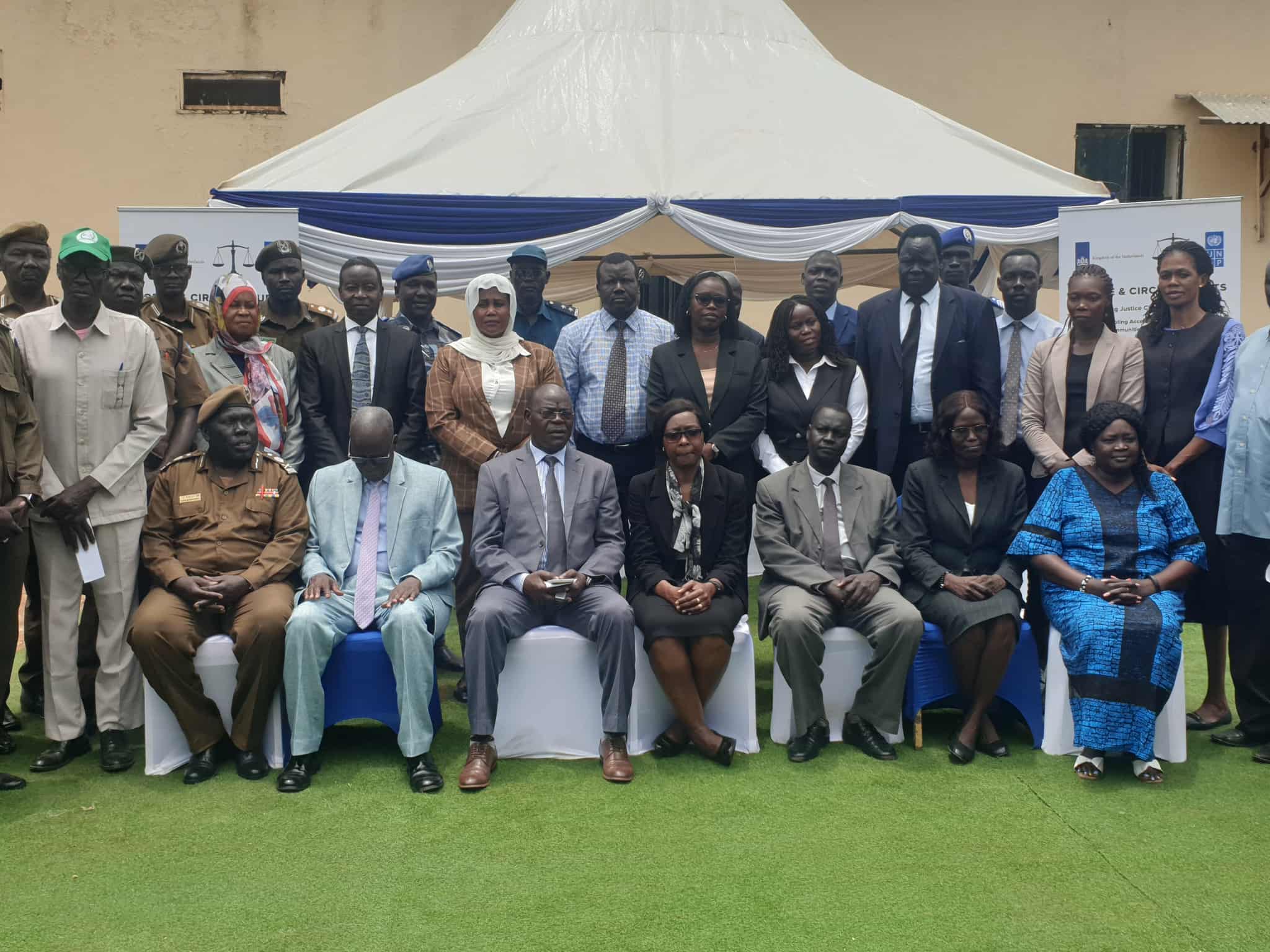
The call came following the launch of the Mobile Circuit Court for Gender-Based Violence and Juvenile cases funded by the United Nations Development Programme and the Government of the Netherlands on Tuesday, which was a response to the overcrowding at Juba Central Prison.
According to Judiciary officials and a report from Juba Central Prison, over 1,600 inmates, including those with Gender-Based Violence and Juvenile cases, are accommodated in the center.
Director for Training of Judges on Gender-Based Violence at the Judiciary, Justice William Kaya, said the mobile court was opened to reduce the overcrowding in prison. He described the congestion of those remanded in the prison as a “shame” after some prisoners had not seen judges for a year due to the slow trial process in the Judiciary system.
“We want to see the results of this Court. Judges and investigators should work with a sense of urgency for the speedy trial of those with gender-based violence cases so that the number of inmates is reduced and their conditions are improved at the center,” said Kaya. “There are many people in the prison who have been there for a year without any resolution or without seeing a judge,” he added.
Meanwhile, the Director of Juba Central Prison, Maj. Gen. Joseph Benjamin, admitted that the prison and the judiciary, with the help of funding from the United Nations Development Programme, should work together to combat Gender-Based Violence-related cases that have been rampant in major prison centers by expediting the cases of those remanded in different centers across the country.
“Let us work together for our people. We have to ensure that the rights of our people are fulfilled,” he said.
United Nations Development Programme Representative Catherine Waliaula emphasized that the existence of a mobile court for gender-based violence in Juba prison will address the remaining cases that have arisen due to the lack of judges in the judiciary system.
“By bringing the mobile and circuit court closer to the people, the perpetrators will be held accountable. Access to justice is fundamental to human rights-related issues, and the process should continue,” she said.