












South African deputy president arrives in South Sudan to shore up peace efforts
By Denis Ejulu
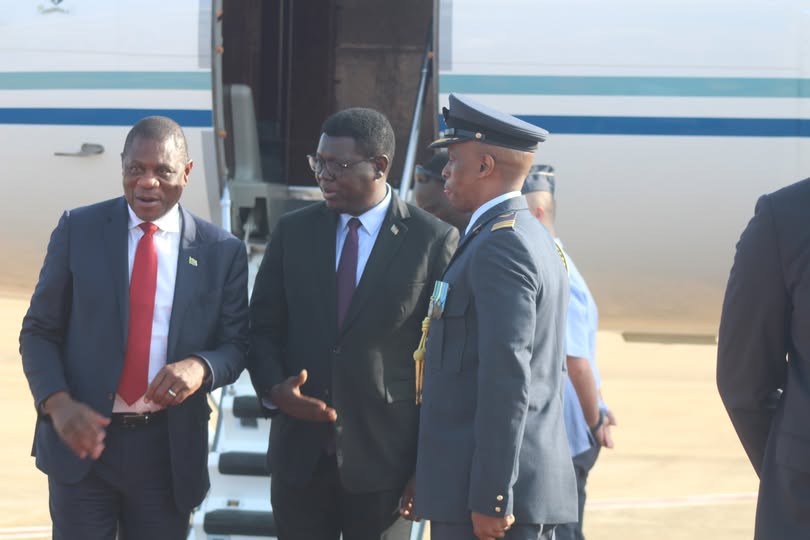
South African deputy president Paul Shipokosa Mashatile on Wednesday arrived in Juba to help shore up peace efforts in the youngest nation amid political tensions among key parties to the 2018 revitalized peace agreement.
Tebogo Seokolo, director general for Africa at the South African ministry of foreign affairs, said that the two-day visit of the special envoy of President Cyril Ramaphosa is aimed at assessing progress made and the challenges encountered in the course of the implementation of the peace agreement.
“Last year, the parties agreed by consensus to postpone the elections to December 2026 and the transitional period to conclude in February 2027. Of course, in the intervening period there have been challenges which require some assistance and intervention from the friends of South Sudan,” Seokolo told journalists in Juba, the capital of South Sudan.
He noted that under the signed peace accord, the parties had set out to finalize key milestones such as the enactment of the permanent constitution, conduct of national census and unification of forces, which remain behind schedule.
Seokolo disclosed that Mashatile was scheduled to meet with President Salva Kiir as well as vice president for economic cluster, Benjamin Bol Mel and other key signatories to the peace agreement including international organizations.
The visit of the South African deputy president comes in the aftermath of renewed political tensions sparked by the house detention of the now suspended First Vice President, Riek Machar.
Machar, together with seven co-accused members of his party- Sudan People’s Liberation Movement/Army-in opposition (SPLM/A-IO) are facing trial on charges of treason, murder and crimes against humanity following an attack in March by the White Army militia on the base of the South Sudan People’s Defense Forces (SSPDF) in Nasir, Upper Nile State.
The trial of the opposition leaders by a special court has heightened renewed fears of a relapse into war after several institutions and mechanisms of the peace agreement became redundant, according to Reconstituted Joint Monitoring Evaluation Commission (RJMEC)-the body monitoring the peace process.