SALF Launches Electoral Assessment Report Ahead of December 2026 Polls
By Sauk Taban
SALF Launches Electoral Readiness and Preparedness Assessment Report and Policy Brief
Ahead of South Sudan’s 2026 General Elections
The Standard Action Liaison Force (SALF), in partnership with the AHEAD Africa Project and co-funded
by the European Union, today launched the Electoral Readiness and Preparedness Assessment Report and
Policy Brief aimed at supporting South Sudan’s preparations for the anticipated General Elections
scheduled for 22 December 2026.
The report presents the findings of a comprehensive assessment conducted across six states and one
administrative area to evaluate public awareness, institutional preparedness, legal and policy frameworks,
security conditions, and citizen confidence in the electoral process covered period from May 2026 to April
2026.
The assessment was undertaken to generate evidence-based insights and practical recommendations that
can strengthen electoral systems and processes, promote democratic governance, and contribute to
credible, inclusive, and peaceful elections in South Sudan. Using a rigorous mixed-methods approach
comprising key informant interviews, focus group discussions, survey questionnaires, and desk research,
the study provides a detailed and balanced analysis of the country’s current electoral landscape.
The findings reveal strong public interest in participating in elections and widespread recognition of
elections as an important mechanism for democracy, accountability, and the peaceful transfer of power.
The assessment found encouraging levels of willingness among citizens, particularly young people, to
engage in the electoral process and contribute to the country’s democratic future.
However, the report also identifies significant challenges that require urgent attention. These include
limited public understanding of voter registration and electoral procedures, varying levels of trust in
electoral institutions, inadequate civic and voter education, institutional capacity constraints, financial and
logistical challenges, unresolved legal and constitutional issues, security concerns, and the growing risks
posed by misinformation, disinformation, and hate speech.
The report notes that while awareness of the upcoming elections is relatively widespread, knowledge of
critical electoral processes, including voter registration, electoral dispute resolution mechanisms, and the
mandates of key electoral institutions, remains limited. Without targeted interventions, these gaps may
undermine public participation and confidence in the electoral process.
Importantly, the assessment underscores that the successful conduct of peaceful, credible, and inclusive
elections depends not only on technical and administrative preparedness but also on the existence of a
conducive political environment. Stakeholders consulted during the assessment emphasized that political
inclusion, dialogue, and confidence-building measures are essential prerequisites for democratic elections
and long-term stability.
Among the key findings and recommendations, participants called for the release of political detainees,
including the First Vice President and other individuals detained in relation to political processes, as part of
broader efforts to build confidence among political actors and create an enabling environment for peaceful
elections. The report further recommends the initiation of an inclusive national political dialogue involving
all political parties, signatories and non-signatories to the peace process, civil society organizations, faith
leaders, women, youth, and other stakeholders.
The assessment concludes that meaningful dialogue and political consensus-building are critical for
reducing tensions, addressing political grievances, preventing electoral violence, and strengthening public
trust in electoral institutions and processes. Participants stressed that elections are more likely to be
accepted as legitimate when all stakeholders have confidence that the political and electoral environment is
fair, inclusive, and transparent.
To translate the findings into action, stakeholders participating in the validation process consolidated and
prioritised seventeen key recommendations to guide electoral preparedness efforts between now and the 22
December 2026 elections.
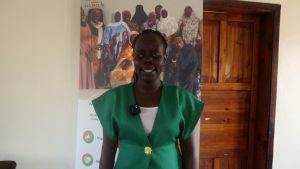
Speaking during the launch, Lony Ruot Kok, the President of SALF emphasized that South Sudan has a
unique opportunity to conduct elections that contribute to peacebuilding, democratic governance, and
national cohesion. However, achieving this objective will require coordinated action by government
institutions, the National Elections Commission, political parties, civil society organizations, security
institutions, development partners, regional actors, and citizens themselves.
“The successful conduct of elections depends not only on voter registration, electoral institutions, and
logistics, but also on the existence of a conducive political environment. Confidence-building measures,
including the release of political detainees, and the promotion of freedom of speech, assembly, and
inclusive national dialogue, are critical steps toward reducing tensions and ensuring that the 2026 elections
are peaceful, credible, and accepted by all stakeholders,” the organization noted.
The report calls upon the Government of South Sudan, the National Elections Commission, Parliament, the
Judiciary, regional organizations including IGAD and the African Union, development partners, civil
society organizations, faith leaders, and the media to work collaboratively in implementing the
recommendations contained in the report and policy brief.
SALF further urged all stakeholders to view the findings not merely as an assessment of challenges, but as
a roadmap for action. By addressing identified gaps in electoral preparedness, strengthening democratic
institutions, fostering political dialogue, and ensuring inclusive participation, South Sudan can create the
conditions necessary for elections that reflect the will of the people and contribute to sustainable peace and
democratic consolidation.
The Electoral Readiness and Preparedness Assessment Report and Policy Brief are expected to contribute
to national dialogue and support ongoing efforts to strengthen electoral governance, public trust, and
peaceful democratic participation ahead of the December 2026 elections.