











Persons with Disabilities Demand Rights as Economic Crisis Deepens
By Kidega Livingstons
As South Sudan’s economic crisis deepens, persons living with disabilities (PWDs) are calling for their basic rights including access to food, water and essential services as rising prices and systemic exclusion push many to the brink.
Leaders of PWD communities say that inflation and shortages have made daily necessities unaffordable for many.
According to South Sudan Union of Persons with Disabilities (SSUPD), the soaring cost of food, water tanks and other basics has left many disabled people unable to meet their daily needs.
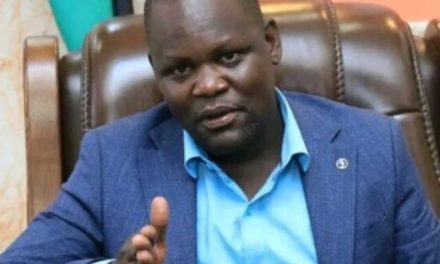
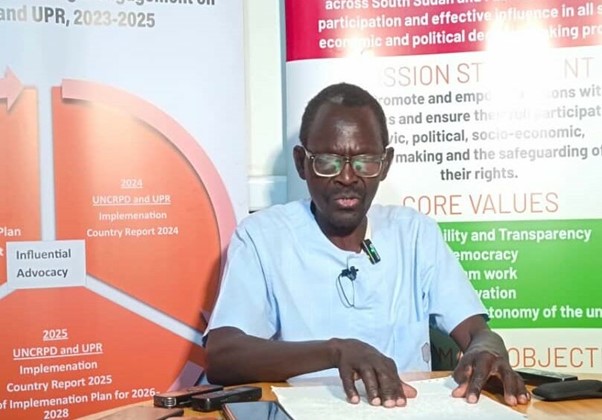
“Water alone let alone food we cannot afford in the market,” said Augustino Wudu Illario, a senior official leading disability advocacy in South Sudan, speaking during the recent celebration of International Human Rights Day.
He warned that persons with disabilities are especially vulnerable amid the growing economic hardship, and appealed for their human rights to be respected.
Illario added that, despite being enshrined as fundamental rights, access to basic services has been severely undermined by ongoing conflict and widespread instability.
Recent reports paint a grim picture for South Sudan as a whole. According to the 2024 World Bank Poverty and Equity Assessment, about 76% of South Sudanese live below the national poverty line, and over two-thirds survive on less than $2.15 a day.
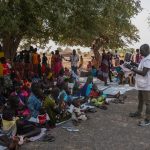
Meanwhile, the latest food-security assessments indicate that more than half the population roughly 7.5 million people are projected to face crisis or worse hunger levels during the 2026 lean season.
For persons with disabilities, such conditions are especially perilous. Advocacy groups note that many are excluded from employment, public services, and humanitarian aid often not by design, but through neglect, inadequate infrastructure and social stigma.
Although South Sudan ratified the UN Convention on the Rights of Persons with Disabilities (CRPD), many disability advocates say the reality has not changed. Public spaces remain largely inaccessible, workplaces are rarely adapted, and inclusive services such as education, healthcare, and welfare support remain inadequate or absent.