IOM Verifies More Than 110,000 Displaced People in Bentiu IDP Camp Through Biometric Registration
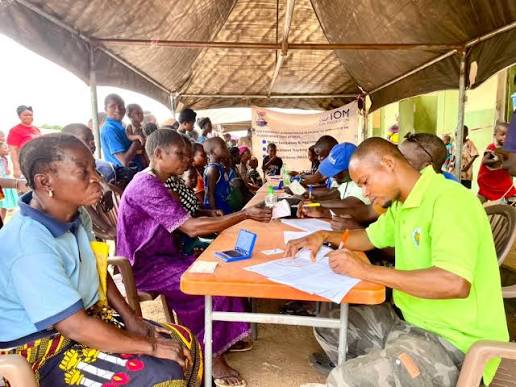
Credit: Displacement Tracking Matrix
The International Organization for Migration (IOM), through its Displacement Tracking Matrix (DTM), has completed a large-scale biometric verification exercise at Bentiu Internally Displaced Persons (IDP) Camp, registering 110,730 individuals from 26,147 households between 5 February and 2 July 2026.
According to the DTM Biometric Registration Report, the exercise was conducted to strengthen the accuracy of beneficiary records, improve humanitarian assistance delivery, and ensure that aid reaches the intended recipients. The registration also included routine maintenance activities such as registering newborns, replacing lost identification cards, consolidating households upon request, and managing protection-related cases referred by humanitarian partners.The verified population consists of 55 percent females and 45 percent males, while 12 percent are children under the age of five.
IOM said the biometric registration provides humanitarian agencies with reliable data for planning and delivering life-saving assistance, supporting better targeting of vulnerable populations and more efficient allocation of limited resources.
The verification also identified several vulnerable groups requiring continued support, including 6,495 breastfeeding mothers, 1,016 pregnant women, 458 people with physical impairments, and 303 individuals with visual impairments.The report shows that the majority of the verified population originates from Rubkona County (44%), followed by Guit (18%), Koch (17%), Leer (11%), Mayiendit (5%), and Mayom (3%), reflecting displacement patterns across Unity State.In addition, the exercise registered 11,904 children from 6,543 households who had not previously been included in the beneficiary database, helping to improve the completeness and accuracy of humanitarian records.
IOM noted that biometric registration creates a unique record for each beneficiary, reducing duplication and strengthening accountability in humanitarian assistance. The process combines biometric data with household information to verify identities, confirm household composition, and keep records updated.
The organization emphasized that while the data provides an important snapshot of the displaced population during the registration period, population figures may change over time due to new arrivals, departures, births, and other demographic changes.
The biometric verification exercise was supported by the governments of Norway, Canada, the United Kingdom, and the European Union Humanitarian Aid, reinforcing ongoing efforts to improve humanitarian response for displaced communities in South Sudan.