








High-level delegation applauds the progress made under the Shabaka Meisha project in Torit County, Eastern Equatoria State.
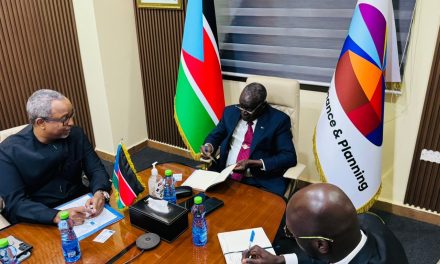
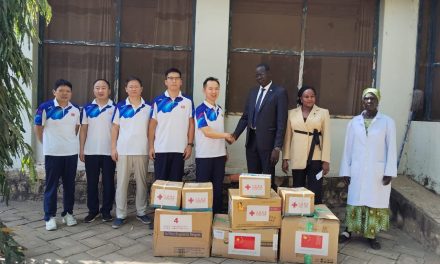
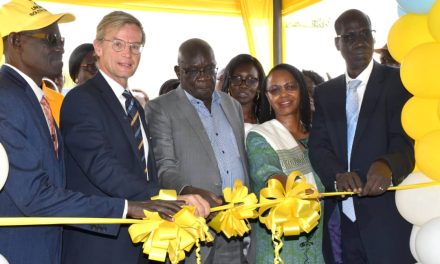
A high-level delegation from the Government of South Sudan and the World Bank Group visited project sites in Torit County of Eastern Equatoria State to observe firsthand and assess the implementation of the Shabaka Meisha Project—officially known as the Productive Safety Net for Socioeconomic Opportunities Project (SNSOP).
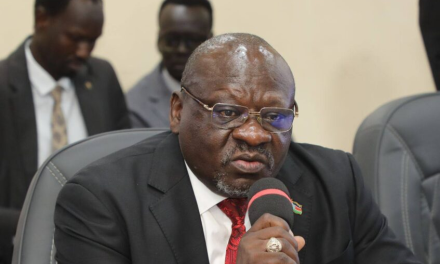
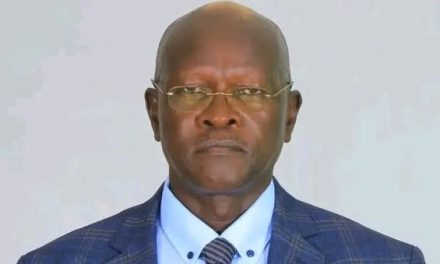
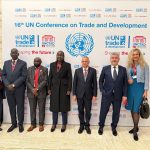
The Delegation was led by Hon. Esther Ikere, Undersecretary, Ministry of Gender, Child and Social Welfare, Charles Undeland, World Bank Group Country Manager for South Sudan, Mukulish Arafat Simeonah Mule, the Shabaka Meisha Task Team Leader, and Petronella Halwiindi, UNOPS Country Manager in South Sudan.
The delegation also included Peter Gumbo, the Minister of parliamentary and legal affairs, Eastern Equatorial State representing the Governor of Eastern Equatoria State, alongside representatives from the MAFS/MGCSW Single Project Coordination Unit (SPCU) and the United Nations Office for Project Services (UNOPS), which implements Component 1 of the project on behalf of the Government.
The US$199 million Shabaka Meisha is a four-year World Bank-funded project that aims to benefit 157,500 vulnerable households across 20 selected counties, supporting them through Labor-Intensive Public Works (LIPWs) and Direct Income Support (DIS) to promote food security, restore livelihoods, and build community resilience. The project also provides economic opportunities for youth to empower them, in addition to strengthening the institutional capacity and social protection system led by the Government of the Republic of South Sudan.
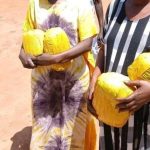
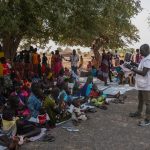
During the visit, the delegation observed biometric cash transfers and inspected ongoing LIPW activities, including the rehabilitation of community access roads and climate-smart sub-projects such as farming. Beneficiary interactions with the delegation offered direct insights into the project’s impact on vulnerable households.
Speaking at the LIPW site, Hon Esther Ikere, the Under Secretary in the Ministry of Gender, Child and Social Welfare, highlighted the project’s social value, noting,
“As a nation emerging from conflict, social safety nets are essential to building the resilience of vulnerable households, especially those headed by single mothers, children, and the elderly.”
While Rev Taban Elunai, the Director of Agriculture Extension from the Ministry of Agriculture and Food Security, described the project as “timely and transformative,” stating, “this project aligns with our national goals to ensure food and nutrition security, create jobs, and empower vulnerable people to participate in economic development.”
Charles Undeland, the World Bank Group Country Manager for South Sudan, commended the government’s commitment to taking the lead and for owning the program.
He said, “Shabaka Meisha is not only delivering much-needed support to vulnerable communities and households but also demonstrates how important it is for the Government to deliver to its citizens, not only with donor funding but with its resources on social expenditures. The World Bank is committed to supporting South Sudan in building a robust social protection system that empowers its citizens and promotes sustainable development.” Undeland added.
The visit underscored the importance of transparency, accountability, and learning from implementation to strengthen social
protection systems across South Sudan.