








Corruption is driving South Sudan’s Decline – UN Report
By Kidega Livingstone
A new report by the United Nations Commission on Human Rights in South Sudan, released this week, paints a stark picture, systemic government corruption and bold opportunism by political elites are fueling a severe human rights crisis. Those findings demand urgent action.
Titled “Plundering a Nation: How Rampant Corruption Unleashed a Human Rights Crisis in South Sudan,” the report is the result of two years of independent investigations. It documents how both oil and non-oil revenues are diverted through opaque off-budget arrangements, and how politically connected contracts siphon off resources all while millions of South Sudanese are deprived of basic services.
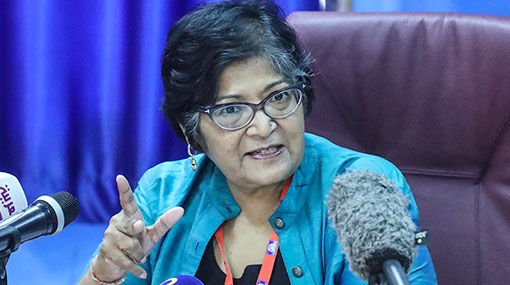
Yasmin Sooka, Chair of the Commission, described the situation as “the plundering of a nation,” and argued that corruption is not incidental, but the engine driving South Sudan’s decline.
“Our report tells the story of the plundering of a nation: corruption is not incidental ,it is the engine of South Sudan’s decline,” Sooka said.
The report identifies a number of devastating consequences: soaring hunger; collapsing health systems; preventable deaths; and deadly competition over resources. Civilians, the report says, are directly suffering from corruption that has persisted since South Sudan gained independence in 2011.
“On the ground we have seen widespread deprivation and the absence of basic infrastructure and services: direct outcomes of corruption,” Sooka said. “South Sudan’s leaders must end the systemic plunder and impunity. When public revenue becomes private fortune, peace cannot hold. For the transition to survive, accountability for economic crimes and investment in human rights are indispensable.”
Barney Afako, a member of the Commission, added that instead of directing the country’s wealth toward the public good, leaders have systematically diverted both oil and non-oil income via unaccountable deals and networks of patronage.
“South Sudan’s ability to manage economic constraints, absorb shocks, and allocate resources to fulfill the human rights of citizens has been significantly impeded by corruption. Moreover, fiscal and accountability reforms envisaged under the Revitalized Peace Agreement remain unimplemented, while impunity for corruption prevails.”
Commissioner Calrose Castresana Fernández warned that the misdirection of funds has real human costs:
“The diversions are not abstract budget failures – they translate into preventable deaths, widespread malnutrition, and mass exclusion from education. Three-quarters of child deaths are preventable — yet funds go to patronage and private pockets, not medicine or clean water and sanitation.”
The report also examines emblematic corruption schemes. Among them:
The “Oil for Roads” programme, which allegedly channelled roughly $2.2 billion off-budget into political patronage networks, much of it going to companies affiliated with Vice President Benjamin Bol Mel. Many of the promised roads were never built or were poorly delivered.
“Irregular” e-services schemes including electronic visas, petroleum import/export licensing, and other non-oil tax collections where a large share of collected revenue does not reach the government coffers.
Other striking findings:
Between 2021 and 2024, approximately $1.7 billion was paid to companies linked to Bol Mel for road work that was largely unfulfilled.
Public spending priorities show massive imbalance: the president’s medical unit receives more than the entire national public health system, even though the health system serves millions.
The food crisis is worsening: over three-quarters of counties face severe food insecurity. Meanwhile, allocations for food security ministries and related public services are a tiny fraction of the budget.
The government has publicly rejected many of the report’s allegations. It claims some figures are exaggerated and faults climate change, conflict, and reductions in oil sales for worsening conditions.
However, the report argues that corruption is not merely a contributing factor but lies at the core of South Sudan’s setbacks — in governance, human rights, and peace.
The Commission presents 54 recommendations, urging the government to:
End impunity for corruption,Improve accountability in financial and contractual practices,Ensure national budgets prioritize basic human rights, including health, education, and food security and Fully implement the fiscal reform aspects of the Revitalized Peace Agreement among others