









A National Call to Restore the Lives of Nyakuron–Custom Market Traders
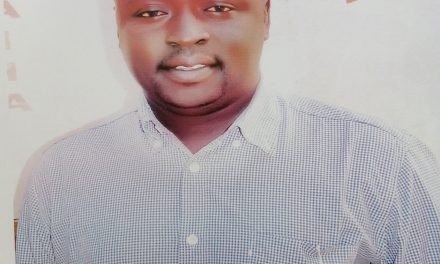
By Majak Daniel Kuany Alier (Mapau,Juba-South Sudan, December 6th 2025)
When tragedy strikes, it has a way of touching every one of us,whether we are directly affected or not. The recent fire that swept through Nyakuron–Custom Market did exactly that. As I watched the images and listened to the stories of traders who lost everything, my heart sank. These are ordinary South Sudanese, small and medium entrepreneurs, who have spent years enduring a tough economy, saving little by little, building their businesses bit by bit. To see all of that reduced to ashes in just a few minutes is truly heartbreaking.
Over the past days, I’ve seen many people share their sympathy, including government officials and even our President. I appreciate every message, every visit, and every expression of solidarity. Words do matter, especially during grief. But as I reflected on everything that was said, something in me still felt unsatisfied.
Sympathy alone is not enough. Our people need more than comforting words, they need solutions. In moments like this, leadership must be felt in action, not only heard in statements.
Yes, investigations are important. Yes, the cause of the fire must be known. But while we wait for reports, committees, and conclusions, the traders need immediate help to get back on their feet. Their children still need food. Their rent is still due. Their lives cannot be paused.
This is where I believe our President had an opportunity, not just to sympathize, but to lead a national action.
Imagine if, instead of focusing mainly on investigations, the President had called upon his entire government to contribute financially to the victims. He could have said:
I President and Vice Presidents contribute 10,000,000 SSP each.
Other Presidency Members: 5,000,000 SSP
Cabinet Ministers: 2,500,000 SSP
MPs: 1,500,000 SSP
Judiciary Leaders: 1,000,000 SSP
This isn’t about draining anyone’s pockets. It’s about setting an example, showing the nation that leadership stands with its people not only in words, but in sacrifice.
And from there, the President could invite the second circle of supporters: the business community. Prominent entrepreneurs like Kur Ajing, BBI, and other successful business owners would not hesitate to help if the call came from the highest office. They know the struggles of building a business; they understand loss.
The third group could be the diplomatic community. South Sudan is not alone, our partners, embassies, and friends around the world often step in during moments of crisis.
Then come the UN agencies, NGOs and INGOs, who have experience responding quickly to disasters. And finally, our faith-based institutions and everyday citizens, the people who always step forward when others are hurting.
If all these groups were mobilized together, imagine the impact. We could rebuild not just stalls and shops, but hope. We could remind our people that they are not forgotten, that their leaders and neighbors care enough to act, not tomorrow, but today.
As for identifying the affected traders, that is not as complicated as it may seem. The traders know themselves. They can stand where their stalls once were. The City Council, which collects taxes daily, surely has records. And where records fall short, the honesty of our communities can guide the process. South Sudanese people do not leave their neighbors behind, we point them out, we stand with them, we help them.
What I am calling for is simple: leadership with a human heart. Leadership that listens, feels, and acts.
Leadership that shows our citizens that they matter, not only during campaigns or ceremonies, but in moments of real suffering.
The fire at Nyakuron–Custom Market destroyed more than property, it shook the confidence of hardworking people who already carry heavy burdens. Rebuilding their lives will take time, but with the right leadership and collective effort, we can give them a starting point.
And maybe, just maybe, this could be the moment when South Sudan proves that its strength lies in unity, compassion, and timely action.
The opinion express here are solely of the writer and don’t represent the Union of Journalists of South Sudan.
Majak Kuany Alier
Secretary General, Union of Journalists of South Sudan
Contact: +211 925 848 660
Email: kuanyalier@gmail.com