By Wek Atak Kajang
The Norwegian Refugee Council (NRC) says the world is paying too little attention to a profusion of mass displacements of people across Africa, who risk death by starvation and prolonged conflicts. According to the NGO, the countries most neglected are all on the African continent including Burundi, Sudan, South Sudan, and Somalia; based on shortfalls in the international political response, media coverage, and the amount of aid pledged. In addition, with the all-absorbing war in Europe’s Ukraine, African suffering has been pushed further into the shadows.
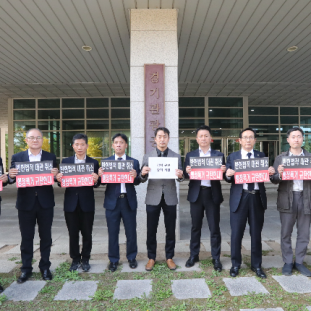
In this reality, there is an international peace organization, Heavenly Culture, World Peace, Restoration of Light (HWPL), that leads the change so that the world becomes one with cultures of peace. Chairman Man Hee Lee of HWPL has presented answers for peace and life in the world of conflict and death with the experience of witnessing the horrors of the Korean War as a veteran. The representative achievement of the peace steps he and HWPL have made is the fruit of contributing to peace in Mindanao, the Philippines, which is ending its 50-year history of conflict.
Mindanao, Philippines, looking at the realization of long-term peace

Mindanao, the Philippines, was the place where Southeast Asia’s largest armed conflict occurred. The Mindanao conflict was a military collision between the Philippine government and Moroans(Muslims) that began in the late 1960s, resulting in more than 120,000 deaths. After the conflict that caused massive casualties, various countries, international organizations, and private organizations supported peace and began to settle peace in Mindanao. However, the conflict never ended just by signing a peace treaty. Peace of Mindanao required the need for a fundamental and long-term approach across politics, economy, society, and culture to prevent a recurrence of war.
Mindanao’s efforts for peace were made by a civilian peace organization based in the Republic of Korea. In 2013, the Chairman of HWPL, Man Hee Lee visited Mindanao, where tensions were widespread due to military collision. He mediated the signing of a peace agreement between the two leaders representing Islam and Catholicism, the government and the private sector, politics, and religion, as citizens watched.
The Peace Agreement in Mindanao mediated by the civil organizations was for permanent peace. Since then, HWPL and all local stakeholders including local politicians, religious leaders, and civil society, have begun to cooperate for peace. From 2019 to 2020, major cities in Mindanao decided to support and implement the “Declaration of Peace and Cessation of War(DPCW)” proclaimed by the HWPL. DPCW was written by HWPL and international law experts from around the globe, focusing on the basic principles for the prohibition, prevention, and resolution of conflicts and wars and spreading the culture of peace.
It also continues a campaign to improve peace awareness and build a peace monument with civil society. The peace monument is a symbol of peace and reflects the spirit of coexistence and respect in everyday life. A representative example is the Peace Monument built in the Phurok Tongki area of Cotabato City, where armed conflicts between Islam, Christianity, and indigenous people were frequent. With the implementation of a peace treaty between the government and armed groups, a monument made by melting weapons used by combatants has become a symbol of the transition to a world of peace.

At the national level, efforts are being expanded to establish peace through cooperation with central government agencies and the field of education. Since February 2016, HWPL has signed MOUs with 70 educational institutions in Mindanao. In addition, an MOU was signed with Commission on Higher Education(CHED), the Philippine government’s agency, in 2018. Also, in cooperation with the Ministry of Education, the development of courses on peace education and the expansion of education at the national level are being promoted.
Regarding the achievements made in Mindanao since 2013, Chairman Man Hee Lee consistently says, “God’s work” and “With the help of God” not personal achievements. He always emphasizes, “Let’s all become the messenger of peace and leave peace as a legacy of future generations.” The possibility of peace emphasized by the HWPL will become a reality when people around the world take the initiative to join and become one in peace.