UNICEF Warns El Niño Threatens More Than 162 Million Children in Eastern, Southern Africa
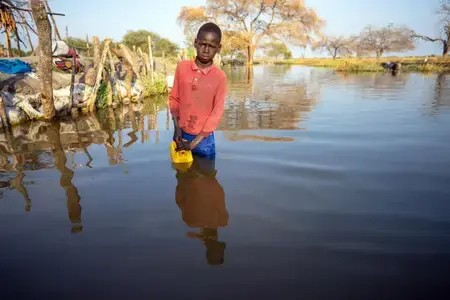
FILE PHOTO: 13-year-old Mathiei Makuol collects dirty water from the floodwater in the village of Panyagor in Twic East, Jonglei State in South Sudan.© UNICEF/UN0594308/Naftalin
More than 162 million children across Eastern and Southern Africa are living in areas exposed to the growing impacts of the 2026-27 El Niño, UNICEF warned Wednesday, urging governments and donors to act before worsening drought, extreme heat and flooding trigger deeper humanitarian crises.
The United Nations children’s agency said the climate phenomenon threatens children’s access to food, health care, safe water and sanitation, education and protection, with vulnerable communities facing overlapping risks.
“The threat from El Niño is growing, and the risks for children are already clear,” said Etleva Kadilli, UNICEF regional director for Eastern and Southern Africa. “Across the region, children are facing food and water insecurity, overstretched health services and disrupted learning.”
UNICEF said its assessments have identified urgent risks in 13 countries: Djibouti, Eritrea, Ethiopia, Kenya, Madagascar, Malawi, Mozambique, Somalia, South Sudan, Sudan, Uganda, Zambia and Zimbabwe.
In South Sudan, drought, extreme heat and localized flooding could worsen food insecurity and malnutrition, increase disease outbreaks and compound existing risks of famine and large-scale displacement, according to UNICEF.
The agency said Somalia could see up to 2.5 million people affected by flooding under its most severe scenario mapping, potentially disrupting children’s access to food, health care, safe water and education. In Ethiopia, tens of thousands of children are likely to be affected, particularly in areas already experiencing severe food insecurity and vulnerability.
UNICEF said the region has a limited window to take anticipatory action before the most severe impacts are felt. However, less than 1% of international humanitarian assistance is currently available for anticipatory action, the agency said.
UNICEF is calling for increased investment in five key areas: nutrition, health and water and sanitation systems, education, child protection and shock-responsive social protection.
The agency is urging partners to pre-position lifesaving nutrition supplies, expand early screening and treatment, strengthen disease surveillance and vaccination campaigns, secure access to safe water and sanitation, and prepare alternative learning spaces before schools are disrupted.
It also called for expanded psychosocial support, family tracing and reunification, measures to prevent gender-based violence, and anticipatory cash assistance linked to early-warning systems.
UNICEF said it needs $173 million within its existing 2026 Humanitarian Action for Children requirements to provide anticipatory and lifesaving assistance to children and families in the 13 priority countries.
The agency said early and flexible funding could help reduce humanitarian needs and protect development gains before climate shocks intensify.
Every $1 invested in disaster risk reduction can save up to $15 in future recovery costs, UNICEF said.
“We know what is coming, which children are most at risk and how to protect them,” Kadilli said. “The choice is whether the world responds now, or waits until the crisis escalates, and children pay an even greater price.”