UNICEF: 5 Million Children in South Sudan Need Urgent Humanitarian Aid
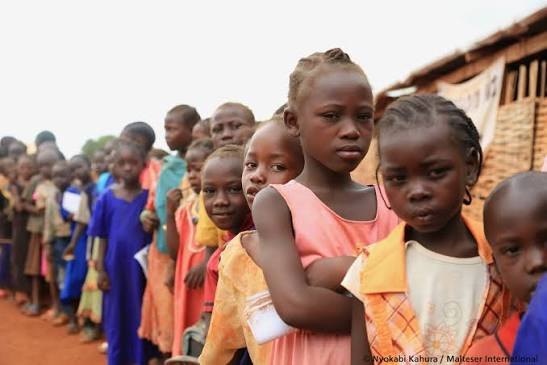
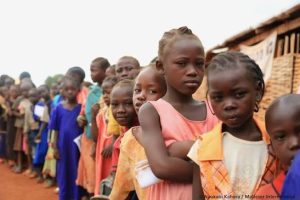
Credit: Nyokabi Kahura/ Malteser International
An estimated 5 million children in South Sudan urgently need humanitarian assistance as conflict, hunger, displacement and disease outbreaks deepen the country’s humanitarian crisis, UNICEF said in its latest situation report.
The agency warned that rising needs are outpacing available resources, with the effects of the war in neighboring Sudan adding further pressure to South Sudan’s fragile health, education and social systems.
More than 428,000 people were displaced by armed clashes and localized violence during the first half of 2026, UNICEF said.
Jonglei State accounted for about 60% of the reported displacement, making it the worst-affected area.
The violence has also increased protection risks for children. UNICEF said verified grave violations against children nearly doubled compared with the same period last year.
Child protection teams have responded by expanding family tracing and reunification services. Between January and June, 491 unaccompanied or separated children were reunited with their families.
Food insecurity remains one of the most serious threats facing South Sudanese families.
About 7.8 million people — roughly 56% of the population — were projected in April to face crisis levels of acute food insecurity.
Famine-like conditions have expanded to four counties: Akobo and Nyirol in Jonglei State, and Luakpiny/Nasir and Ulang in Upper Nile State.
The deteriorating food situation has driven a sharp increase in malnutrition among children. UNICEF and its partners admitted nearly 197,300 children for treatment of severe acute malnutrition between January and June.
South Sudan is also confronting several disease outbreaks while its health system remains under severe strain.
A cholera outbreak that began in late 2024 has affected more than 107,000 people and caused 1,706 deaths, according to UNICEF. Although new cases have declined, active transmission continues in some hotspots.
The country is also responding to outbreaks of measles, mpox, dengue fever and hepatitis E.
Recent Ebola outbreaks in neighboring Uganda and the Democratic Republic of Congo have further raised concerns about cross-border transmission, particularly because of high population movement between the countries.
The humanitarian response is being hampered by a major funding gap.
UNICEF’s $196.8 million Humanitarian Action for Children appeal for South Sudan is only 44% funded, leaving about $110.5 million still needed.
The funding shortage is particularly affecting education and water, sanitation and hygiene programs.
Humanitarian operations are also facing increased access challenges. UNICEF reported a 62% increase in humanitarian access incidents, including illegal checkpoints and disruptions caused by seasonal flooding.
The agency warned that without immediate and flexible donor funding, millions of children could lose access to clean water, health care, education and other essential services.
UNICEF called for increased international support to prevent the overlapping crises from causing further deterioration in conditions for children and vulnerable families across South Sudan.