Conflict in Jonglei Leaves Families Separated as Child Malnutrition Worsens
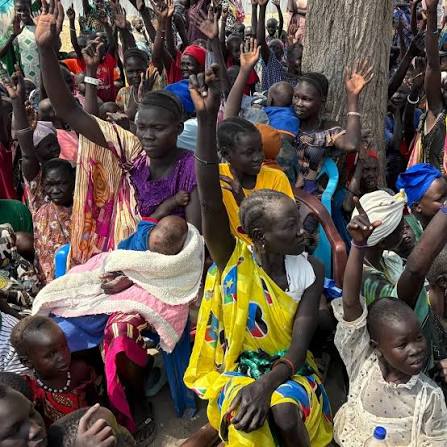
Escalating violence in South Sudan’s Jonglei State has displaced nearly 300,000 people, leaving thousands of families separated and exposing children to rising risks of malnutrition, disease, and violence, UNICEF has warned.
The fighting has forced civilians to flee under dangerous conditions, with reports of aerial bombardments, ambushes along displacement routes, and widespread insecurity. Many displaced families have arrived in Bor and surrounding areas after travelling for days or weeks with little access to food, clean water, healthcare, or shelter.
Among those affected is 40-year-old Yang Chol, who fled Lankien in Nyirol County with her four daughters during heavy fighting. While escaping, she was ambushed and became separated from her two youngest daughters, aged nine and six, who remain missing.
Her story reflects a growing protection crisis. As of April 2026, more than 500 unaccompanied children had been identified across Jonglei State, although humanitarian agencies believe the actual number is much higher. UNICEF and its partners are continuing family tracing and reunification efforts, including the search for Yang Chol’s missing children.
Another displaced mother, Nyageme, 38, fled Motot in Uror County with her children, walking for more than 20 days before reaching Bor. During the journey, she witnessed deaths and lost relatives while escaping the violence. Although she has since reunited with her husband, the family continues to struggle with food shortages, limited access to safe drinking water, and inadequate shelter.
UNICEF said the conflict has sharply increased protection risks for women and children, with reports of child abductions, recruitment of boys into armed groups, and widespread sexual violence, including rape and abduction of women and girls.
The humanitarian agency also warned that the nutrition situation is deteriorating rapidly as displacement disrupts access to food and essential health services. Recent assessments show that four counties in Jonglei have reached critical levels of acute malnutrition.
Rapid response teams operating in areas including Akobo County have identified severe acute malnutrition among children displaced for extended periods without humanitarian assistance. Some children have reportedly died due to delays in accessing life-saving treatment.
In response, UNICEF and its humanitarian partners are expanding emergency health, nutrition, water, sanitation and hygiene (WASH), and child protection services. The response includes delivering essential medical supplies, nutrition support, safe water interventions, and protection services to vulnerable communities.
UNICEF has renewed its call for safe, sustained, and unhindered humanitarian access to all conflict-affected areas to enable the timely delivery of life-saving assistance and protection services.