Conflict Displaces Thousands in Western South Sudan as Improved Security Brings Over 12,000 Returnees Home
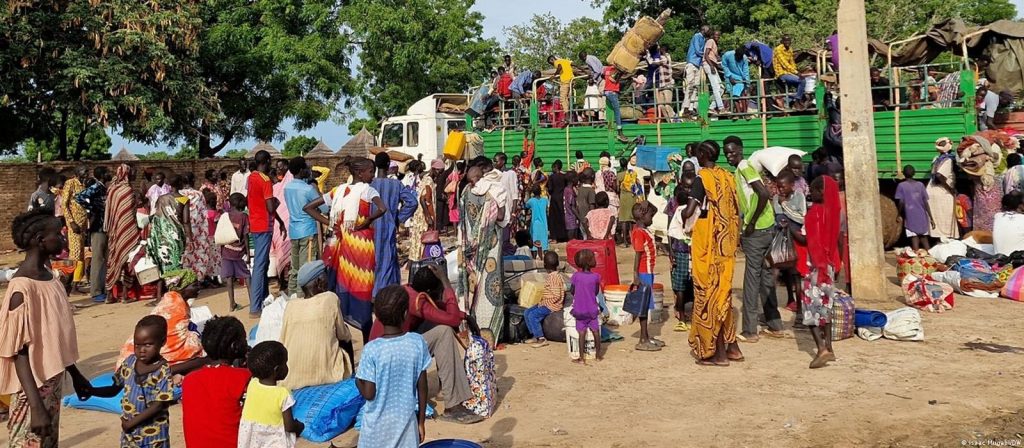
Credit: DW.com
More than 18,500 people were affected by population movements across South Sudan in June 2026, with localized violence forcing thousands to flee their homes in the west while improved security encouraged more than 12,000 people to voluntarily return from Ethiopia, according to the latest report by the International Organization for Migration (IOM).
The IOM South Sudan Event Tracking Report #112, covering 1–30 June 2026, highlights the country’s continuing humanitarian challenges, where conflict-driven displacement persists alongside signs of recovery in parts of the country.The report says that fighting and cattle raiding between 14 and 21 June in Marial Baai and Wau payams of Jur River County forced 6,357 people from 1,213 households to flee their homes in search of safety.
Women and children accounted for the majority of those displaced, including 3,619 females and 501 infants under one year of age.
Displaced families sought refuge in nearby communities, with Marial Baai village hosting 1,857 people and Lach receiving 1,755 people, making them the largest displacement sites identified during the reporting period.
According to IOM assessments, humanitarian needs remain acute. Nearly half of the affected households identified shelter materials as their most urgent requirement, followed by non-food item (NFI) kits and food assistance. Communities also reported increasing demand for safe drinking water and healthcare services.
Communities also reported increasing demand for safe drinking water and healthcare services.
While conflict displaced thousands in Western Bahr el Ghazal State, improved security conditions along South Sudan’s eastern border triggered a significant wave of voluntary returns.
The report recorded 12,215 returnees from 2,424 households, most of whom crossed back into South Sudan from Ethiopia during June.
The largest influx was recorded in Akobo County, where 11,020 people returned after improved security reportedly followed the South Sudan People’s Defence Forces (SSPDF) regaining control of areas previously occupied by opposition forces.
An additional 678 people returned to Nasir County as military confrontations eased, allowing families to return to their places of habitual residence.
Most returnees came from Ethiopia’s Gambella Region, with approximately 90 percent identifying Nuwer as their place of origin.
The report notes that the humanitarian needs of returnees differ from those of newly displaced families.
While internally displaced people require immediate emergency assistance such as shelter, food and essential household items, returnees are primarily seeking non-food item kits, healthcare services, and protection support as they rebuild their homes and livelihoods.
Despite encouraging returns in parts of the country, IOM warns that South Sudan’s humanitarian situation remains highly fragile. Localized conflict, cattle raiding, political instability and insecurity continue to drive new displacement, while returning communities require sustained assistance to successfully reintegrate.
The findings are based on data collected through IOM’s Displacement Tracking Matrix (DTM) Event Tracking Tool, which combines field assessments, interviews with community leaders and local authorities, and secondary data verification to monitor population movements across South Sudan.