Global Childhood Immunization Improves Slightly, but Conflict and Vaccine Hesitancy Leave Millions Unprotected
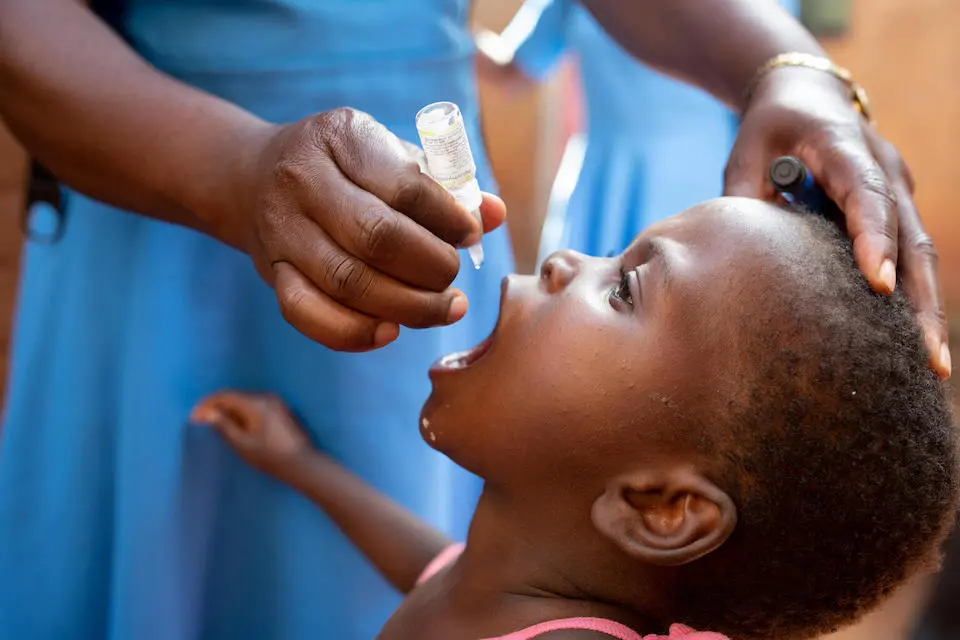
Credit: UNICEF USA
By Philip Taban
Global childhood immunization coverage recorded modest gains in 2025, but millions of children remain unvaccinated due to conflict, displacement, poverty, and growing vaccine hesitancy, according to new estimates released by the World Health Organization (WHO) and the United Nations Children’s Fund (UNICEF).
The latest WHO-UNICEF Estimates of National Immunization Coverage (WUENIC) show that 90 percent of infants worldwide—nearly 116 million children—received at least one dose of the diphtheria, tetanus and pertussis (DTP) vaccine in 2025, while 85 percent, or about 110 million children, completed the recommended three-dose series.
Despite the one-percentage-point increase from the previous year, global vaccination coverage remains below pre-COVID-19 levels recorded in 2019.
The report estimates that 13.5 million children received no vaccines at all during their first year of life in 2025. Although this represents a decline of nearly 750,000 compared to the previous year, WHO and UNICEF warned that millions of children continue to begin vaccination schedules without completing them, leaving them vulnerable to preventable diseases.
Measles remains a major concern, with only 84 percent of children receiving the first dose of the measles vaccine and 77 percent receiving the second dose—well below the 95 percent coverage required to prevent outbreaks. As a result, 57 countries reported major measles outbreaks in 2025.
UNICEF Executive Director Catherine Russell said governments and health workers had helped restore vaccination services following disruptions caused by the COVID-19 pandemic, but emphasized that vulnerable children continue to be left behind.
She noted that conflict, displacement, and poverty remain significant barriers to immunization and called for renewed efforts to reach every child while rebuilding public trust in vaccines.
WHO Director-General Dr. Tedros Adhanom Ghebreyesus described immunization as one of the most effective and equitable public health interventions, stressing that every child deserves protection from vaccine-preventable diseases regardless of where they are born.
The report found that more than half of all unvaccinated, or “zero-dose,” children live in fragile and conflict-affected countries, where insecurity and underfunded health systems continue to disrupt routine immunization services.
However, it also highlighted encouraging progress in some crisis-affected countries. Sudan recorded the world’s largest improvement in vaccination coverage during 2025, increasing first-dose DTP coverage by 35 percentage points and first-dose measles coverage by 22 percentage points.
Meanwhile, WHO and UNICEF warned that vaccination coverage is also declining in several middle- and high-income countries due to weakening political commitment, structural health system challenges, and increasing vaccine hesitancy.
The agencies also expressed concern over declining investments in immunization data systems. Only 18 national immunization surveys were conducted in 2025, down sharply from 50 surveys in 2024, limiting countries’ ability to identify children who are missing vaccinations.
WHO, UNICEF, and Gavi, the Vaccine Alliance, urged governments and international partners to strengthen immunization services in conflict-affected areas, combat misinformation, increase domestic and international funding for vaccination programmes, and invest in stronger disease surveillance and health data systems.
The agencies warned that without sustained investment and stronger political commitment, progress toward the global Immunization Agenda 2030 targets could stall, increasing the risk of preventable disease outbreaks worldwide.