South Korean Leaders’ “Cult” Remarks and Call for Eradication of Religious Group Draw Domestic and International Criticism
BY SCJTV
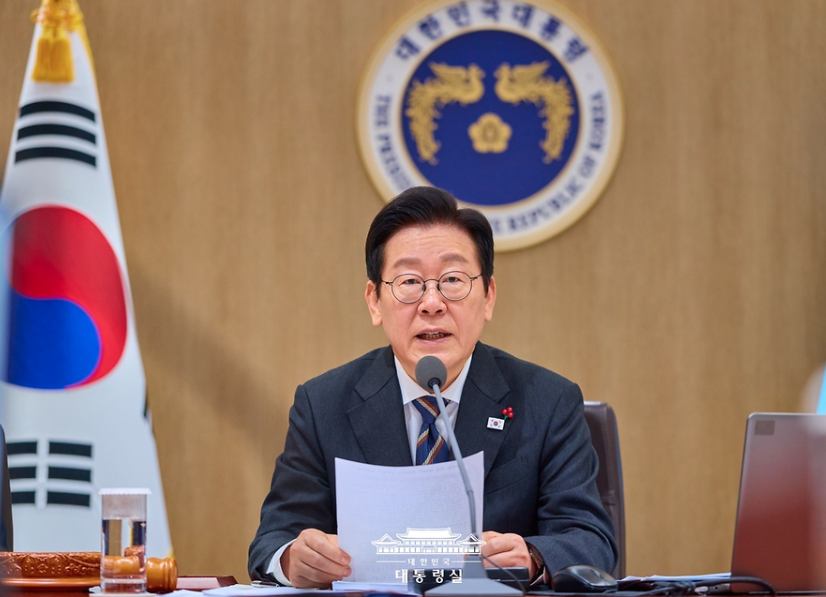
South Korean President Lee Jae Myung and Prime Minister Kim Min-seok are facing criticism after publicly labeling a religious organization a “cult” and calling for its “eradication,” raising concerns about religious freedom, constitutional protections, and democratic norms.
On January 12, President Lee condemned Shincheonji Church of Jesus, formally known as the Temple of the Tabernacle of the Testimony, along with other religious groups. He stated that “the harm they cause to society has been left unchecked for too long, resulting in serious damage.”
The following day, Prime Minister Kim echoed the president’s remarks during a cabinet meeting, ordering a joint government investigation into what he described as a “pseudo-religious group” and “cult,” explicitly calling for its eradication. Shortly afterward, a joint law enforcement task force was assembled, and investigations are now underway.
Deliberations in the National Assembly of South Korea regarding the appointment of a special prosecutor have intensified concerns that further compulsory measures—including potential search-and-seizure operations—may follow.
Constitutional Concerns Raised
Article 20 of South Korea’s Constitution guarantees freedom of religion as a fundamental right. Critics argue that President Lee’s public condemnation of Shincheonji—made without any judicial ruling—risks fostering stigma and hostility toward a specific religious group through state authority.
Legal observers and civil society groups contend that the remarks undermine constitutional safeguards and democratic principles, particularly given that President Lee assumed office following the impeachment of South Korea’s former president after an unconstitutional declaration of martial law.
Shincheonji Responds: “Religious Discrimination”
Shincheonji Church of Jesus, founded in 1984 by Lee Man-hee, describes itself as a rapidly growing Christian organization, reporting annual membership increases exceeding 100,000. Some analysts suggest its expansion and visibility have contributed to heightened political and social scrutiny.
The group first became a major target of state action during the COVID-19 outbreak in 2020. Authorities launched large-scale investigations into alleged violations of infectious disease laws, conducting more than ten search-and-seizure operations at Shincheonji’s headquarters and regional churches.
At the time, Lee Jae Myung—then governor of Gyeonggi Province—adopted a hardline stance and personally led a forced entry into the group’s headquarters.
Subsequently, South Korean courts acquitted Shincheonji of major charges, including alleged violations of the Infectious Disease Control and Prevention Act. In a recent statement, the church said that “although numerous complaints and accusations have been filed against us, courts have consistently dropped charges or ruled ‘not guilty,’” adding that previously resolved cases are now being “recycled as tools for political and public attacks.”
The organization emphasized that it has “no intention of engaging in political conflict” and urged authorities to “stop using a specific religion as a scapegoat while speaking of national unity.”
International Scrutiny Intensifies
International attention has grown following comments by U.S. President Donald Trump, who alluded on his Truth Social platform to allegations of “very vicious raids” on churches in South Korea. In an August post, Trump suggested that “a purge or a revolution” could be taking place in the country.
Observers note that it is highly unusual for the leader of an allied nation to publicly criticize another country’s internal law enforcement actions.
In December, the International Democracy Union called for closer monitoring of South Korea’s adherence to democratic governance and the protection of fundamental rights—an uncommon step for a country long regarded as a consolidated democracy.
Freedom of religion is protected under the International Covenant on Civil and Political Rights, which requires that any state interference meet strict standards of legality, proportionality, and minimal restriction.
As investigations continue, the controversy raises a broader question facing liberal democracies worldwide: how far can the state intervene in religious matters without undermining fundamental civil liberties? International observers are increasingly focused on how South Korea will balance public authority with constitutional rights in the months ahead.