THE JUBA I MISS SO DEARLY
I honestly miss the Juba where you could board a “mwasalat” (taxi) and don’t tell the driver to stop but you just snap your fingers, and the driver would know that you had reached your destination.
Travelling anywhere within the city would only cost at most a mere Dinar, in most cases it was a coin, “Kumsumia” or fifty cents, that is the Juba I miss today!
The Juba I’m referring to is the city where you would pull out the coin to pay conductors, they were literally children and they would commonly retort that someone had already paid your fare.
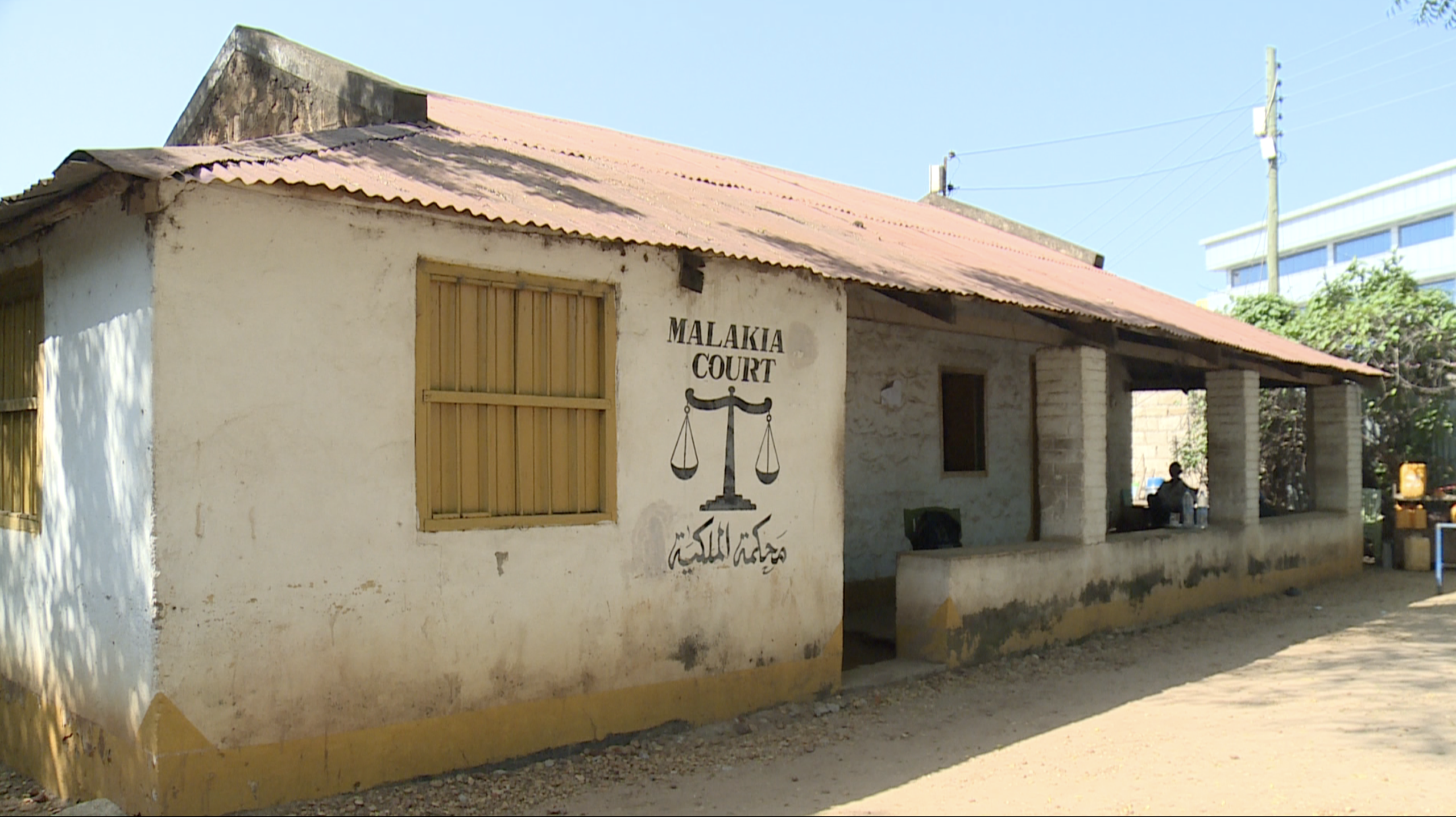
I miss that Juba when I remember how a friend, an engineer from Uganda, vowed to return to his country, Uganda to change the names of his family members. The obsession with the lifestyle in Juba psyched him to rename his family members after names of different locations in Juba, he told me that he was going to rename his son to Hai Malakal, his daughter Malakia and his wife, Juba Raha.
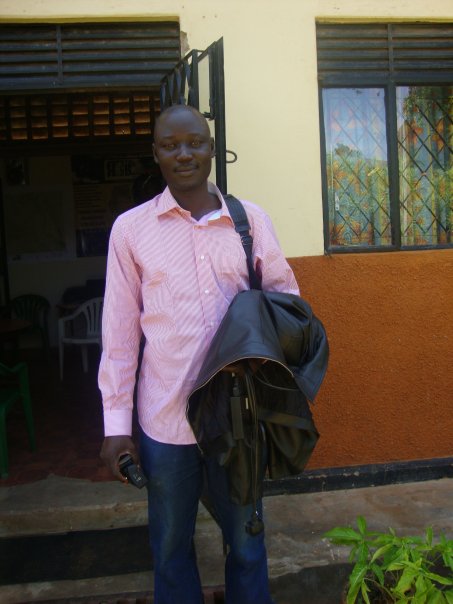
Oyet Patrick in 2007 at Bakhita Radio premises.
The Juba then had very few restaurants; one of them was known as Mama Zahara which served all local and regional delicacies and cuisine. Those days, we fondly ate foul masr (beans), fish, roasted chicken and bread accompanied by bottles of Coca-Cola.
The same philanthropy and generosity in other sectors were replicated in eateries. You would fill your stomach and at the end of it be turned away by the cashier that your bill had been paid by someone.
Today, the story is a stark contrast and life in Juba is a pale shadow of its former self. A fortnight ago, an old friend visited a restaurant and ordered for food. He proceeded to the counter to clear his bill only to be shocked at the bill, a whopping $10, which he did not have on him at that time, since my home is near that restaurant, my friend had to telephone me. I had to rush to his rescue when hell threatened to break lose.
Such a situation would never happen in the Juba of those days I am reminiscing about; because the owner of the restaurant those years would have just let my friend leave without paying.
The so called “niggers,” “torontos,” “Sherikat gangs,” were not yet born, Juba was a safe haven. On the flipside, only a few privileged homes had latrines, the underprivileged ones like some of us literally dug shallow holes on the ground that served as makeshift pit latrines, especially in the evening hours.
There were a few commercial toilets and bathrooms in the markets made of plastic, one would pay “kumsumia” to use them, upon paying, a small piece of toilet paper would be handed to you together with a small piece of soap to complete your bath. The size of the piece of toilet paper kind of annoyed me, at times it was cut so small that it would not meet the purpose for which it was given but all in all, I still miss that Juba.
Today, Juba has changed; every home has a toilet or latrine and at least a bathroom. I recently went to shower and hanged my pair of trousers on the bathroom, those kinds of outdoor bathrooms adjacent to the perimeter wall, by the time I finished bathing, I had no clothes, someone had stolen the pair of trousers.
I was lucky that at that time, there was no one at home, I had to tiptoe back to the house naked, bending like I had stomach ulcers and tummy ache. I was scared, I was imagining someone just walking into the compound as I was trying to get to the house and seeing me naked, that information could have gone to the village and a different story would have been created out of it.
I was also scared of the citizen journalists, I was traumatized for days, thinking, what if someone took my picture using their phone at that time when I was heading to the house? What if they put the picture on Facebook? Luckily none of that happened.
The Juba I miss never had Facebook, WhatsApp and the many social media platforms that we have today, no trolling, abusive language, misinformation and people we relatively happy.
Only Sudani and Zain telecommunication companies provided mobile communication services. We literally met physically as it was an assured way of meeting people.
Then entered Gemtel Telecommunication Company. It was more locally owned but with a number of limitations. Acquiring sim-cards was more difficult than acquiring a handset. Some thieves could snatch your phone but drop the handset after pulling out the sim-card.
The simcard would immediately be inserted in another phone and you could call and talk to the person who stole your phone, the simcard cost $100 and was hardly available. We did not have technology of tracking phones and so on, once you lost your simcard that was the end of it.
All roads were dusty despite the sweltering heat and baking weather. There were only a few houses with permanent perimeter walls. Then, we had only a few traffic police officers and they did not ask for logbooks from motorists. Vehicles were registered under the New Sudan (NS) series. Those with Central Equatoria Temporary Plate Number registration bore “CETP” stickers.
Supplies from Uganda and Kenya used to come through Kaya-Yei then Juba, the now famous Juba-Nimule Road was not operational, it was heavily landmines infestated.
The current fantasy and craze with fuel guzzlers like V8 models never existed. Instead, there were other competitive models.
General Isaac Obuto Mamur, was among the outstanding and privileged few who owned a fleet of cars that included Hummers, Jeeps which were very unique then.
A few other well-off guys had cars known as “Big Horn”
Juba had few hotels like Mango Camp, Civicon (now Oasis), You would hardly find South Sudanese girls working in those hotel because it was a near abomination by the society.
A case at hand was when my brother’s wife got a job at Juba Grand Hotel as a receptionist but could not be allowed to take up the job. My brother believed that, such jobs were a domain for promiscuous people, as such, many of the workers in Juba Grand Hotel were brought from Philippines.
Recently, I asked my brother whether he had changed his mind about his wife working in the hospitality industry and it seems he had changed his mind.
We did our film (drama) rehearsals at Kumoyangi Primary School, Landmark Hotel has since replaced the institution. Last month, I visited Landmark Hotel to try and see if I could get that old feeling of the school, it was not there.
The only political parties we knew then were; Sudan People’s Liberation Movement (SPLM) and the armed forces, Sudan People’s Liberation Army (SPLA), National Congress Party (NCP) of former president Omar Al Bashir and the Sudan Armed Forces.
Today, I am told we have about nine commanders-in chief, unknown gunmen and more than thirty (30) political parties, things have indeed changed.
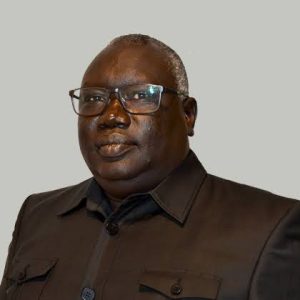
Oyet Patrick Charles, a journalist and the Chairperson of the Union of Journalists of South Sudan, is the author of this article, he can be reached at oyetpatrick12@gmail.com. All views expressed in the article are solely his and do not represent the position of any institution he is associated with.